Copper reaches $14,783 as shrinking Shanghai stocks tighten immediate supply
Benchmark copper rose for a sixth consecutive session to $14,783 per tonne, supported by falling inventories and demand for immediate delivery in China. Higher costs threaten margins for cable, electrical equipment and vehicle manufacturers, while benefiting upstream producers.
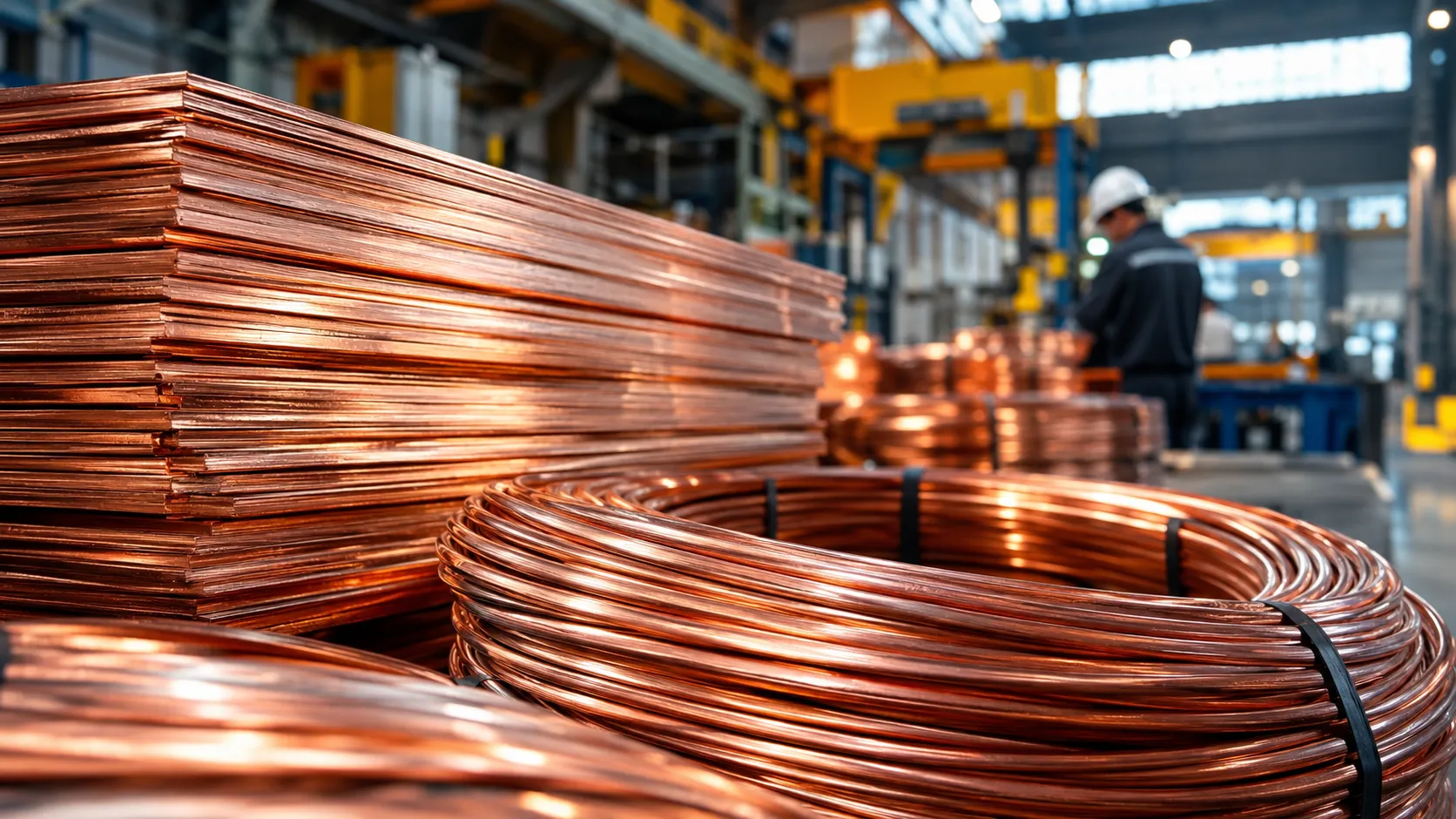
Shanghai inventories tighten the physical market
Benchmark copper on the London Metal Exchange reached $14,783 per tonne in the latest Friday trading session, marking a sixth consecutive gain. Nabz Gheymat reported that the closing price was 0.8% higher than the previous day and remained close to historical highs. The rally is increasingly being linked to constraints in the physical supply chain rather than solely to short-term financial-market positioning.
Refined copper stocks in Shanghai warehouses fell to 43,900 tonnes in the latest week, their lowest level since 2023, according to Nabz Gheymat. Inventories registered with the Shanghai Futures Exchange have declined by about 70% since early June. The drawdown indicates that more imported copper is moving directly to factories instead of remaining in exchange warehouses. Cash copper in Shanghai has also traded at a wider premium to futures, signalling stronger demand for metal available for immediate delivery.
Purchasing ahead of China’s October 1-7 holiday has added to near-term demand as industrial consumers bring forward raw-material procurement. On the supply side, scheduled maintenance at some refineries during October and November could further constrain short-term availability. The combination leaves traders focused on whether Shanghai stocks can recover after the holiday or whether factories will continue absorbing incoming material.
Industrial buyers face higher input costs
The consequences extend across power infrastructure, construction, automotive production, household appliances and industrial equipment. Wire and cable manufacturers are among the first to feel a copper price increase because the metal represents a substantial share of their raw-material value. Producers must either raise selling prices, accept narrower margins or renegotiate supply terms, particularly when existing customer contracts are fixed or long-term.
Electrical grids remain a central source of demand through copper wiring, cables and related equipment. The source cites the International Energy Agency’s Critical Minerals Outlook 2026 as identifying copper among the metals expected to record the largest long-term increases in demand volume. The agency also forecasts 3.6% growth in global electricity consumption in 2026, with industry, electric vehicles and data centres among the main drivers.
For upstream miners and refined-copper producers, elevated international prices can increase revenue where sales are linked to global benchmarks. The benefit is not automatic: profitability also depends on energy, labour, transport and processing costs. Reports of risks to output at major mines and the possibility of lower mined supply in 2026 add another layer of uncertainty, although high prices may also encourage producers to release more metal.
Dollar strength remains a counterweight
A stronger US dollar and higher US interest rates normally pressure industrial metals by increasing the cost of dollar-denominated commodities for international buyers. So far, tight physical availability has offset much of that pressure. The market nevertheless remains vulnerable to a recovery in supply, weaker Chinese purchasing or additional producer sales near record prices. Industrial consumers therefore face both a high benchmark price and uncertainty over prompt availability, while traders must monitor Shanghai inventories, refinery maintenance and post-holiday buying before judging whether the six-session rally can continue.