Conflict, Drought and Shipping Disruption Deepen Yemen’s Food Import Crisis
Military escalation, drought and disruption at Mokha port are increasing pressure on Yemen’s import-dependent food supply. Bab el-Mandeb transit has fallen 24% from pre-escalation levels, while higher shipping, insurance, fuel and internal trade costs are pushing up staple prices.
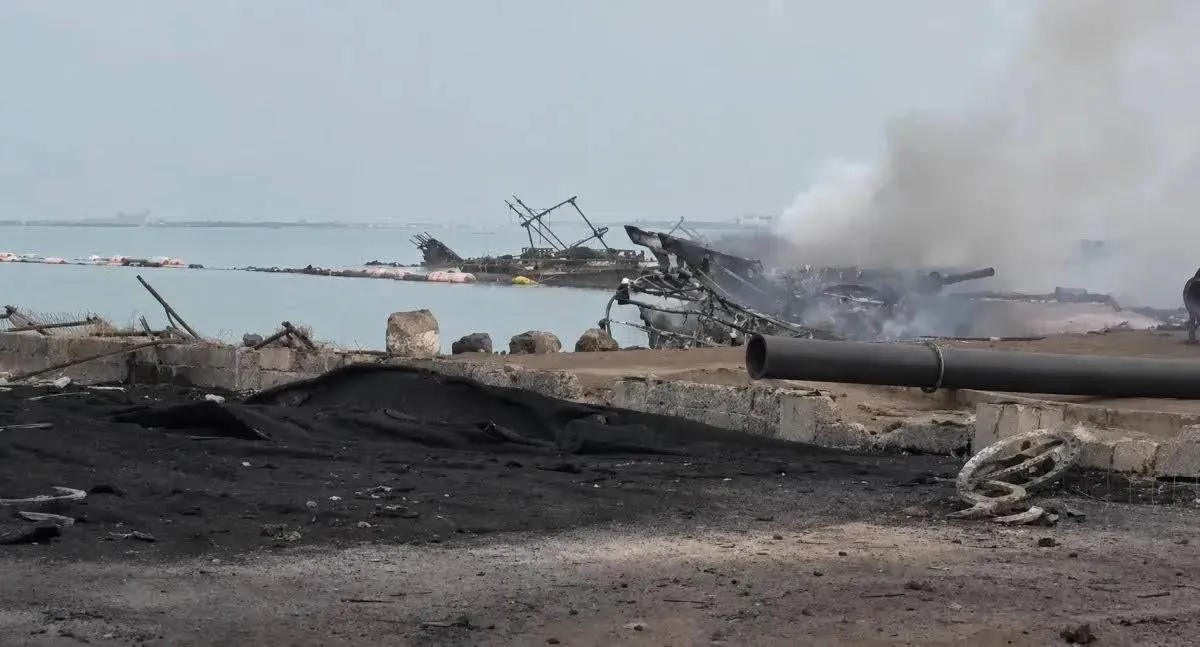
Military escalation, drought and mounting transport costs are intensifying Yemen’s food security crisis, with disruption at Mokha port adding another constraint to an economy heavily dependent on imported food. Asharq Al-Awsat, citing an updated outlook from the Famine Early Warning Systems Network, reported that four governorates are now one classification below famine.
The network expects disrupted trade routes and continued fighting to keep pressure on both commodity availability and prices. Attacks on Mokha port have interrupted commercial operations and supply chains, increasing the risk that food deliveries will be delayed or diverted through more expensive routes.
Bab el-Mandeb traffic declines
Transit through the Bab el-Mandeb Strait has fallen 24% compared with levels before the escalation, according to the early warning network. Traffic by major oil tankers has declined 42%. Reduced vessel movements are raising transport risks and contributing to higher shipping and insurance costs for goods bound for Yemen.
These increases have an outsized effect because Yemen relies heavily on imports to meet its food needs. Higher imported fuel prices also feed into domestic transport, electricity and commercial operating costs, extending the impact beyond cargo arriving at ports.
Liquidity constraints, electricity outages and costly fuel are expected to impede business operations, according to the report. The resulting pressure on employers could further reduce labor demand and household income at a time when poor families are already struggling to cover essential purchases.
Food basket costs rise across southern markets
Food and Agriculture Organization data cited by Asharq Al-Awsat showed that the cost of a basic food basket in the benchmark Aden market rose 5% in June compared with February, before the regional escalation was implemented. The largest increases were recorded in Abyan, Taiz and Shabwa, where basket costs climbed 10%, 8% and 7%, respectively.
Recent market data were unavailable for Houthi-controlled areas. Local media nevertheless reported further increases in the prices of wheat flour, sugar, rice, canned food and cooking oil. The reported price of a liter of cooking oil rose 24% from the beginning of the month.
Domestic levies are adding to these pressures. In mid-July, the Houthis imposed a new charge of 5,000 Yemeni rials on each bag or carton and raised customs duties on wheat flour entering from government-held areas through the Al-Rahida land crossing in Taiz by 400%, according to Asharq Al-Awsat. The group applies an exchange rate of about 535 Yemeni rials to the dollar.
Emergency conditions expected in four governorates
The early warning network expects Emergency conditions, Phase 4 of the five-level Integrated Food Security Phase Classification, to persist in Hodeidah, Hajjah, Taiz and Amran. Other governorates are expected to remain in Crisis, with pockets of households also facing Phase 4 conditions.
Fighting reached its highest level of the year during June and July, involving missiles, drones, direct clashes and artillery fire, the network said. Displacement increased particularly in Al Jawf, Hodeidah and Taiz, which together accounted for more than 19% of all displacement recorded in Yemen during July.
Drought is compounding the damage by weakening livelihoods and employment opportunities. Yemen’s water and environment minister, Tawfiq Al-Sharjabi, called for a shift from post-disaster response toward early action based on forecasting data and warning systems. The civil aviation and meteorology authority is preparing a specialized center to monitor climate indicators and anticipate drought and flooding, while the World Food Programme said anticipatory efforts would also seek to deliver humanitarian services to vulnerable communities on time.
For food traders and humanitarian suppliers, the immediate outlook is defined by overlapping risks: constrained port operations, more expensive maritime transport, higher domestic fees, fuel inflation and weaker purchasing power. Any further disruption to the Bab el-Mandeb corridor or commercial access to western Yemen would increase the risk of shortages and additional price rises.