Colombia Simplifies EU Access for Biscuits and Other Composite Foods
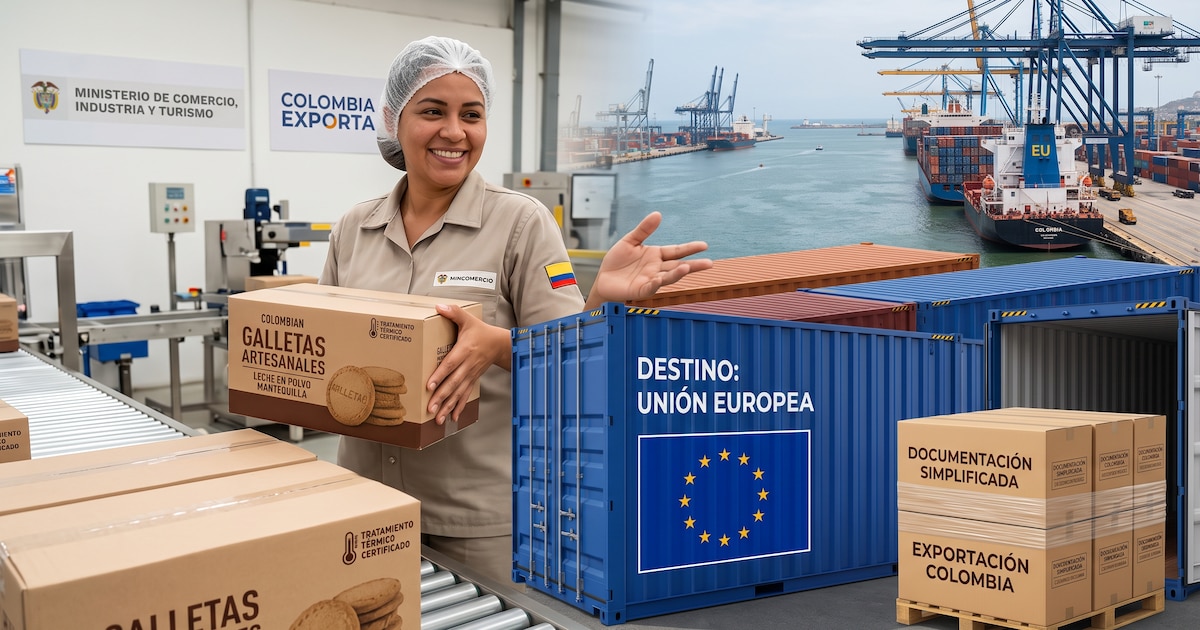
Colombian manufacturers may now use supplier certificates to document prior heat treatment of certain dairy ingredients in composite foods exported to the European Union. The change avoids duplicate processing while preserving EU sanitary and origin requirements.
Supplier certificates can prove prior treatment
Colombian manufacturers of biscuits and other composite foods will have a simpler route for demonstrating compliance with European Union sanitary requirements. Under an adjustment reported by Infobae, exporters may use certificates issued by their suppliers to prove that certain dairy ingredients received the required heat treatment before arriving in Colombia.
The procedure covers ingredients such as milk powder, butter and whey. It applies when these inputs originate in an EU member state or the United States and meet the sanitary conditions required for their entry and use. Colombian companies will therefore be able to rely on documented treatment performed abroad instead of repeating the process locally.
Sanitary and origin rules remain in force
The change does not remove European sanitary controls or rules of origin. Before shipment, exporters must provide the supplier’s certificate identifying the heat treatment applied to the ingredient. They must also submit documentation that allows the authorities to verify the ingredient’s origin and compliance with the relevant sanitary requirements.
This distinction is important for composite foods, which combine ingredients of different types and are subject to specific EU entry conditions. The adjustment changes the method used to demonstrate that eligible dairy inputs have already been treated; it does not lower the health standards applying to the finished goods. Products made with ingredients that fall outside the stated origin and compliance conditions will not qualify through this route.
Lower operational burden for Colombian producers
Biscuits containing milk powder, butter or whey are among the products expected to benefit. Removing duplicate treatment can simplify production planning and export preparation for manufacturers that already source compliant ingredients from approved markets. Documentation will become central to the process, making traceability and coordination with suppliers particularly important before goods are shipped.
Colombia’s Ministry of Commerce, Industry and Tourism presented the adjustment as part of its effort to facilitate exports and broaden access to international markets. Minister Mauricio Gómez Amín said eliminating duplicated procedures would make it easier for Colombian companies to reach new markets, grow and generate opportunities. According to the ministry, Colombian exports of composite products to the EU currently represent a trade flow of about US$5 million. The new procedure does not guarantee an increase in sales, but it removes an operational obstacle for producers seeking to compete in the European market.
Full market analysis