Cocoa smuggling through N'Zérékoré pressures Côte d'Ivoire's industry
Cocoa moving from Côte d'Ivoire toward Guinea and Liberia through the N'Zérékoré corridor is weakening the country's regulated supply chain. The illicit flows threaten official export volumes, complicate crop accounting and may undermine the pricing system in the world's largest cocoa-producing country.
N'Zérékoré emerges as a regional smuggling hub
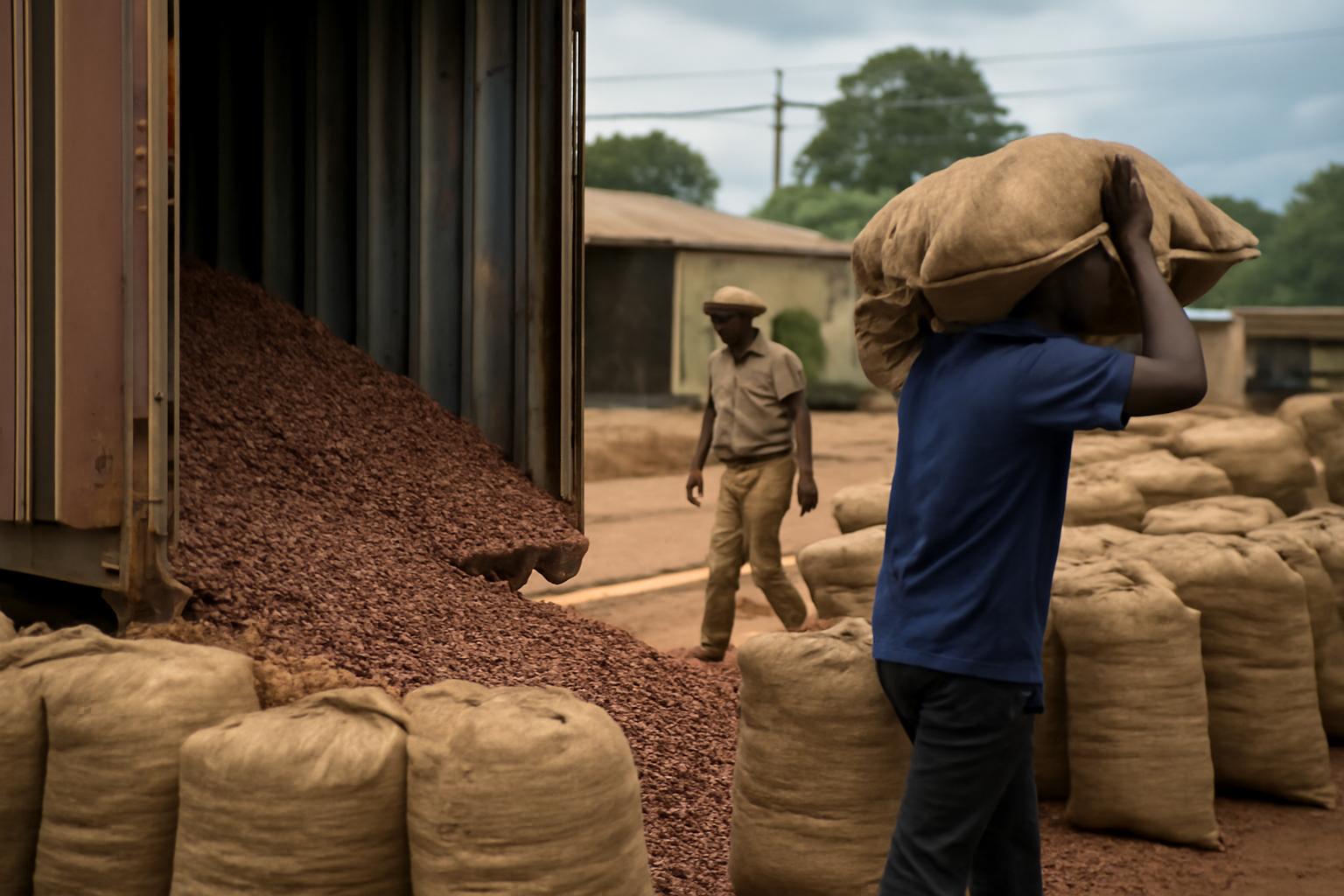
Cocoa smuggling from Côte d'Ivoire toward neighboring Guinea and Liberia is raising concern across the Ivorian industry. N'Zérékoré, a city in southeastern Guinea, has emerged as a central point in the illicit corridor. Cocoa leaving Côte d'Ivoire outside regulated channels can pass through this area before entering alternative commercial networks.
The flows affect the world's largest cocoa-producing country at a sensitive point in its supply chain. Côte d'Ivoire's position in the global market depends not only on the size of its harvest but also on the state's ability to register purchases, supervise quality and channel beans through official exporters. Every shipment diverted across a land border reduces the volume visible to regulators and licensed market participants.
Official crop and export data come under pressure
Smuggling creates a gap between cocoa harvested inside Côte d'Ivoire and the crop delivered through its official system. That makes production estimates harder to reconcile with port arrivals and recorded exports. Exporters, processors and market analysts may consequently have a less reliable view of the amount of cocoa available for shipment or domestic processing.
The destination of the beans also matters. Cocoa entering Guinea or Liberia may be recorded as part of those countries' trade flows even if it was grown in Côte d'Ivoire. This can distort the regional picture of production and exports while reducing Côte d'Ivoire's declared supply. Without dependable origin records, buyers also face greater difficulty tracing beans through the supply chain.
Parallel trade challenges regulated pricing
The illicit corridor can weaken Côte d'Ivoire's pricing arrangements by allowing beans to bypass the domestic purchasing system. Producers and intermediaries may turn to cross-border buyers when the terms offered outside official channels appear more attractive. The result is direct competition between regulated purchasing and a parallel market that does not carry the same compliance burden.
For licensed exporters and processors, the immediate risk is tighter access to beans even when cocoa has been harvested in their sourcing regions. Lower deliveries can leave commercial operators competing for a smaller officially recorded pool. The effect is not limited to exporters: processors relying on local supply may also face uncertainty over throughput and raw-material availability.
Enforcement must extend beyond the border
Border controls alone may struggle to contain a trade organized around multiple routes and intermediaries. Effective oversight requires attention to the earlier stages of the chain, including local purchasing, transport and the movement of cocoa toward frontier areas. Coordination with Guinea and Liberia is also relevant because N'Zérékoré connects the smuggling issue to a wider regional market.
The central challenge for Côte d'Ivoire is to keep domestically produced cocoa inside a system that can document origin, quality and export volumes. Persistent leakage would weaken the information used by authorities, traders and investors to assess the crop. It would also leave compliant companies carrying regulatory costs while competing with operators outside the formal market.