Cocoa Prices Under Pressure as Ivory Coast Supply Accelerates and ICE Inventories Stay High
Global cocoa quotations are declining as beans arrive faster from Ivory Coast and stocks in ICE-certified warehouses remain elevated, Bisnis.com reported. The combination erodes the scarcity premium that carried the market through two seasons and shifts pricing power toward grinders and buyers.
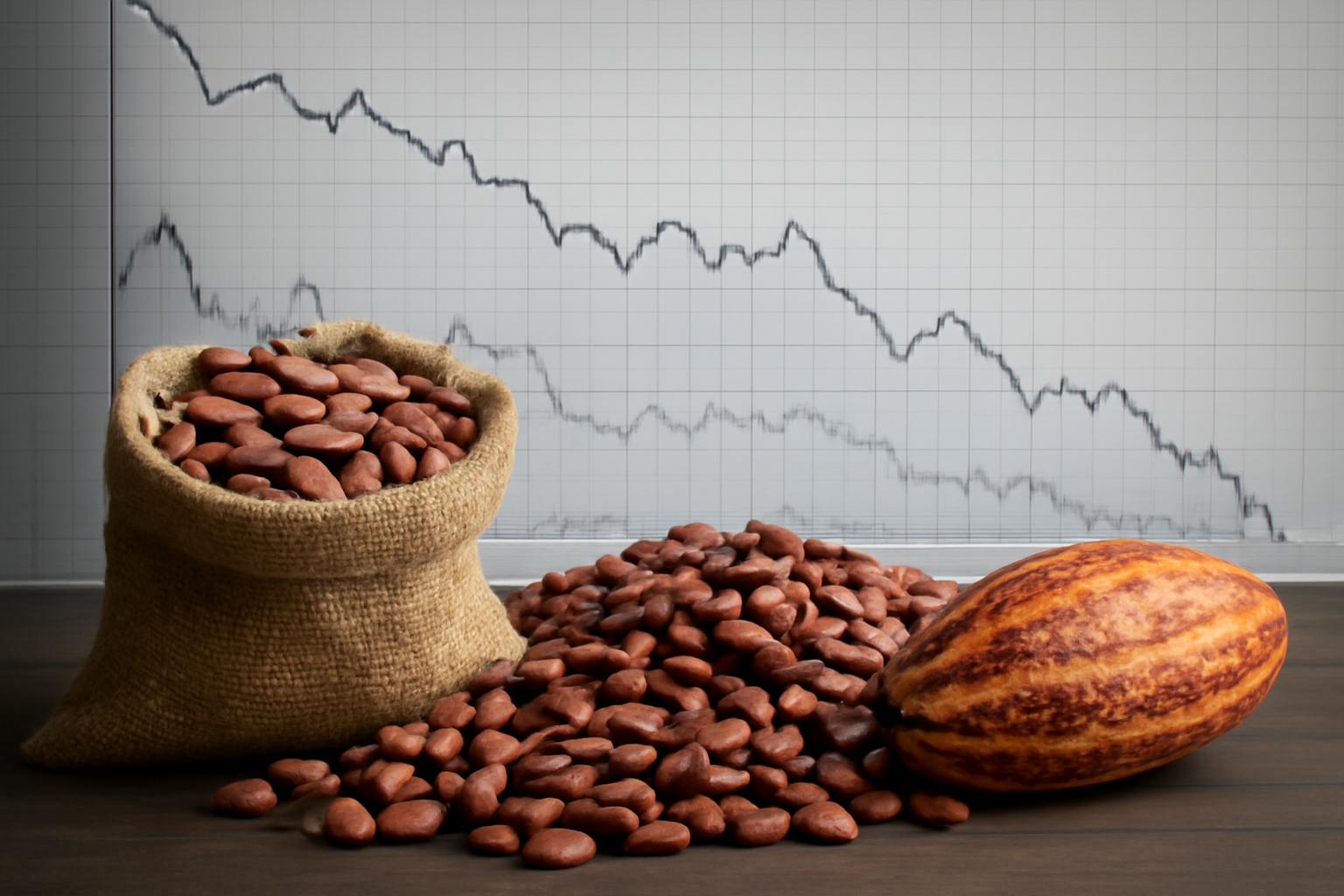
Cocoa prices on world markets are under pressure as supply from Ivory Coast accelerates and stocks held in ICE-certified warehouses remain high, Indonesian business publication Bisnis.com reported. The two forces point the same way: the physical scarcity that drove cocoa to record levels over the past two seasons is easing, and pricing power is moving back toward buyers.
Arrivals from the world's largest producer set the tone
Ivory Coast is the world's largest cocoa producer, and the pace at which beans reach the ports of Abidjan and San Pedro is the physical market's earliest and most closely watched indicator. Bisnis.com identified the jump in Ivorian supply as the main factor weighing on global quotations. Traders read cumulative arrivals against the same point in the previous season; when the current pace runs ahead, exporters and grinders stop chasing beans and lower their bids for nearby shipment.
Timing amplifies the effect. The West African main crop is harvested from October through March and accounts for the bulk of annual output, so an early run of heavy arrivals reshapes expectations for a whole season rather than for a single month. A faster flow also eases the logistical problems that accompany short crops, including port bottlenecks, deferred deliveries and renegotiated contracts, which restores confidence that origin sellers can perform on what they have already sold.
Exchange inventories reinforce the move
The second leg of the decline is visible stock. ICE certified inventories, meaning cocoa graded and stored in exchange-approved warehouses in the United States and Europe, are the market's buffer of last resort and the only supply figure the trade can verify daily. Bisnis.com pointed to elevated exchange stocks as the second source of pressure on prices.
High certified inventories change the shape of the futures curve. When beans are readily deliverable against the front contract, backwardation narrows or disappears and the penalty for holding physical stock falls. That removes one of the strongest arguments behind the rally, namely that any buyer needing beans quickly had to pay a premium to secure them. It also encourages producers, cooperatives and merchants to hedge forward while values remain historically high, which adds selling into an already falling market.
What cheaper beans mean along the chain
The move is not uniformly negative. Lower raw material costs redistribute margin along the value chain rather than destroy it.
- Grinders and processors: bean cost dominates processing economics, and cheaper raw material widens combined margins, the condition plants need before lifting utilisation.
- Chocolate manufacturers and importers: relief arrives with a lag, because manufacturers buy forward and consumer prices are reset on annual or seasonal cycles.
- Producing countries: Ivory Coast fixes a farmgate price for each season, so a falling world price is absorbed first by exporters and by state marketing arrangements rather than by the posted price paid to farmers.
- Origin exporters and traders: falling prices reduce the working capital and margin calls tied to hedging, but squeeze anyone holding unsold physical bought at higher levels.
What the market watches next
Direction from here depends on whether the current pace of arrivals holds. A strong opening to a harvest is not the same as a large crop, and if the flow tails off, the same weekly data that is bearish today turns supportive. Dry-season weather in West Africa, the trajectory of ICE certified stocks and quarterly grindings published by regional cocoa associations are the checkpoints that will confirm or contradict the current move.
The Bisnis.com report did not quantify the increase in Ivorian supply, the level of exchange inventories or the size of the price decline.