Cocoa price crash puts Ghanaian and Ivorian growers under severe pressure
Cocoa growers in Ghana and Ivory Coast are confronting a reported 75% price decline. The shock threatens farm incomes and creates fresh uncertainty for producers, traders and global chocolate supply chains.
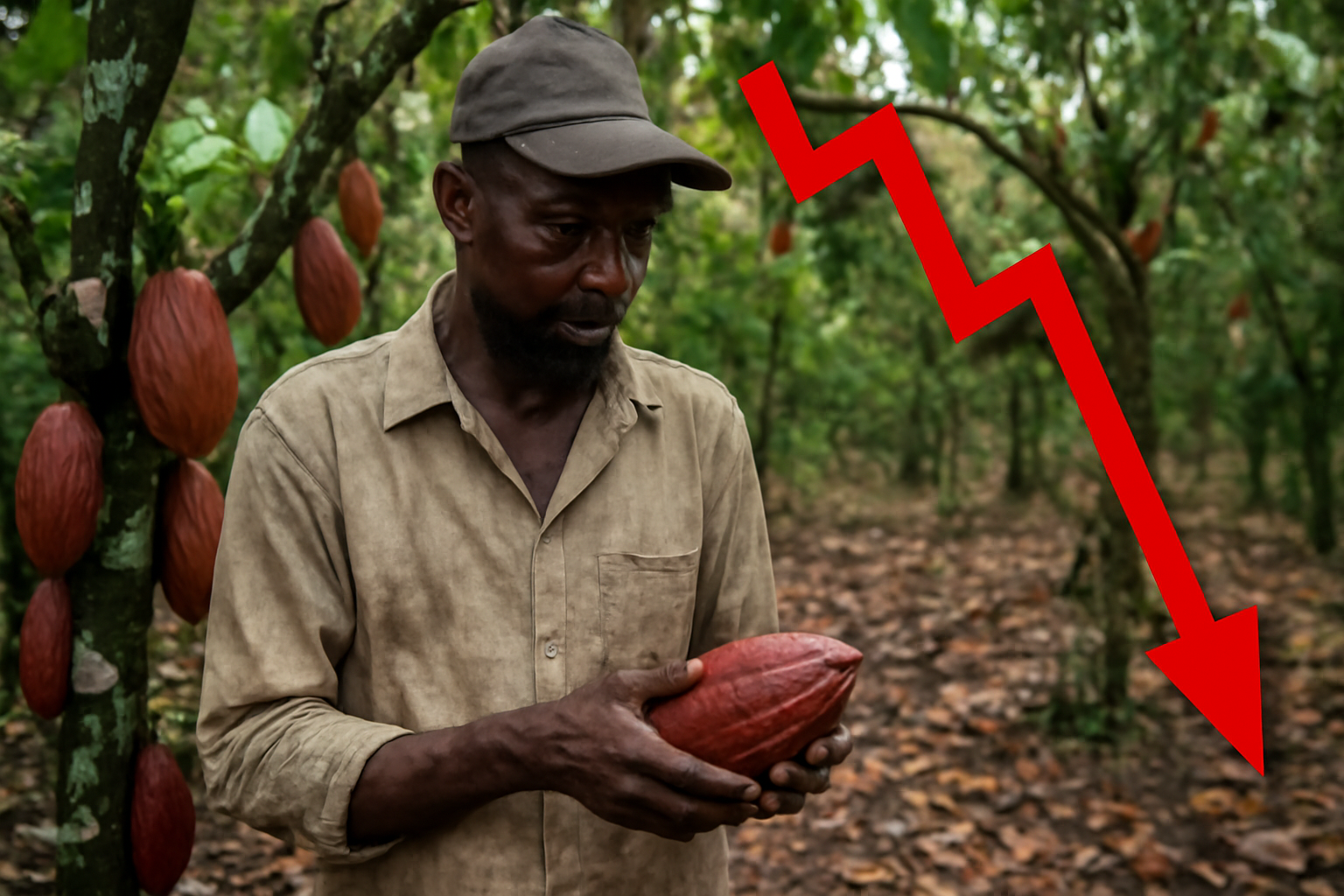
A sharp reversal for cocoa growers
Cocoa farmers in Ghana and Ivory Coast are facing a severe market shock after the price of their crop reportedly fell by 75%. Mix Vale described the situation confronting growers in the two West African countries as an unprecedented crisis for the sector.
The scale of the reported decline matters directly at farm level. Unless it is offset by higher output or other support, a 75% fall in the price received for cocoa means substantially less revenue from the same quantity of beans. That puts pressure on growers’ ability to cover production costs and finance the next crop.
The available report does not specify the reference price, the period over which the decline occurred or whether the quoted movement applies to international contracts, local purchasing prices or another market measure. Those distinctions are important because farmers may not receive the same price observed in international trading.
Pressure moves through the supply chain
Ghana and Ivory Coast are central to the story because the price shock is affecting growers in both countries at the same time. The immediate impact falls on producers, but uncertainty can spread to local buyers, processors, exporters and companies that depend on a stable flow of cocoa beans.
For traders and processors, a rapid price decline can complicate purchasing decisions and the valuation of inventories acquired at different prices. Farmers, meanwhile, may delay sales if they expect a recovery, while buyers may remain cautious if they expect prices to weaken further. The source material does not provide evidence that either response has already occurred, but both are practical risks following a fall of this magnitude.
The effect on chocolate manufacturers is not necessarily identical to the effect on farmers. A lower bean price may reduce the cost of new purchases, but supply contracts, inventories and processing arrangements can delay or alter how market movements reach manufacturers. The report provides no data on retail chocolate prices or company margins.
Supply outlook depends on the farm response
The longer-term issue is whether lower returns change production decisions in Ghana and Ivory Coast. When growers earn less from the same crop, they have less cash available for farm maintenance, inputs and investment. If that pressure persists, it may affect future availability even if buyers initially benefit from cheaper beans.
Key details remain unresolved, including how long the lower price will last and what measures, if any, industry participants or national authorities may take. Producers, exporters and chocolate companies will therefore need to watch both local purchasing conditions and the response of growers. The reported 75% collapse is already a major income shock; its significance for global cocoa supply will depend on its duration and how deeply it changes farm-level decisions.