Coal remains Kazakhstan’s largest energy source with a 48% share
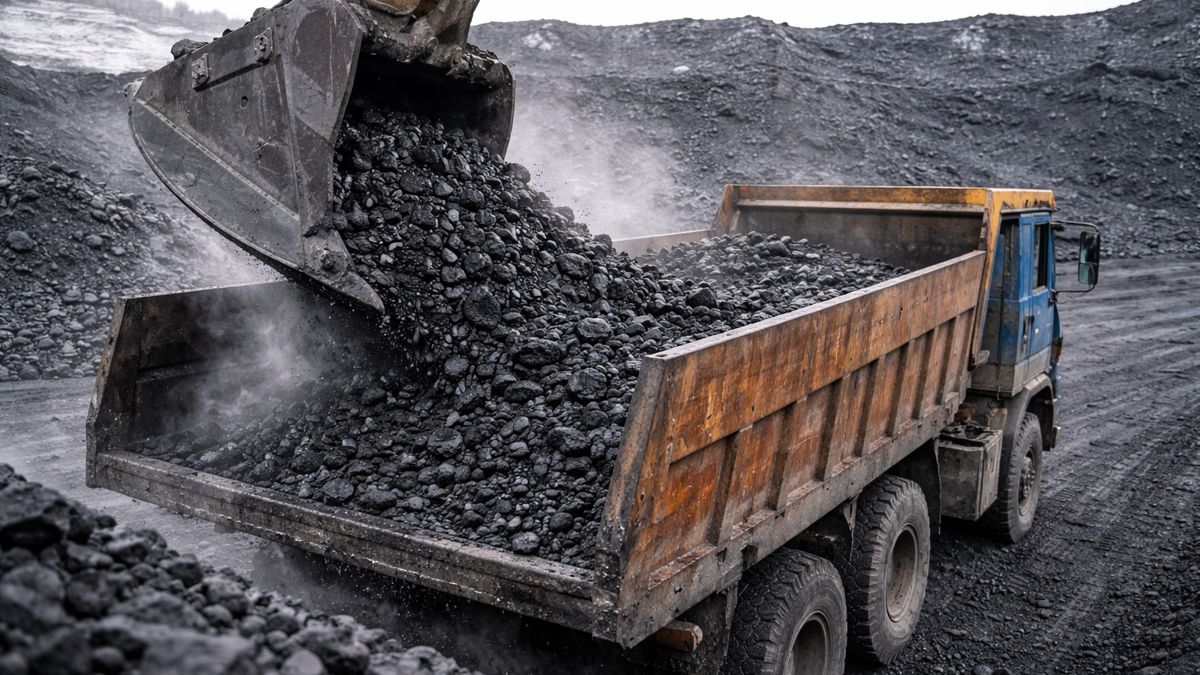
Coal accounts for about 48% of Kazakhstan’s total energy supply, ahead of natural gas at 26.2% and oil at 23.9%. The concentration underscores the continuing importance of coal infrastructure and the scale of investment required to diversify the country’s energy mix.
Fossil fuels dominate Kazakhstan’s energy mix
Coal remains the largest single source in Kazakhstan’s energy system, accounting for about 48% of total energy supply, National Business Kazakhstan reported. Natural gas represents 26.2% and oil contributes 23.9%, leaving only a small portion of the country’s energy balance to low-carbon sources.
Hydropower accounts for around 1.1%, while other renewable sources provide approximately 0.8%. Taken together, coal, natural gas and oil therefore supply more than 98% of the energy mix. The figures were highlighted by energy analyst Abzal Narymbetov after his review of data from the Energy Institute Statistical Review covering major global markets in 2026.
Kazakhstan resembles other coal-heavy Asian markets
Kazakhstan ranks as the world’s 29th-largest energy market by volume, according to Narymbetov. Its reliance on coal places its energy profile closer to those of China and India than to the systems of the United States or Russia. Coal represents 56.9% of China’s energy mix and 59% of India’s, compared with Kazakhstan’s approximately 48%.
Other large markets show markedly different structures. The United States is oriented toward oil, with a share of 38.8%, and natural gas, at 35.1%. Gas accounts for 55.4% of Russia’s mix and 69.5% of Iran’s. Saudi Arabia obtains 99% of its energy from oil and gas. South Korea has the highest nuclear share among the markets cited, at 15.5%, while hydropower exceeds 10% of Canada’s energy balance.
Coal demand remains embedded in existing infrastructure
The composition of Kazakhstan’s energy supply has direct implications for fuel producers, power companies and infrastructure investors. With coal providing almost half of the system’s energy, mines, rail logistics and coal-consuming facilities remain central to energy security. Any rapid reduction in coal use would require replacement capacity as well as investment in grids, flexible generation and dependable fuel or power supplies.
The limited shares of hydropower and other renewables show the distance between the current mix and a more diversified system. National Business Kazakhstan also previously reported that the country had launched a unified digital system for monitoring coal deliveries. The platform is intended to improve transparency across coal-market processes. For suppliers and industrial consumers, closer monitoring may provide better visibility over deliveries, although the available source material does not specify implementation results or investment requirements.