Coal prices fall for fifth session as weaker Chinese demand clouds Indonesia’s export outlook
Coal closed at US$142.35 per tonne on September 21, down 0.63% and extending its decline to five consecutive sessions. Cautious Chinese buying and weak steel demand are pressuring the market, while slowing thermal-coal imports could weigh on Indonesian export revenue.
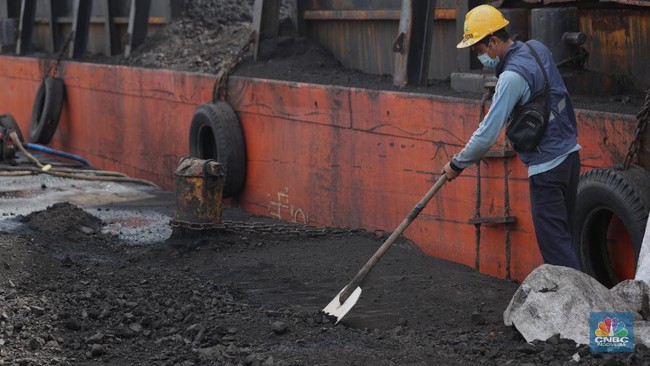
Coal records a fifth consecutive decline
Coal prices extended their retreat on Monday, September 21, 2026, adding pressure to the outlook for Indonesia, the world’s largest coal exporter. CNBC Indonesia, citing Refinitiv data, reported that coal settled at US$142.35 per tonne, down 0.63% during the session. The movement marked a fifth consecutive trading day of losses.
The decline comes as Chinese buyers remain cautious and demand from the country’s steel industry has yet to strengthen. Conditions in China matter directly for Indonesia because the country is one of the principal buyers of Indonesian coal. A sustained reduction in Chinese purchasing would affect both export volumes and the prices received by Indonesian producers.
The market is not facing uniformly bearish conditions. Supply remains tight in parts of China, while steel mills are rebuilding inventories before the October 1-7 National Day holiday. These factors have limited the depth of the decline, but they have not been strong enough to reverse the broader downward trend.
Steel margins restrain coking-coal purchases
Chinese coking-coal prices are under pressure as steelmakers restrict raw-material purchases. Weak steel demand and compressed producer margins are encouraging mills to buy selectively, even as the holiday period approaches. CNBC Indonesia reported that low-sulfur coking coal in Linfen was priced at about 2,550 yuan per tonne on September 16.
Restocking by steel plants is providing temporary support. However, the strength and duration of that demand will depend on whether steel margins recover after the holiday. If profitability remains weak, mills may again reduce purchases once their immediate inventory requirements have been met.
Supply constraints offer a counterweight. Production recovery in major mining regions such as Shanxi remains limited because of safety and compliance inspections. Restricted mine output can prevent a sharper fall in domestic coking-coal prices, but it does not remove the demand risk created by subdued steel consumption.
China’s import pace is set to slow
China’s seaborne thermal-coal imports are projected at 270-290 million tonnes for 2026. Imports reached 187.2 million tonnes between January and August, according to the figures cited by CNBC Indonesia. Meeting the main projection would require average monthly imports of roughly 21-26 million tonnes from September through December, below the July-August average of 25.3 million tonnes.
A stronger purchasing scenario could lift full-year imports to 300-315 million tonnes, but that is regarded as an upside case rather than the central forecast. For Indonesian miners and exporters, the distinction is material: the main scenario points to softer monthly demand from a key customer, increasing competition for cargoes and limiting revenue support from export prices. Tight Chinese supply and pre-holiday restocking may cushion the market in the short term, while the post-holiday buying pattern will provide a clearer signal for the final months of 2026.