Coal benchmark reaches $151.05 as Indonesian supply tightens and Russian exports lose ground
The benchmark coal price rose 1% to $151.05 a tonne on October 5, extending a four-session gain to 3.2%. Lower Indonesian exports and stronger coal-fired generation support the market, while transport costs and Chinese tariffs weaken Russian suppliers.
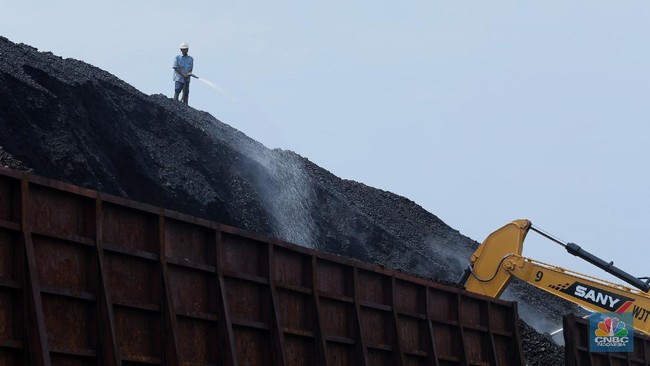
Benchmark extends four-session rally
The benchmark coal price closed at $151.05 a tonne on Monday, October 5, up 1%, according to CNBC Indonesia, citing Refinitiv. The increase extended its advance over four consecutive sessions to 3.2% and produced the highest close since September 8, bringing the market close to a one-month high.
The rise reflects tightening supply from Indonesia, the world’s largest exporter of thermal coal. Indonesian coal exports fell 9.3% year on year to 227.7 million tonnes between January and August 2026. CNBC Indonesia linked the decline to government production quotas, policy uncertainty and shipping disruptions associated with a strong El Niño event.
Gas disruption strengthens coal demand
Global coal demand is expected to reach a record in 2026 as disruption to gas supplies linked to the conflict in the Middle East raises the cost of liquefied natural gas. According to the International Energy Agency, higher LNG prices caused by disruption to shipping through the Strait of Hormuz have encouraged China, India, Japan, South Korea and parts of Europe to increase coal-fired power generation.
China’s thermal coal market has also strengthened. Restocking continues, although activity remains limited, while sellers are holding inventories in anticipation of tight supplies after the holiday period. Mine production is expected to recover gradually, limiting the volume of additional coal reaching northern Chinese ports.
Sxcoal data cited by CNBC Indonesia showed Australian coal with a calorific value of 5,500 kcal/kg offered at about $110 a tonne FOB, while Indonesian 3,800 kcal/kg coal was offered at approximately $77-$78 a tonne FOB. Indonesian sellers were increasingly reluctant to release available volumes. The CCI index for Indonesian 3,800 kcal/kg coal rose by $0.5 to $76.5 a tonne FOB and $88.5 a tonne CFR China. Australian 5,500 kcal/kg coal also gained $0.5 to $130.5 a tonne CFR China.
Russian suppliers face a cost disadvantage
Russian exporters are moving in the opposite direction despite the stronger international market. Russian coal shipments to China declined 10.8% year on year to 53.15 million tonnes in January-August 2026. China imported 310 million tonnes of coal in total during the period, including 78.39 million tonnes from Mongolia and 121 million tonnes from Indonesia, leaving Russia outside the leading group of suppliers identified in the report.
Mongolian coal benefits from lower overland transport costs and zero import duty in China. Coal from Mongolia, Australia and Indonesia enters at a zero tariff under free-trade arrangements, while Russian coal faces a Chinese import tariff of 3%-6%. Russian companies have reportedly offered discounts of about 10%, but deeper cuts could make exports unprofitable.
Logistics are adding to the pressure. The cost of shipping coal from Vostochny port to China rose 45.5% from the beginning of the year through September 11, and Russian rail freight tariffs were due to increase again in October. Demand for coal wagons is pushing costs higher, with thermal coal exports particularly exposed. Russian coking coal shipments to Turkey fell 30% in the first seven months of 2026, with no deliveries recorded in July. In the same month, coal shipments to ports in southern Russia dropped 33% from June. FISU said higher costs and price competition are making it harder for Russian companies to preserve market share, while Mongolia continues to expand deliveries to China.