CME to launch sorghum basis futures for Great Plains grain markets
CME Group expects trading in its new sorghum basis futures to begin on August 24, 2026, subject to regulatory review. The physically delivered CBOT contract will track the price difference between sorghum and corn and use a Kansas elevator network.
A contract for the sorghum-corn spread
CME Group plans to launch sorghum basis futures, giving growers, grain merchants, feed buyers and biofuel producers a dedicated instrument for managing changes in the price relationship between sorghum and corn. Trading is expected to begin on August 24, 2026, subject to regulatory review. The contracts will be listed by the Chicago Board of Trade and governed by CBOT rules.
The contract will reflect the difference between sorghum and corn prices rather than functioning as a stand-alone benchmark detached from the larger grain complex. Both crops are used in animal feed and as ethanol feedstock. CME said sorghum prices generally follow corn over longer macroeconomic cycles, but geopolitical events and regional supply changes can disrupt that relationship.
Premiums and discounts carry different signals
A sorghum premium over corn typically indicates that international demand is lifting sorghum values, according to CME. A deep discount can encourage domestic buyers to substitute cheaper sorghum into feed rations. That variability creates basis risk for Great Plains growers and elevators even when they already use corn futures to manage broad grain-price exposure.
The new contract is designed to isolate that spread. A producer expecting the sorghum premium to weaken could use the instrument to hedge the change, while an elevator, exporter, feed manufacturer or ethanol producer could take the opposite position according to its procurement exposure. The hedge would not remove production risk, local transportation costs or every difference between a farm’s cash bid and the deliverable market. Its usefulness will depend on how closely local prices follow the contract and whether trading develops enough depth for participants to enter and exit positions efficiently.
Kansas delivery network anchors the market
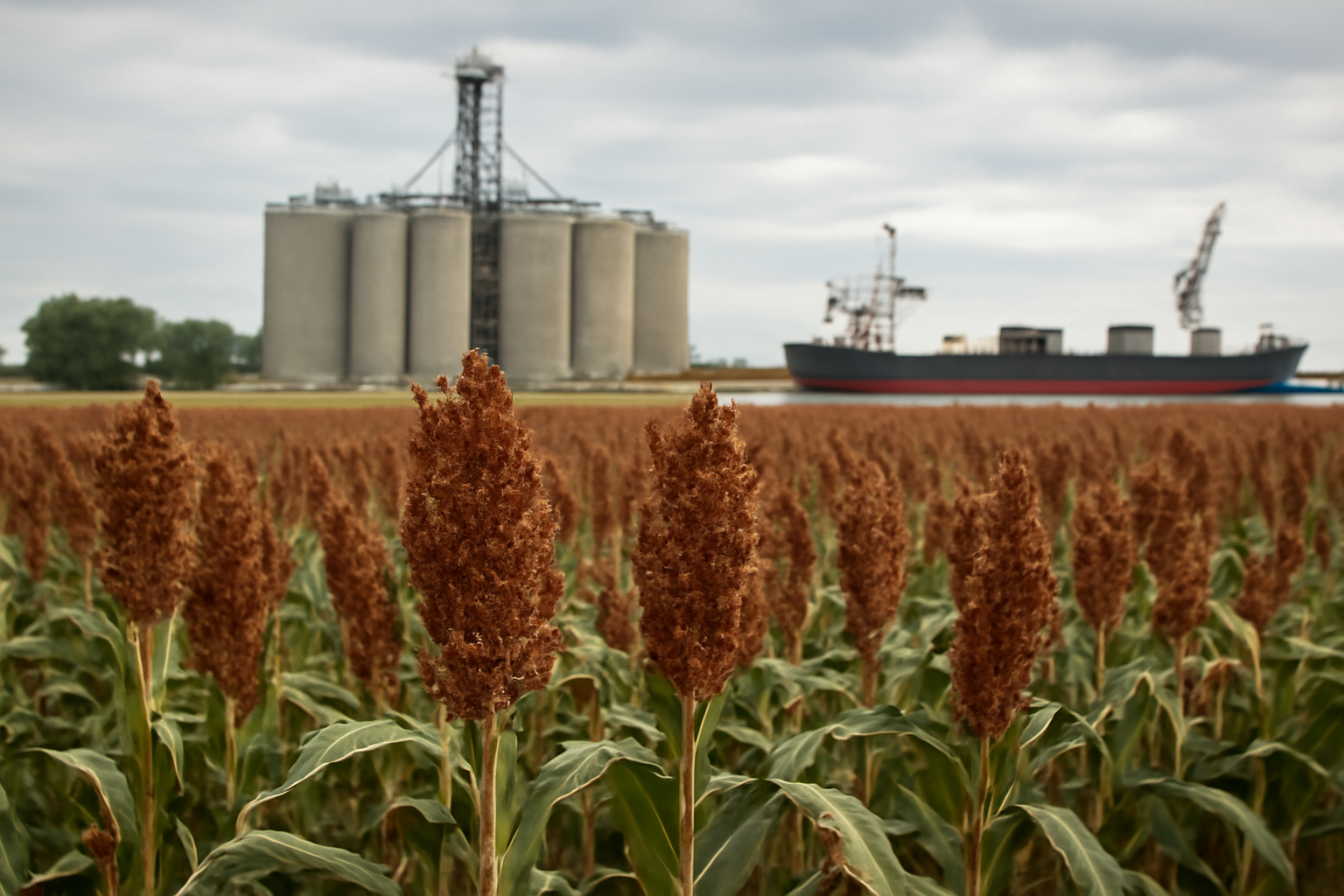
The futures will be physically delivered. Grain can be loaded by truck or rail from a network of elevators in Kansas, the largest sorghum-producing US state, using the established Kansas City Hard Red Winter Wheat delivery system. That arrangement gives the contract an existing logistical framework, but it also places the deliverable market firmly in Kansas. Growers and buyers elsewhere in the Great Plains will need to assess freight differentials and the relationship between their local basis and the Kansas delivery points.
Liquidity is the central commercial test. CME reported record agricultural volume of 2.1 million contracts in the second quarter of 2026. Corn futures and options reached record open interest of 4.1 million contracts during the quarter, while quarterly volume was the second highest on record at 695,000 contracts. Those figures show the scale of the surrounding agricultural derivatives market, but they do not guarantee activity in a new sorghum product. Participation by elevators, merchants, exporters and end users will determine whether bids and offers become sufficiently continuous for growers to use the contract at practical transaction costs.
Implications for growers and grain buyers
For sorghum producers, the contract could separate two decisions that have often been combined: hedging the general direction of grain prices through corn futures and managing the sorghum-specific premium or discount. For buyers, it could provide a clearer way to protect feed or processing margins when export demand, regional supplies or biofuel consumption move sorghum away from corn.
The instrument can improve price visibility without eliminating basis uncertainty. Physical delivery may help connect futures values to the cash market, while the Kansas network provides a defined convergence mechanism. However, concentrated delivery geography and initially uncertain liquidity could limit its relevance for some locations. The contract’s effect on growers’ bottom lines will therefore rest less on its launch than on sustained commercial use after August 24.