Citrus greening vector detected on Rhodes, prompting calls for tighter EU surveillance
The insect vector associated with citrus greening has been confirmed on the Greek island of Rhodes. Citrus exporters are urging the European Union to strengthen border surveillance as concern grows over Mediterranean production.
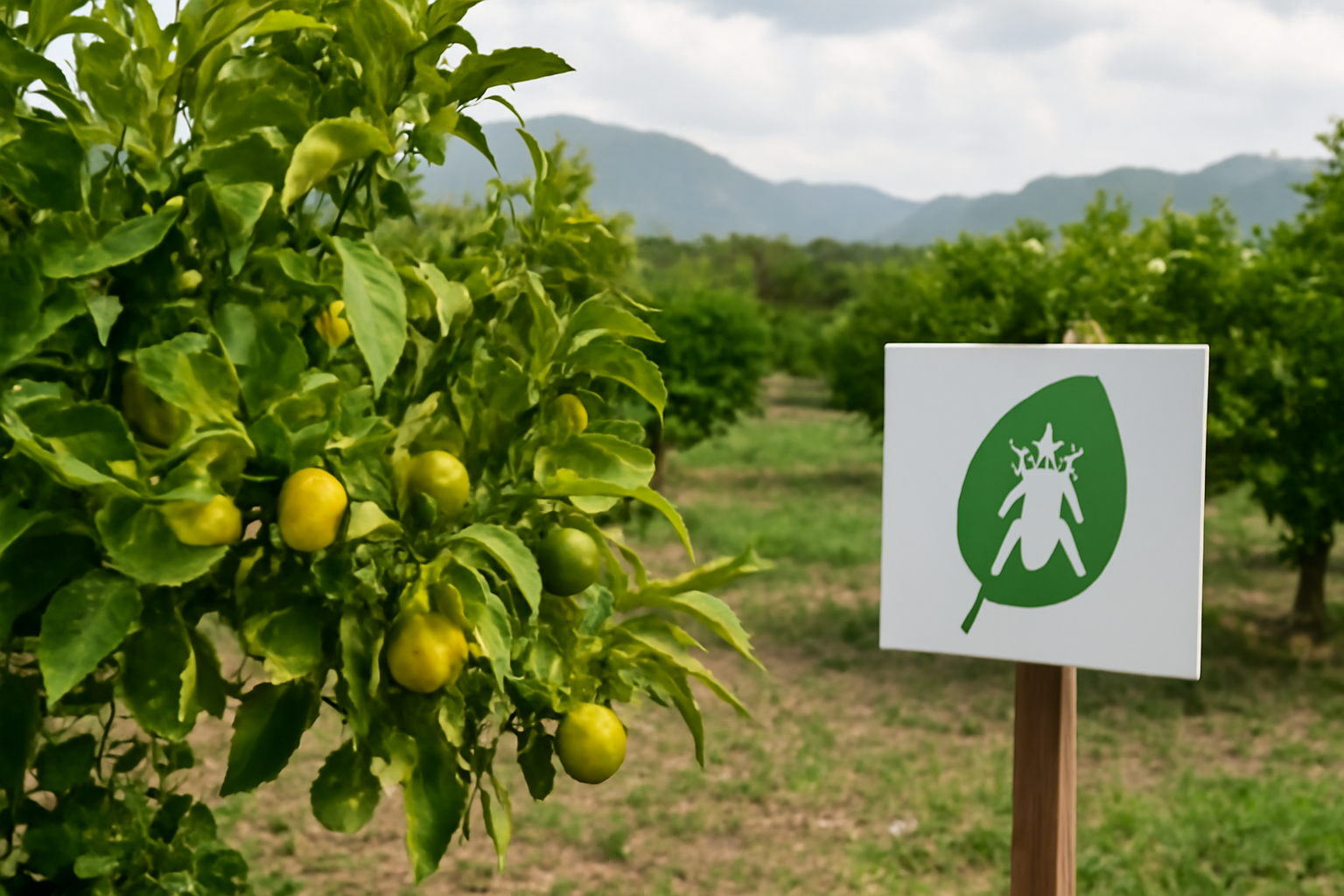
Vector reaches a Mediterranean citrus region
The insect vector associated with citrus greening, also known in Spanish as “dragón amarillo,” has been confirmed on Rhodes, according to El Periódico Mediterráneo. The detection places the organism on a Greek island in the Mediterranean and has prompted citrus exporters to call for an urgent strengthening of European Union border surveillance.
The available report confirms the presence of the insect rather than an outbreak of citrus greening itself. That distinction is important for producers and traders: a vector can create a pathway for transmission, but its detection does not by itself establish that local citrus trees are infected. No figures on affected orchards, production losses or trade disruption were provided.
Exporters seek stronger border controls
Exporters want the EU to intensify checks intended to prevent the pest from spreading farther into Mediterranean citrus-growing areas. Border surveillance can include scrutiny of plant material and other regulated goods capable of carrying agricultural pests, although the report does not specify which measures exporters have proposed or which routes are considered most exposed.
The call reflects the commercial importance of keeping plant-health threats away from production zones. Citrus growers, nurseries, packers and exporters depend on healthy orchards and predictable access to markets. The establishment of a disease vector can raise monitoring and containment requirements even before authorities confirm plant infections.
Rhodes also presents a geographic challenge. As an island, it offers a defined area for surveillance, but its position in the Mediterranean means movements of plants and goods require close attention. The source did not identify how the insect arrived, how widely it has spread on Rhodes or whether detections have occurred elsewhere in Greece.
Mediterranean industry faces a prevention test
For the wider citrus industry, the immediate issue is prevention rather than documented damage. Producers need information on the vector’s distribution, while exporters need confidence that phytosanitary controls can limit its movement. Importers and trading partners will also watch official findings because plant-health status can influence inspection requirements and market access.
The report provides no estimates for Mediterranean output at risk and identifies no changes to citrus prices, shipments or trade rules. It also does not report any orchard closures or eradication measures. Those gaps limit any assessment of the near-term commercial effect.
Further official surveillance will therefore be central to determining whether the Rhodes finding remains isolated. Confirmation of the vector has already shifted attention toward EU border controls, but the implications for production and trade will depend on subsequent evidence about its range and whether the citrus-greening pathogen is present.