CIESA bids $1.4 billion for Mexico's Altos Hornos de México as the steelmaker goes to auction
CIESA has put forward a $1.4 billion offer for Altos Hornos de México (AHMSA), the integrated steel producer currently up for sale. The amount is the only financial term made public, with no disclosure on debt treatment, financing or a timetable for restarting the mills. A closed deal would return integrated flat steel capacity to a market that has been importing in its absence.
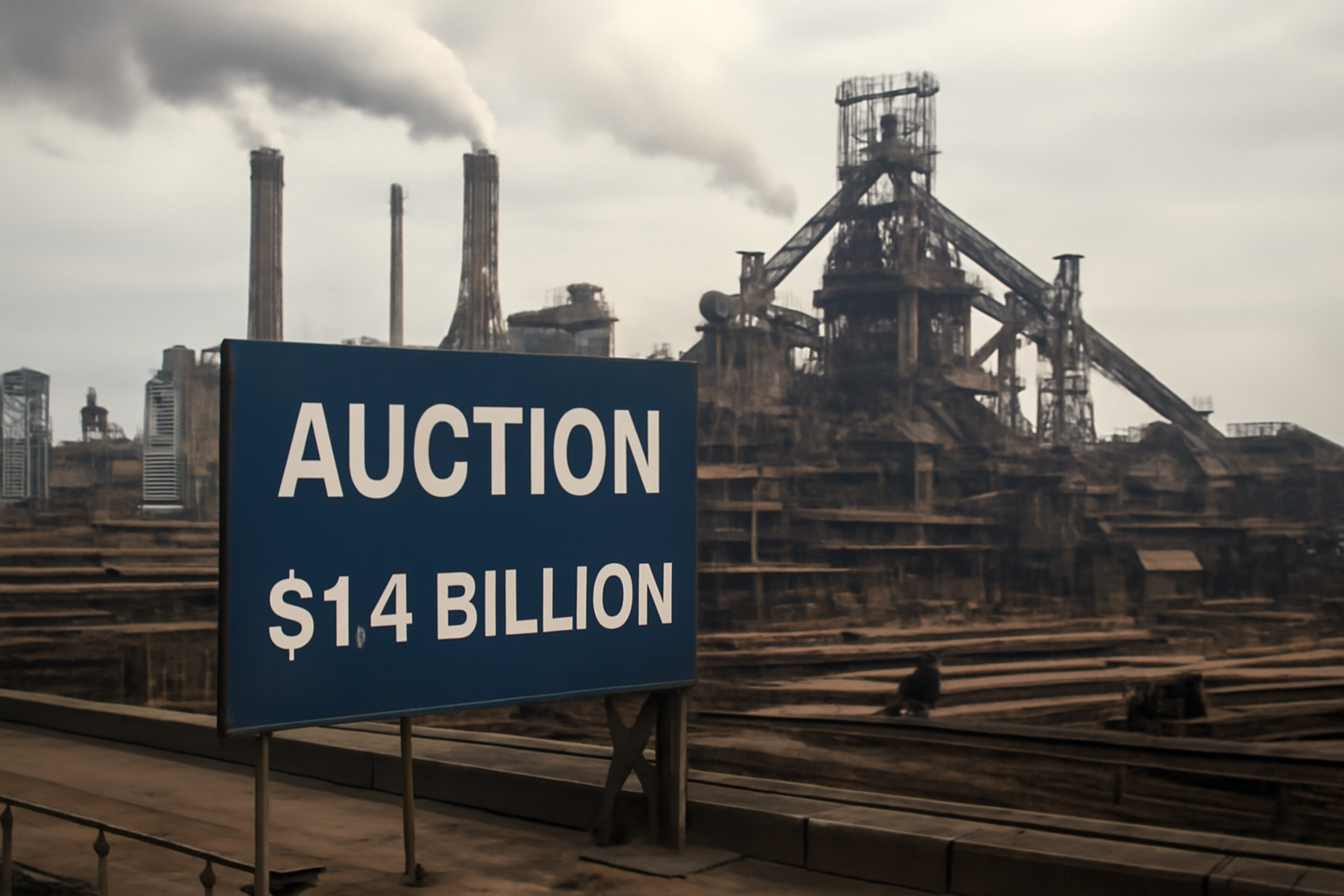
Altos Hornos de México (AHMSA), for decades one of the country's largest integrated steel producers, is the target of a purchase offer worth $1.4 billion from CIESA. The bid would end the company's time on the auction block and open a new stage for both AHMSA and Mexico's steel industry.
The $1.4 billion figure is the only financial term of the transaction that has been made public. Neither the payment structure, the treatment of AHMSA's debt, commitments on the workforce, nor a timetable for restarting the mills has been disclosed. What is clear is the binary nature of the outcome: AHMSA changes hands, or it does not, and each path carries consequences for a supply chain that runs from the Coahuila coal basin to steel buyers across northern Mexico.
A $1.4 billion bid for an asset that is not producing
The offer sets a reference price for a complex that is not currently making steel. In an auction of this type, the headline number is the entry ticket; the capital required afterwards to bring furnaces, coke batteries and rolling lines back to commercial operation is a separate bill, and it has not been quantified publicly. For creditors, suppliers and workers with claims against the company, the size of the bid matters directly, because sale proceeds determine how much of the liability stack can be covered.
For CIESA, the logic of paying that amount rests on what integrated capacity is worth in a country that imports a substantial share of the flat steel it consumes. Acquiring an existing complex avoids the permitting and construction timeline of new capacity. That advantage only holds if the restart is technically feasible and fully financed.
What the buyer would be acquiring
AHMSA is an integrated producer: its business combines raw material extraction with steelmaking rather than relying entirely on purchased feedstock. That structure is uncommon in Latin America and is the main reason the company draws strategic interest despite its financial condition. The package on offer includes:
- The steelmaking and rolling complex at Monclova, Coahuila, built around the blast furnace and oxygen steelmaking route.
- Coal mining operations in the Coahuila basin supplying metallurgical coal and coke inputs.
- Iron ore mining units feeding the blast furnaces.
- A flat product portfolio centred on heavy plate and hot- and cold-rolled coil, grades used in construction, pipe manufacturing and energy infrastructure.
Implications for Mexico's steel market
If the deal closes and production resumes, the first measurable effect would be on imports. Buyers of plate and heavy flat steel in northern Mexico have sourced from abroad while AHMSA has been out of the market. A functioning Monclova would recapture part of that demand and tighten competition for exporters shipping into Mexico. Domestic mills that absorbed AHMSA's former customers would face a returning competitor with its own raw materials.
If the auction fails, the alternative is continued deterioration. Idle integrated assets lose value quickly: refractories, blast furnace linings, mining permits and skilled labour do not wait. Every year without a restart raises the capital needed to resume operations and lowers the realistic sale price. The regional economy of Monclova, built around the plant, is exposed under either scenario.
Unresolved conditions
A change of control of this scale in Mexico requires clearance from the competition authority, and because AHMSA is inside an insolvency process, the court and the creditors supervising that process also have to approve. None of those steps has a published timetable. Until financing and approvals are confirmed, the $1.4 billion is an offer, not a completed sale, and the mills stay cold.