CHS plans 80-million-bushel soybean processing plant in Wisconsin
CHS plans to build a soybean processing facility in Evansville, Wisconsin, with annual capacity of 80 million bushels. Feedstuffs reports that the plant is targeted to begin operations in fall 2028, potentially expanding the Upper Midwest market for soybeans while increasing supplies of soybean meal and oil.
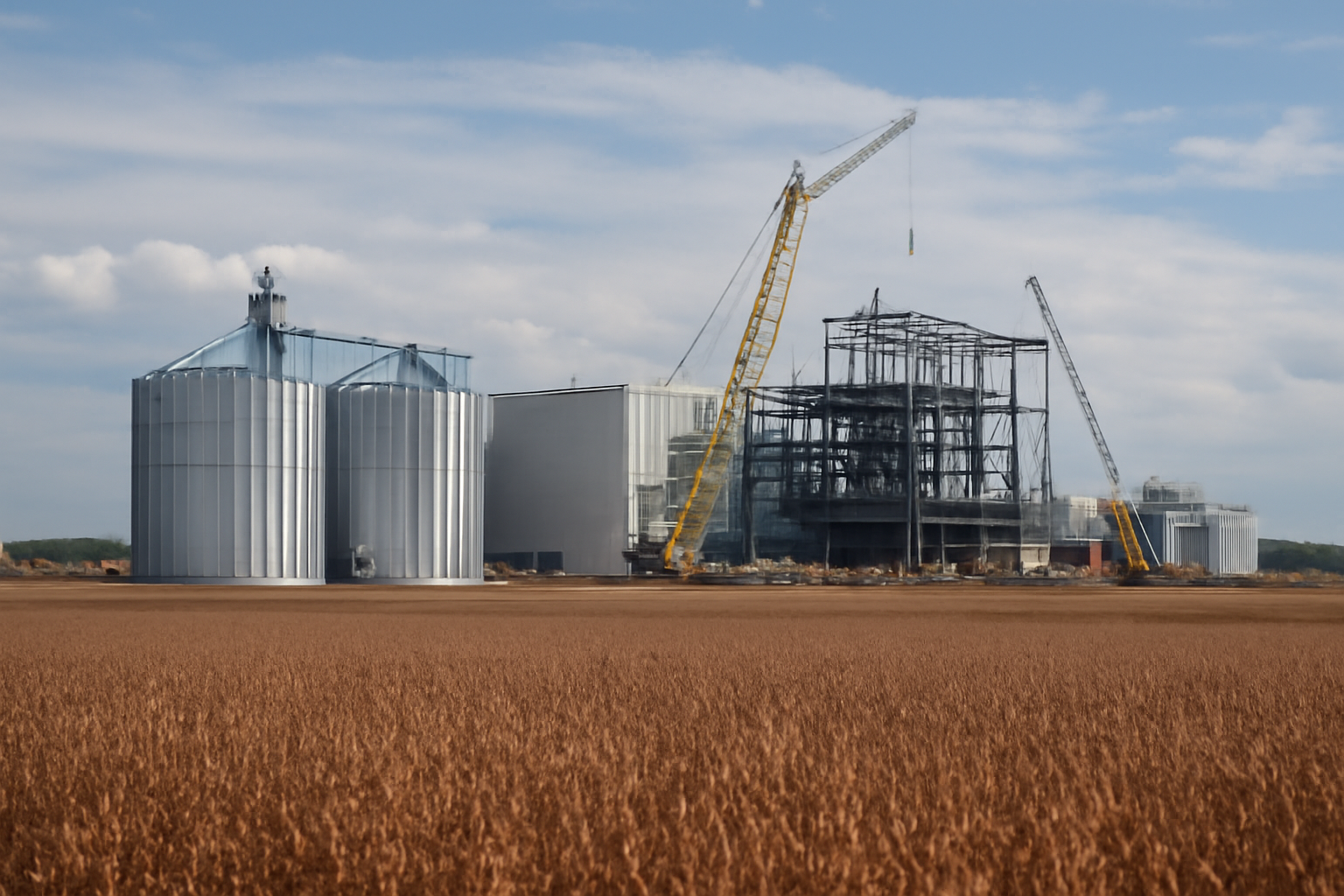
CHS targets fall 2028 for Wisconsin facility
CHS plans to build a soybean processing facility in Evansville, Wisconsin, with annual processing capacity of 80 million bushels, according to Feedstuffs. The company is targeting fall 2028 for the plant to become operational.
The announced capacity makes the project a potentially significant new destination for soybeans produced in Wisconsin and the wider Upper Midwest. Once running at its stated capacity, the facility would require a large and regular flow of beans from farms, elevators and commercial handlers. The actual sourcing area will depend on crop availability, transportation costs and the purchasing terms offered by the plant.
The available project information does not specify the construction cost, expected employment, technology configuration or planned output volumes for individual products. It also does not provide a construction schedule beyond the targeted opening season. Those details will be important for evaluating how quickly the facility can reach its nameplate capacity and how broadly its effects will extend across regional agricultural markets.
A new source of competition for soybeans
For producers, the central issue is whether another large processor creates stronger local competition for soybeans. A plant buying up to 80 million bushels annually could give growers and elevators an additional sales channel, particularly within an economical trucking or rail radius of Evansville. That may affect local basis levels—the difference between cash soybean prices and benchmark futures—although the size and duration of any change will depend on competing bids, harvest volumes and logistics.
Regional elevators and merchants will have to assess whether the plant becomes a customer, a competitor for farm deliveries or both. Existing handlers could benefit from supplying the facility, but they may also face greater competition when securing soybeans during harvest. Storage capacity, delivery timing and transport access will influence which businesses are best placed to participate.
The fall 2028 target is especially relevant because autumn coincides with the main soybean harvest period in the region. If commissioning proceeds as planned, CHS would need to coordinate start-up requirements with the seasonal arrival of a new crop. Delays or a gradual ramp-up could change procurement needs during the first operating season.
Meal and oil supplies could expand
Soybean processing converts beans principally into soybean meal and soybean oil. The Wisconsin project could therefore increase the availability of both products in the Upper Midwest. Feed manufacturers and livestock producers may gain another regional source of meal, while users of soybean oil could see additional supply from a plant located closer to Midwestern production.
The commercial effect will depend on the facility’s product mix, customer contracts and transport network, none of which were detailed in the supplied report. Meal markets are particularly sensitive to freight because the product moves in substantial volumes. A closer source can matter to buyers even when broader commodity prices are set in national or international markets.
Additional oil production could serve food, industrial or fuel-related demand, but CHS has not specified the intended end markets in the available material. Without those details, it is too early to determine how much output will remain in the region or move to customers elsewhere.
Execution and procurement will determine the impact
The plant’s 80-million-bushel capacity provides a clear measure of its intended scale, but capacity does not guarantee immediate full utilization. Construction progress, commissioning, soybean availability and product demand will determine the operating rate after the planned fall 2028 start.
For farmers, processors, traders and downstream buyers, the next relevant disclosures will include the investment timetable, procurement territory, logistics design and expected meal and oil output. Until then, the project’s clearest implication is that CHS intends to establish a large new soybean-processing outlet in Wisconsin, with the potential to reshape competition for beans and the regional supply of processed soybean products.