Chinese vessel carries 26,400 tonnes of Russian potash east via Northern Sea Route
A New New Shipping Line container vessel has left Murmansk with 26,400 tonnes of Russian potash fertilizer after delivering 502 containers of Chinese automotive components. The voyage completes the return leg of Port Alliance’s experiment to assess a two-way Arctic freight corridor.
Return cargo leaves Murmansk
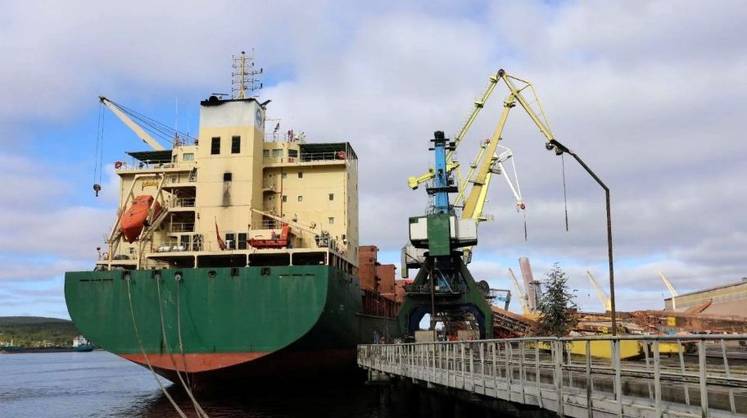
Workers at Murmansk Bulk Terminal loaded 26,400 tonnes of potash fertilizer onto the first container vessel operated by China’s New New Shipping Line to arrive via the Northern Sea Route. The ship has departed with the Russian export cargo for ports in Southeast Asia, according to Monocle, citing the terminal’s stevedoring company.
The eastbound shipment follows an inbound voyage carrying components for Chinese automotive manufacturers operating in Russia. Specialists at Murmansk Commercial Seaport unloaded 502 containers of imported parts before the vessel moved to the bulk terminal’s berths for its return loading.
The operation is the final stage of a Port Alliance logistics experiment intended to create a two-way transport corridor through the Arctic. Murmansk Bulk Terminal is part of Port Alliance, which will assess the route’s commercial efficiency after the entire voyage has been completed.
Railway cycle supports the maritime service
The project extends beyond the vessel’s two cargo legs. National Transport Company and Port Alliance developed a railway system known as the “Big Ring” to reduce unproductive wagon movements to and from Murmansk.
After unloading potash at the terminal, empty rail wagons are filled with apatite raw material in the Murmansk region. They then travel to processing plants in the Leningrad region and Krasnodar territory before returning to the potash producer for another shipment. The organizers say this cycle links incoming and outgoing cargo and improves the route’s commercial appeal by limiting empty wagon mileage.
Distribution of the automotive components from Murmansk to destinations inside Russia is continuing. The entire shipment is scheduled to be dispatched from the port by the end of September.
Commercial case remains under review
The vessel first berthed at Murmansk Commercial Seaport on the night of August 19. It was the port’s first experience receiving containerized freight transported over the Northern Sea Route. Port Alliance has highlighted Murmansk’s deepwater berths, year-round navigation and existing infrastructure as assets for developing the service.
Murmansk Bulk Terminal production director Natalia Korobkina said technical upgrades had enabled the terminal to begin handling potash fertilizer and establish a stable operating process. The loading demonstrates that bulk fertilizer can be incorporated into a service whose inbound leg consists of containerized industrial components.
Commercial director Vladislav Yakovchuk said the voyage gives fertilizer producers an additional export corridor with direct access to Southeast Asian markets. He argued that the Northern Sea Route can shorten delivery times and reduce reliance on transit zones, and could eventually attract foreign as well as Russian fertilizer producers.
Those potential advantages have not yet been translated into a final commercial verdict. The trial establishes that different cargoes can be assembled on the westbound and eastbound legs, but its viability will also depend on the full voyage’s costs, timing and operational reliability. Port Alliance said it would draw conclusions only after the ship completes the journey.