Forensic tests link Chinese tomatoes to products labelled Australian or Italian
Forensic testing has linked China-grown tomatoes, including some associated with Xinjiang, to products sold by Leggo’s, Coles and Aldi with Australian or Italian origin claims. The findings raise questions about origin labelling and supply-chain transparency in Australia’s processed tomato market.
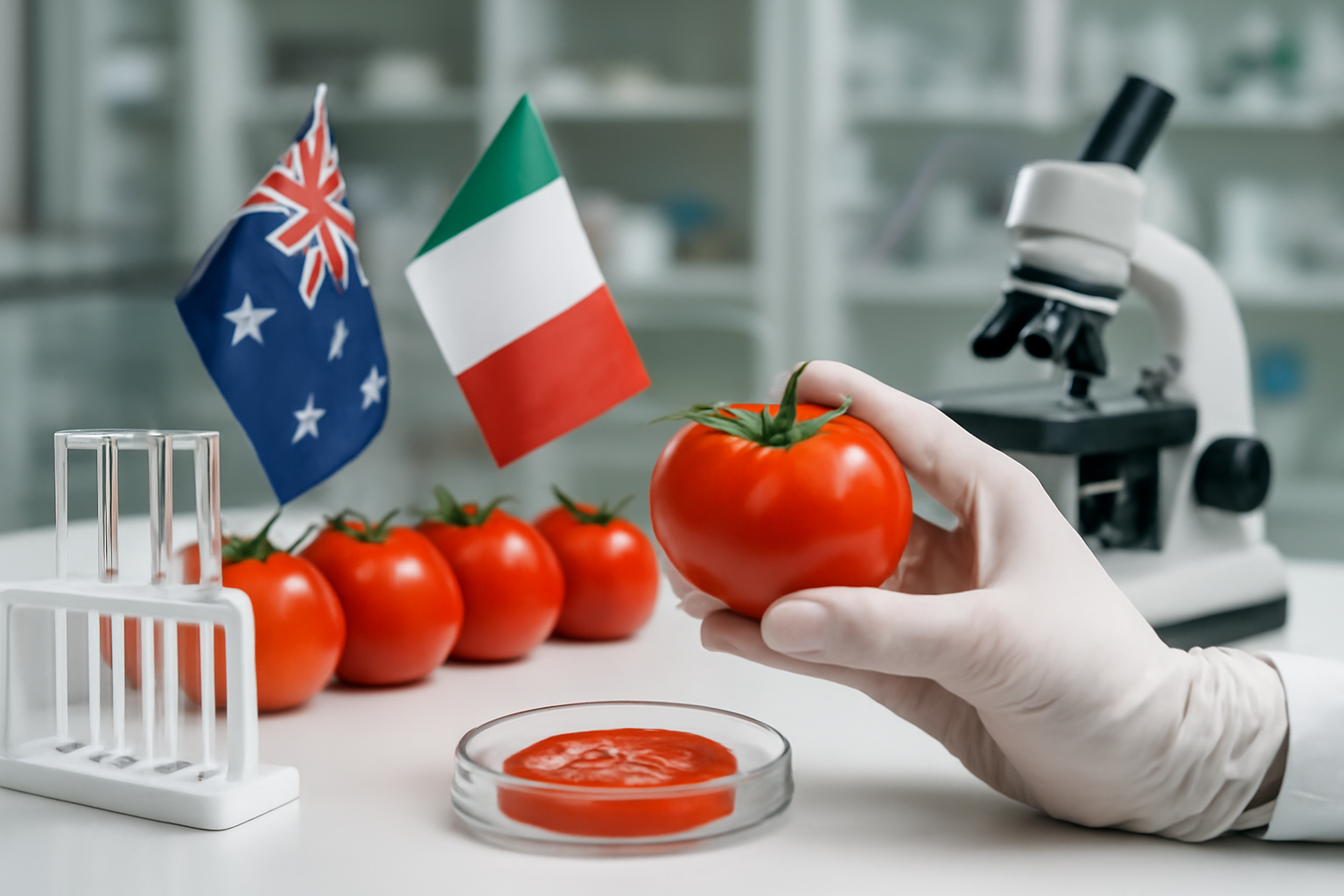
Testing challenges stated origins
Forensic testing has found evidence of China-grown tomatoes in products sold in Australia with labelling that presented the tomatoes as Australian or Italian. The products were associated with Leggo’s, one of Australia’s largest tomato brands, and supermarket groups Coles and Aldi.
The investigation analysed more than 221 tomato-based items. Its findings indicate that consumers may have received inaccurate information about where the agricultural ingredients in some processed tomato products were grown. Testing also linked some of the Chinese tomato material to Xinjiang.
The available findings do not state that all 221 products contained Chinese tomatoes, nor do they specify the number of affected items attributed to each company. They nevertheless challenge prominent origin claims used to distinguish products on Australian supermarket shelves.
The issue concerns the origin of the tomatoes rather than simply the country where the final product was manufactured or packaged. Processed food supply chains can involve agricultural production, primary processing, blending, manufacturing and packing in different jurisdictions. Clear labelling is therefore essential when a package makes a specific claim about where its tomatoes were grown.
Transparency questions for brands and retailers
For Leggo’s, Coles and Aldi, the findings create a need to examine supplier declarations and the evidence supporting domestic or Italian origin statements. Retailers and brand owners depend on documentation from processors and intermediaries, but the forensic results suggest that documentary controls may not have fully reflected the physical product.
The case also matters to Australian tomato growers and processors. An Australian-grown claim can influence purchasing decisions and differentiate domestic production from imported ingredients. If China-sourced tomatoes are sold under that description, local suppliers face competition from a product presented to consumers as having the same origin.
Italian origin claims carry a similar commercial significance. Italy has a widely recognised processed tomato industry, and references to Italian-grown tomatoes can shape perceptions of provenance. Evidence that the underlying tomatoes came from China would weaken the reliability of that distinction for importers, retailers and consumers.
The connection to Xinjiang adds another layer of supply-chain scrutiny. The material provided does not identify volumes, suppliers, shipment routes or the share of any product traced to the region. Those missing details will be important for companies assessing exposure and for authorities considering whether existing origin disclosures are adequate.
The investigation places analytical testing alongside invoices, certificates and supplier assurances as a tool for verifying food origin. For manufacturers and retailers, the immediate commercial question is whether their traceability systems can connect claims on individual packages to the farms and processors behind the tomato ingredients.
Any response will also depend on the exact wording used on each label and the composition established by testing. The findings reported so far point to misleading presentation, but the supplied material does not describe regulatory decisions, penalties, recalls or company responses. Further disclosure would be needed to establish the scale of the affected trade and determine how the products entered the Australian supply chain.