Chinese Soybean Buying and Tight Arabica Stocks Lift Vietnam’s MXV Index 2.13%
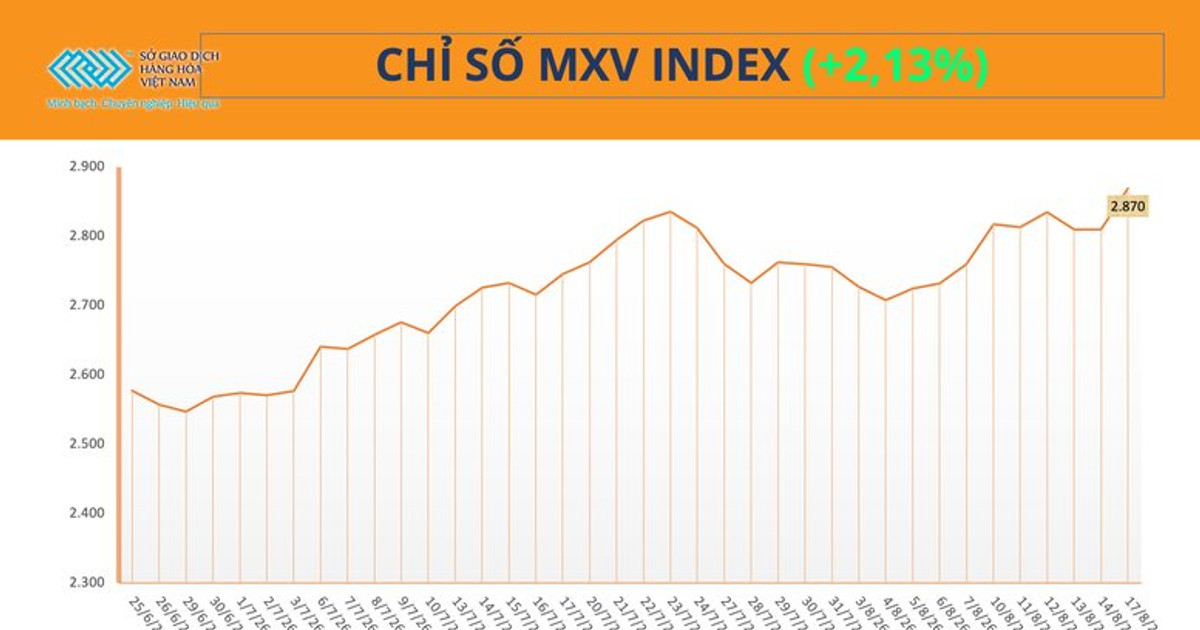
Vietnam’s MXV-Index rose 2.13% to 2,869 points on August 17 as renewed Chinese demand supported US soybeans and ICE Arabica inventories fell for a 40th consecutive session. Soybean products accounted for about 23% of total trading value, while coffee represented more than 67% of industrial raw-material turnover.
Soybean complex advances on Chinese demand
Vietnam’s MXV-Index gained 2.13% to close at 2,869 points on August 17, with agricultural commodities and industrial raw materials leading a broad market rise. According to Pháp Luật, soybean and coffee prices provided the main support as Chinese companies resumed purchases of US agricultural products and exchange-certified Arabica inventories continued to decline.
November soybean futures rose nearly 2% to $446.8 per tonne. December soybean meal increased 0.76% to $351.3 per tonne, while December soybean oil climbed 2.7% to $1,561 per tonne. Together, the three contracts generated about 23% of total trading value on the market. The report attributed the advance to Chinese buying for new-crop shipments, worsening US crop quality and increased short-covering by investment funds.
Vietnamese feed producers face higher input costs
The global rally has direct implications for Vietnamese animal-feed manufacturers, which depend on imported soybeans and derivatives. Preliminary Vietnam Customs data cited by the publication showed that the country imported 332,799 tonnes of soybeans in July 2026, valued at more than $165.09 million. Rising futures prices can therefore increase procurement costs for processors and may affect purchasing schedules and inventory management.
China’s return to the US market also matters for competing importers. Stronger demand for new-crop cargoes can tighten the availability of nearby supplies and support prices across soybeans, meal and oil. The simultaneous gains across all three products indicate that the session’s move extended beyond whole beans into the feed and vegetable-oil markets.
Arabica scarcity contrasts with Robusta supply
ICE US Arabica inventories fell for a 40th consecutive session on August 17, reaching 231,340 bags and approaching a historic low. Brazilian coffee represented only 2.7% of certified stocks, compared with more than 18% at the same time last year. Quách Văn Luận, director of Saigon Futures’ Hanoi branch, said Arabica supply was not yet abundant. Brazil’s 2026-2027 harvest was 90% complete as of August 12, below 97% a year earlier, while disruption to Colombian exports followed the August 11 earthquake around the port of Buenaventura.
Robusta fundamentals were less supportive. ICE-certified Robusta stocks increased to 4,285 lots on August 10, their highest level in 4.5 months. Vietnam exported 1.31 million tonnes of coffee in the first seven months of the year, up 21.1%. Rabobank and StoneX projected a Robusta surplus of about 8.64-10 million bags in 2026-2027, suggesting that selling pressure could persist.
Despite that divergence, September Arabica rose more than 2% to $7,608 per tonne on August 17, while September Robusta gained more than 1.3% to $3,670 per tonne. Coffee accounted for more than 67% of trading value in MXV’s industrial raw-material group. Vietnamese domestic coffee prices increased by 300 dong per kilogram to 95,100 dong per kilogram, although drought in parts of Lâm Đồng and Gia Lai could reduce the coming crop by about 20% as trees require water for fruit development.