Chinese Garlic Reaches Indian Markets Despite Import Ban in Place Since 2005
Chinese garlic continues to be smuggled and sold in India despite an import ban in force since 2005. The reported trade is raising concerns about biosecurity, enforcement and pressure on Indian garlic growers.
Garlic continues to cross a closed border
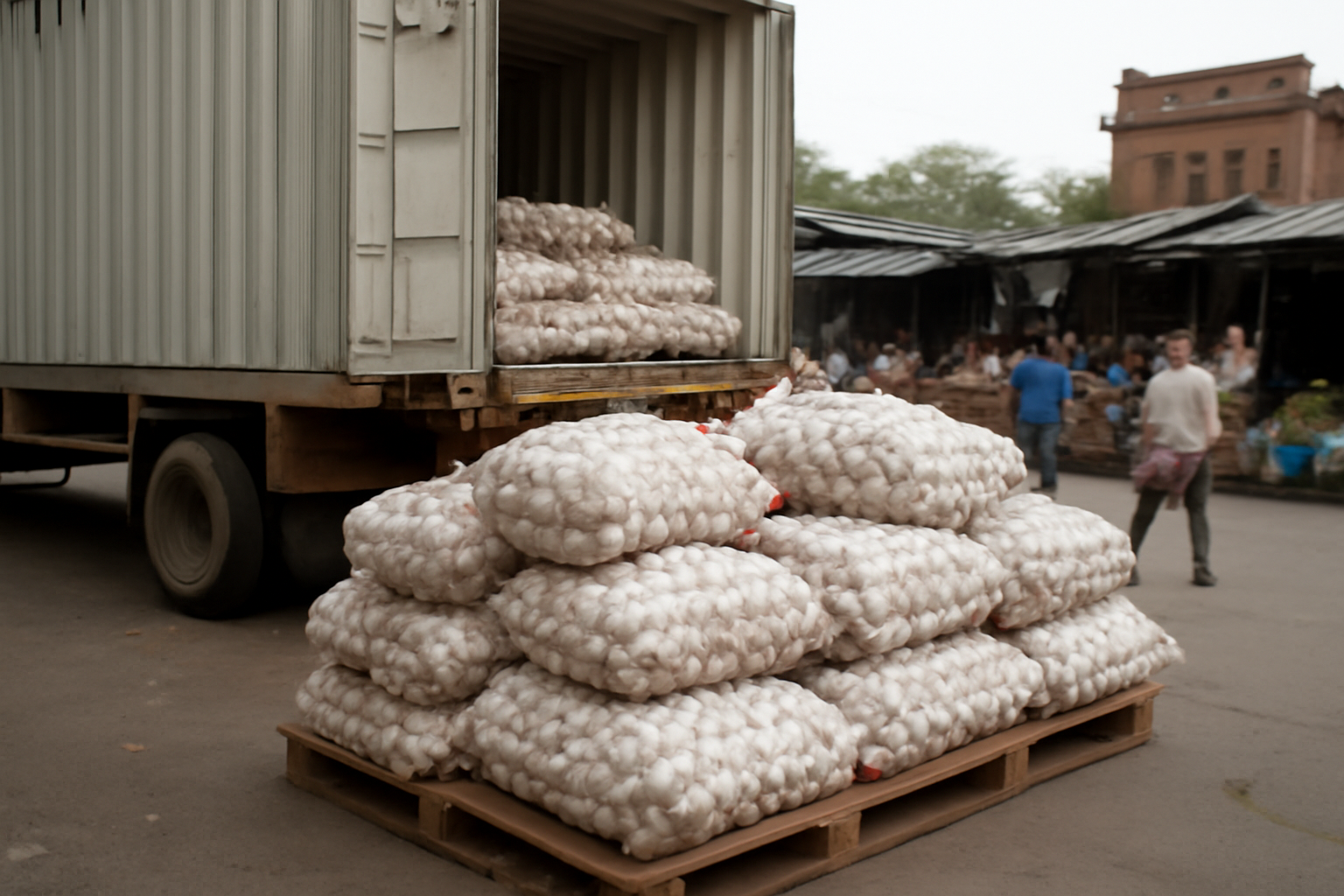
Chinese garlic is continuing to reach Indian markets despite a prohibition on its import that has been in place since 2005. Cases involving the smuggling and sale of large quantities have emerged even though the formal trade channel remains closed.
The persistence of the product in the market points to a gap between the import rule and its enforcement. The available information does not identify the volumes involved, the routes used or the Indian markets receiving the garlic. It nevertheless indicates that the activity is significant enough to generate renewed concern after roughly two decades of restrictions.
Biosecurity is central to the ban
The issue extends beyond customs compliance and competition between suppliers. Experts have presented the movement of Chinese garlic as a biosecurity concern. Agricultural import controls are intended to prevent prohibited plant material from reaching farms, storage sites and distribution networks without the required safeguards.
Smuggled produce bypasses the formal checks attached to lawful agricultural trade. That leaves regulators with less information about the origin, condition and handling of the garlic entering the country. The reported sales therefore test both border controls and surveillance inside wholesale and retail markets, where prohibited shipments can be mixed into ordinary commercial supply.
Domestic growers face unrecorded competition
Indian garlic producers are also exposed to pressure from supplies that enter outside the regulated import system. When banned garlic reaches the market, domestic growers must compete with a product whose volume and movement are not captured through normal trade procedures. That can make it harder for producers, traders and market analysts to assess available supply and understand the source of changes in local market conditions.
The absence of disclosed shipment volumes means the direct effect on Indian prices cannot be quantified from the available material. However, repeated cases of smuggling and sale can weaken confidence that the ban is shielding growers and the domestic plant-health system as intended. For legitimate traders, uneven enforcement also creates a market in which compliant businesses follow the prohibition while illicit operators continue supplying the product.
Enforcement must cover the full supply chain
The continued availability of Chinese garlic suggests that border intervention alone may not be enough. Enforcement also depends on identifying prohibited goods after they enter domestic transport, wholesale and retail channels. Without reliable information on origin and traceability, buyers may struggle to distinguish lawful domestic garlic from banned imports.
For Indian authorities, the central challenge is to make the restriction effective in practice while addressing the biosecurity risk identified by experts. For growers, the priority is preventing unrecorded supply from undermining the protection promised by the ban. The recurrence of reported cases shows that a rule dating from 2005 still requires active enforcement across the garlic market.