Chinese EV brands approach 40% of Spain’s electrified-car market as BYD overtakes Tesla
Chinese brands registered more than 82,000 electrified vehicles in Spain between January and September, approaching 40% of the market. BYD moved ahead of Tesla in battery-electric cars and strengthened its lead in plug-in hybrids despite EU tariffs.
Chinese brands approach 40% of registrations
Chinese vehicle brands accounted for nearly four out of every 10 electrified cars registered in Spain between January and September, according to figures cited by El País from an institute belonging to the country’s automotive manufacturers’ association. Their registrations exceeded 82,000 units despite European Union tariffs intended to restrict the inflow of electric vehicles manufactured in China.
The figures cover both battery-electric vehicles and plug-in hybrids. This distinction matters because Chinese manufacturers have gained their strongest position in the plug-in hybrid segment, where their combined market share exceeded 43%. The performance indicates that their expansion in Spain is not limited to fully electric models and is reaching consumers who want electric driving capability without relying entirely on charging infrastructure.
BYD moves ahead of Tesla
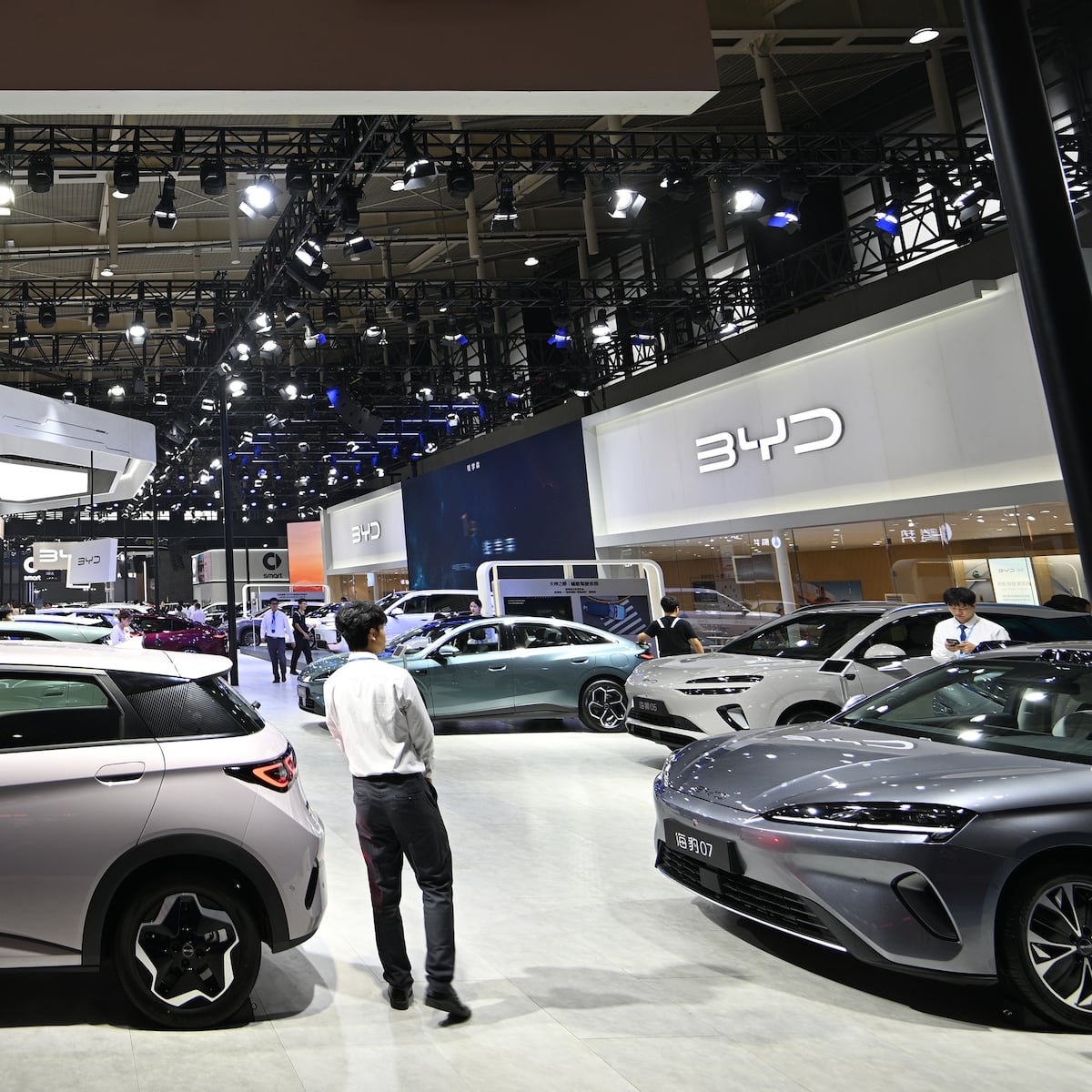
BYD, described by El País as the world’s largest manufacturer of plug-in vehicles, became the leading Chinese force in Spain’s electrified-car market. The company accounted for almost half of electric-car registrations in the market covered by the report and sold nearly 1,000 more battery-electric vehicles than Tesla, pushing the US manufacturer into second place in the fully electric category.
The result changes the competitive picture in a segment that Tesla had helped define. BYD’s advantage is not presented as a marginal gain from a single product class: the Chinese manufacturer also holds an even stronger position in plug-in hybrids. Its lead there is substantial compared with Ebro, the second-ranked brand in that category.
Tariffs have not stopped market expansion
The growth of Chinese brands shows that the EU tariff barrier has so far failed to prevent them from taking a major share of Spain’s electrified-vehicle registrations. The available figures do not specify tariff rates, prices or margins, but the volume of more than 82,000 vehicles demonstrates that Chinese manufacturers have continued to find buyers under the new trade conditions.
Plug-in hybrids appear central to that resilience. With Chinese brands controlling more than 43% of the segment, manufacturers can compete through a broader powertrain mix instead of depending exclusively on battery-electric cars. For dealers and importers, this creates a larger addressable market. For established European and US brands, it increases competitive pressure across two electrified categories at the same time.
Local assembly adds another route into Spain
Ebro illustrates how the boundary between an imported Chinese vehicle and a locally produced model is becoming less clear. Its vehicles are not entirely Chinese-made: they use platforms from a company in China, are shipped to Spain in disassembled form and are then reassembled in Barcelona. Ebro ranks second behind BYD among plug-in hybrids.
This model links Chinese industrial platforms with Spanish assembly capacity. It may also become increasingly relevant as manufacturers and their partners adapt sourcing and production arrangements to European trade policy. The current data do not establish how local assembly affects tariff treatment, but they show that competition is developing through both finished-vehicle imports and cross-border manufacturing structures.
Spain is therefore emerging as a test of whether tariff protection alone can slow Chinese automotive growth. Between BYD’s lead over Tesla, the more than 82,000 Chinese electrified vehicles registered and the above-43% share in plug-in hybrids, Chinese manufacturers have established a broad market presence. The next competitive phase will depend not only on battery-electric sales, but also on plug-in hybrid demand, local assembly partnerships and the ability of incumbent brands to respond across price and technology categories.