Chinese car brands approach 20% of Spain’s private-buyer market
Chinese-controlled brands sold more than 65,000 passenger cars and SUVs to Spanish households between January and July 2026, approaching a 20% share of the private-buyer channel. More than 30 brands are now competing in Spain, while manufacturers and battery groups are preparing local production and supply-chain investments.
Sales rise fastest among private buyers
Chinese-controlled car brands sold close to 94,000 vehicles in Spain during the first half of 2026, accounting for 12.3% of the overall market, according to LNE. Their position was considerably stronger among private buyers. From January through July, Spanish households bought slightly more than 65,000 Chinese-brand passenger cars and SUVs out of a total of 327,457, putting their share close to 20%.
More than 30 Chinese-controlled brands now operate in Spain, but the expansion is concentrated among five names. BYD recorded 15,037 private-channel sales through July, followed by MG with 14,906, Ebro with 10,546, Omoda with 10,342 and Jaecoo with 5,539. These brands have moved ahead of several established manufacturers in this channel, including Peugeot, Nissan, Audi, Citroën, Mercedes-Benz, Ford, Opel and Volvo.
The gains are not based solely on lower prices. The newcomers are combining electrification, connectivity, technology and equipment with competitive costs, aggressive commercial policies and rapidly expanding dealer networks. More than 600 Spanish dealerships already sell Chinese-origin brands. Faconauto, the Spanish dealers’ association, cites a JPMorgan projection that Chinese manufacturers could reach about 20% of the Western European market in 2028.
Manufacturers move toward local production
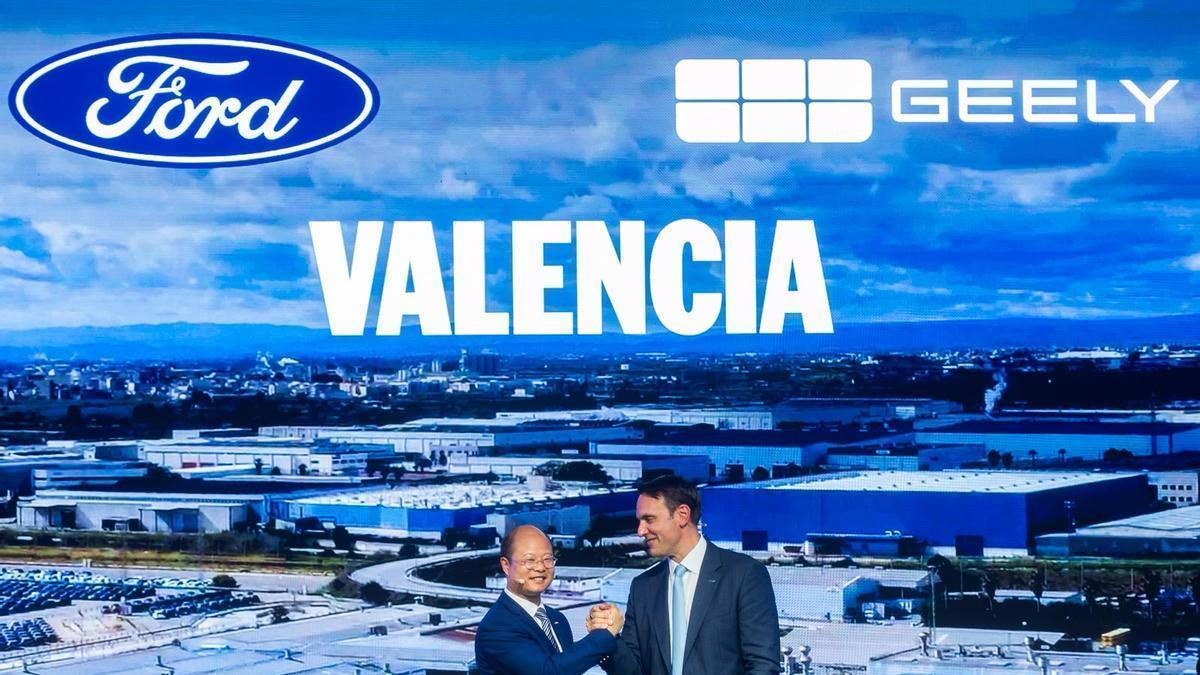
The next phase is industrial. Ebro is producing in Barcelona through an alliance with Chery at the former Nissan plant. Leapmotor plans production at Stellantis facilities in Galicia, Zaragoza and Madrid. SAIC, the owner of MG, has announced an assembly plant in Ferrol and a component-related facility in Galicia, while BAIC is participating in the revival of Santana in Linares. An agreement between Ford and Geely will also bring production for both companies to Almussafes in Valencia.
Battery investment could broaden the industrial base beyond vehicle assembly. Projects include CATL with Stellantis in Figueruelas, Gotion in Valladolid, Hithium in Navarra and Envision in Navalmoral de la Mata. Spain’s position as Europe’s second-largest vehicle producer, its specialized supplier network, export logistics and growing renewable-energy capacity support its case as a production platform for the European market. Public backing is also available through the Spain Auto 2030 Plan.
Suppliers and after-sales capacity become critical
Sernauto, Spain’s automotive supplier association, argues that new factories should progressively develop local supply chains, increasing domestic component production, engineering work, skilled employment and investment. Local manufacturing may also strengthen consumer confidence, but Faconauto says factories alone will not secure a lasting position. Brands need distribution and after-sales networks, spare parts, warranties, technical training, diagnostic tools and repair capacity throughout the vehicle’s service life.
Competition has intensified in products, prices and technology, although average dealership profitability has not yet deteriorated. Faconauto reported profitability of 1.30% in the first quarter of 2026, compared with 1.19% a year earlier. The share of loss-making dealerships fell from 32.7% to 27.9%. Both Faconauto and Sernauto are calling for balanced rules, long-term investment, cooperation with local suppliers and industrial projects that transfer value and strengthen Spain’s technological capacity.