More than 100 Chinese buyers scout Vietnamese durian supply as quality demands rise
More than 100 Chinese fruit companies travelled to Ho Chi Minh City to seek Vietnamese durian suppliers as producing regions entered harvest season. Buyers are placing greater weight on traceability, grading, consistent quality and compliant packing alongside price.
Chinese buyers enter the market at harvest time
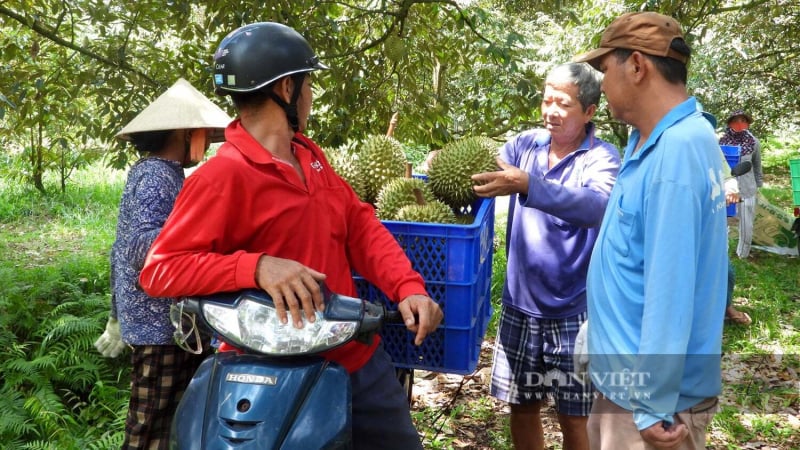
More than 100 Chinese fruit distributors, retailers and importers travelled to Ho Chi Minh City to identify Vietnamese durian suppliers as several producing regions entered harvest season, Dân Việt reported. The delegation included representatives of Pagoda, Xianfeng Fruit, Chengxin Zhiyuan, Shouheng Group, JD Fresh and Goodfarmer Group.
The buyers joined more than 500 delegates from government agencies, cooperatives, companies and expert organisations at the second Asia Durian Conference and a Vietnam-China supply and demand meeting on 14 July. Direct business-to-business sessions were scheduled after the conference, while the Chinese delegation was also due to inspect growing areas and production processes in Buôn Ma Thuột, Đắk Lắk.
China remains the dominant export market
Vietnamese durian exports rose from more than $277 million in 2022 to over $3.2 billion in 2024 and approximately $4 billion in 2025, according to figures cited by Trần Ngọc Liêm, deputy secretary-general of VCCI and director of its Ho Chi Minh City regional branch. In the first five months of 2026, exports reached $562.4 million, up 45.2% from the same period a year earlier. China bought about $492 million, accounting for 87.5% of the total.
Those figures make access to China decisive for Vietnamese growers, packers and exporters. Geographic proximity and shorter transport routes provide an advantage, but Chinese buyers increasingly evaluate brands, product appearance, grading, traceability and lot-to-lot consistency. Zhang Le, general director of Xingfeng Fruit in Vietnam, said stable quality helps determine whether consumers buy the product again.
Traceability and packing capacity become commercial tests
Exporter Trái cây 001 is applying a “one QR code for every durian” model while controlling growing-area and packing-facility codes, company director Nguyễn Thị Mỹ Duy told the conference. The company operates 63 purchasing points across 20 provinces and cities and can supply about 1,200 tonnes per day during peak season. Transport time to China has been reduced to six days, lowering logistics costs and supporting large orders.
However, Liêm warned that planted area is expanding faster than the industry’s ability to meet export requirements. Some farms and packing facilities still fall short on registration codes, plant quarantine and traceability, leaving exporters exposed to warnings and customs delays. Duy argued that the sector must move more decisively from informal cross-border sales to official trade channels.
Competition shifts beyond price and volume
Cai Jianfei, founder of Chinese fruit-industry B2B platform iFresh Asia Fruit, said the bilateral durian trade was entering a new stage in which lawful compliance, product quality and long-term cooperation would separate suppliers. Conference organisers called for standardised growing areas, upgraded packing facilities, digital traceability, stronger supply chains and brand development.
The message for Vietnamese exporters is that additional production alone will not secure China’s market. As more countries expand durian exports, suppliers must deliver documented origin, reliable grading and consistent shipments. For Chinese importers, wider sourcing in Vietnam may improve access during harvest season, but verification of farms, packers and phytosanitary compliance is becoming as important as the negotiated price.