Chinese brands account for 48% of Russian truck transactions after three quarters of 2026
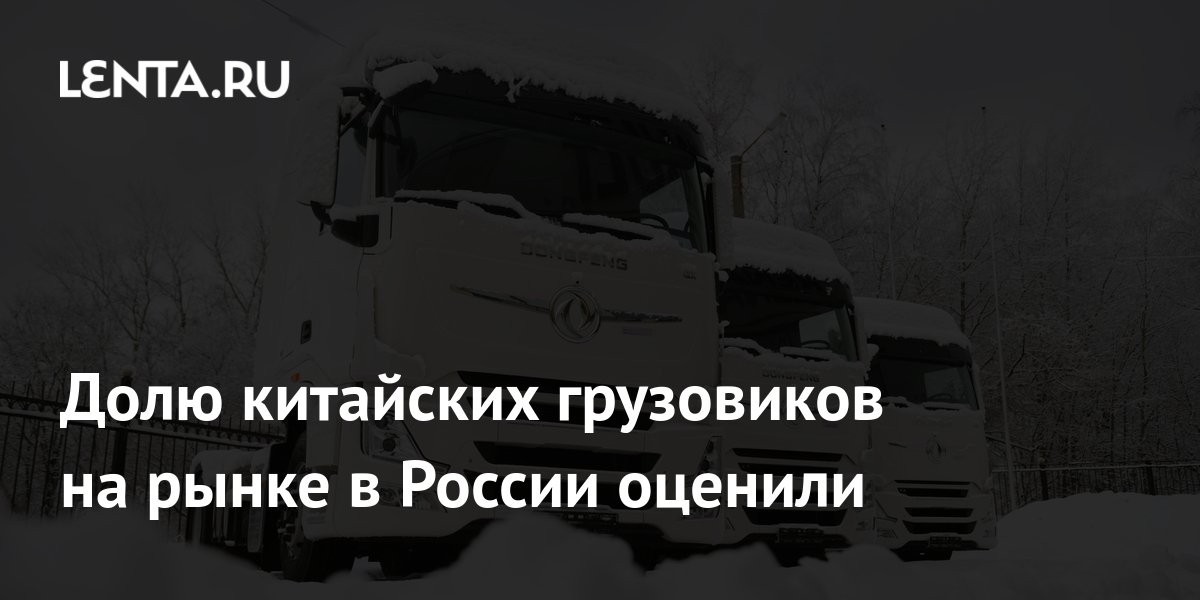
Chinese manufacturers accounted for 48% of Russian truck transactions after the first three quarters of 2026, according to an Interleasing study reported by Lenta.ru via TASS. FAW led individual brands with 19%, while Russian trucks represented more than 31% of transactions.
Chinese manufacturers hold 48% of transactions
Chinese brands accounted for 48% of transactions in Russia’s truck segment after the first three quarters of 2026, according to a study by Interleasing reported by Lenta.ru, citing TASS. The result confirms the central position Chinese manufacturers have established in Russia’s commercial-vehicle market.
FAW, Shacman and SITRAK were the most sought-after Chinese makes. The study said these three brands represented almost one-third, or 30%, of total new-truck sales and 76% of sales of Chinese vehicles.
FAW held the largest individual share, accounting for 19% of total sales. Shacman followed with 11% and SITRAK with 7%, while DongFeng and Howo completed the five leading Chinese brands with shares of 3% and 2%, respectively. The published individual shares for FAW, Shacman and SITRAK total 37%, although the same report puts their combined contribution to new-truck sales at 30%, indicating that the figures may refer to different measurement bases.
Price, availability and service support drive demand
Experts cited in the study attributed the performance of Chinese trucks to a broad model range, the availability of vehicles and spare parts, and an extensive dealer network. They also pointed to more favorable purchase and ownership costs compared with European alternatives.
These factors matter beyond the initial vehicle price. For fleet operators, access to parts and service capacity influences downtime, maintenance planning and the total cost of operating a truck. A broad product range also allows Chinese suppliers to compete across more applications rather than relying on a limited number of models.
The concentration within the Chinese segment remains substantial. With FAW, Shacman and SITRAK representing 76% of Chinese-vehicle sales, most demand is captured by a small group of suppliers. DongFeng and Howo have a presence in the market, but their reported total-market shares remain considerably lower.
Russian brands retain a sizeable domestic position
Russian trucks accounted for more than 31% of transactions. Kamaz produced the strongest result among domestic manufacturers, taking 11% of total sales and 35% of sales of Russian vehicles. The figures leave domestic producers with a significant base, although their combined share remains below that of Chinese brands.
European and Japanese brands represented 12% of sales, but most vehicles in this category were used. Buyers in Russia primarily selected Mercedes-Benz and Volvo trucks, followed by DAF, MAN and Scania. The prominence of used vehicles indicates that these brands continue to serve part of fleet demand without matching Chinese suppliers’ position in the new-truck segment.
Russia had previously become the largest importer of Chinese trucks after shipments rose to their highest level since the beginning of the year. Deliveries in the middle of summer increased by almost 20% from the previous month. Mexico and Vietnam were also among the leading destinations, with purchases worth $110.5 million and $103.3 million, respectively. For Chinese manufacturers, Russia therefore represents both a major export destination and a market where dealer coverage, parts supply and ownership costs are translating into a high share of transactions.