Chinese brands gain ground in Czech electric-car market as plug-in hybrid sales rise
Battery-electric and plug-in hybrid cars captured a combined 13.91% of Czech new passenger-car registrations in August. Chinese brands led the plug-in hybrid ranking and also gained positions in the battery-electric segment.
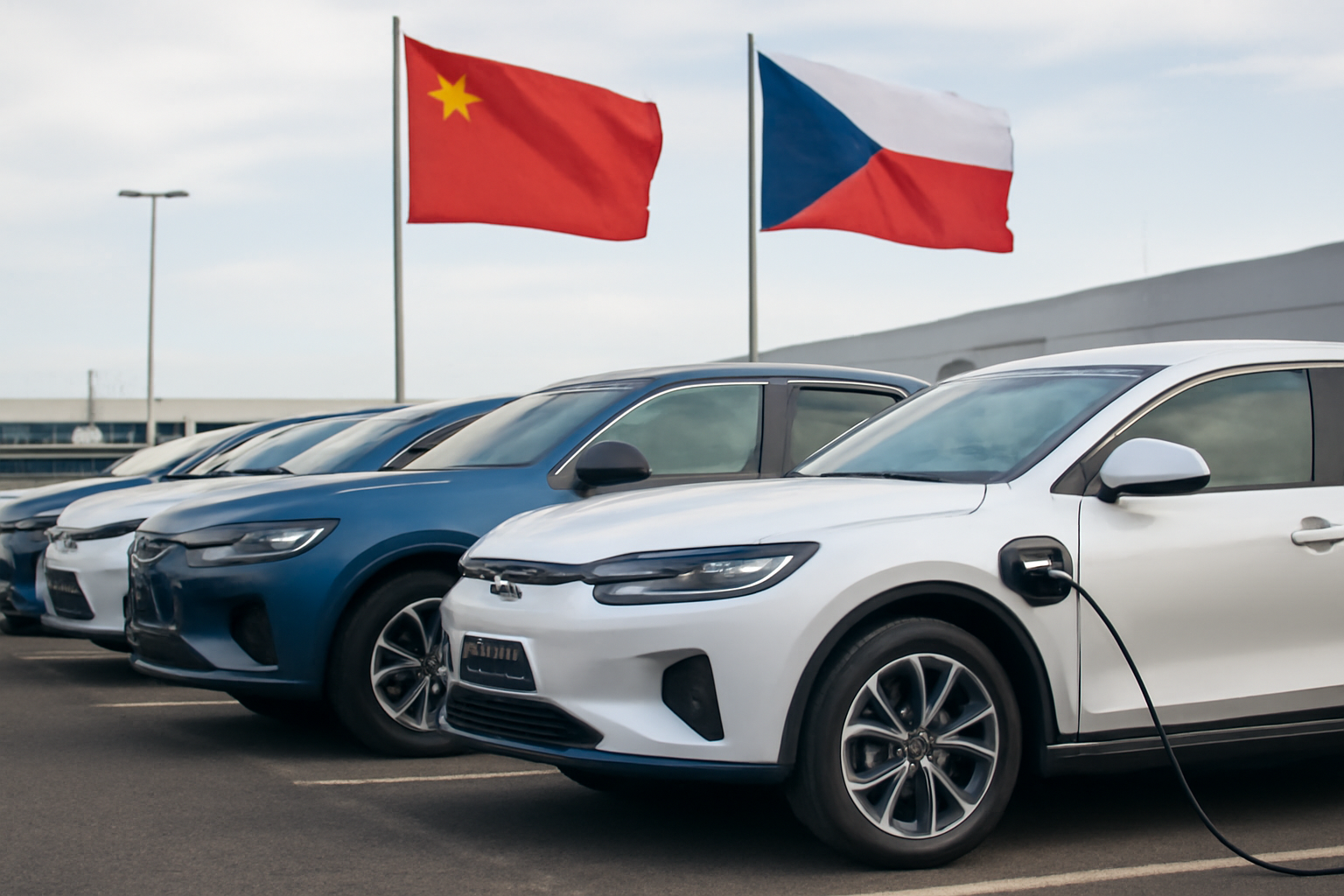
Electric share approaches 14%
Battery-electric vehicles and plug-in hybrids accounted for a combined 13.91% of new passenger-car registrations in the Czech Republic in August, according to figures from the Czech Automobile Importers Association, or SDA, reported by České noviny. Battery-electric cars represented 8.45% of the market, while plug-in hybrids held 5.46%.
The figures extend a pattern of rising electrified-vehicle penetration during the year. The two categories remain commercially distinct: battery-electric vehicles rely entirely on electric propulsion, while plug-in hybrids combine a rechargeable electric system with a petrol or diesel engine. Taken together, however, their near-14% monthly share shows that vehicles capable of external charging are becoming a material part of the Czech new-car market.
Škoda retains a commanding BEV lead
Domestic manufacturer Škoda remained the leading battery-electric brand in August, registering 569 vehicles. That was more than five times the volume recorded by second-placed Mercedes-Benz, which registered 107. Volkswagen ranked third, although the source did not provide its registration total.
Škoda’s lead shows that the advance of Chinese manufacturers has not displaced the established market leader in fully electric cars. The competitive picture is more fragmented below Škoda, however. Chinese brands are adding volume across both battery-electric and plug-in hybrid categories, creating additional pressure on European manufacturers competing for buyers outside the leading domestic marque.
Chinese brands lead plug-in hybrids
Omoda/Jaecoo took first place in the Czech plug-in hybrid ranking with 123 registrations in August, according to the SDA data. Škoda followed with 96, while Ford registered 92. The result places a Chinese automotive group ahead of established European and US competitors in one of the market’s fastest-developing powertrain categories.
Other Chinese manufacturers also contributed meaningful volumes. BYD registered 45 battery-electric cars and 73 plug-in hybrids. Chery recorded 63 plug-in hybrids, while Leapmotor registered 58 battery-electric vehicles and 16 plug-in hybrids. These totals indicate that Chinese participation is not concentrated in a single brand or propulsion technology.
The immediate challenge for European automakers is therefore broader than competition for fully electric sales. Chinese groups are using plug-in hybrids as well as battery-electric models to enter the Czech market, allowing them to address customers who want electric driving capability but are not ready to rely exclusively on charging. For dealers and distributors, the expanding range increases the importance of local sales networks, servicing and brand recognition. For incumbent manufacturers, August’s registration mix shows that competitive pressure is developing first in specific electrified segments rather than uniformly across the entire passenger-car market.