China tests Xinjiang rubber dandelion as alternative to Southeast Asian supply
Chinese researchers have produced natural rubber from Taraxacum kok-saghyz grown in Xinjiang, extracting 40 kg of latex from one tonne of dried roots in July 2026. The pilot project could eventually diversify supply for the world’s largest rubber consumer, although its current output remains far below industrial scale.
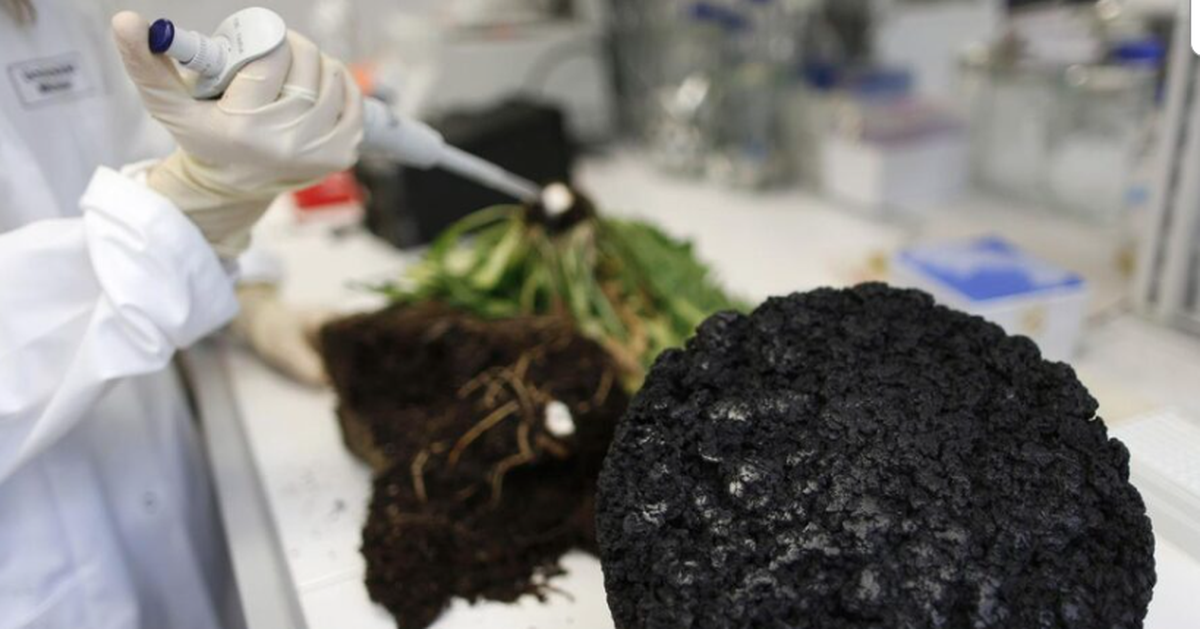
Xinjiang pilot produces first measurable output
Chinese researchers are testing a native rubber-producing dandelion in Xinjiang as a potential domestic alternative to imported natural rubber. The plant, Taraxacum kok-saghyz, grows in saline and alkaline land near the Tianshan Mountains and produces latex in its roots. According to Soha, citing the South China Morning Post, a research team harvested one tonne of dried roots from an experimental field of about 1.3 hectares in July 2026 and extracted 40 kg of natural rubber.
The initial volume is small, but the trial has established a route from cultivation to extraction. In July 2026, researchers worked with Beijing University of Chemical Technology and Shihezi Vocational Technical College to establish a pilot processing line. The Chinese Academy of Sciences team has also developed an integrated research chain covering crop improvement, breeding, cultivation techniques, by-product development and rubber extraction.
A large consumer with limited domestic supply
China used about 7 million tonnes of natural rubber in 2025, representing more than 40% of global consumption, according to the source material. Domestic production met less than 20% of that requirement. Demand is supported by China’s automotive manufacturing sector and its tyre exports, leaving producers heavily dependent on imported feedstock.
A January 2026 report from SunSirs said China imported 5.8716 million tonnes of natural rubber between January and November 2025, an increase of 16.98% from the same period of 2024. Thailand was the largest supplier. Southeast Asia produces about 70% of the world’s natural rubber, led mainly by Thailand, Indonesia, Vietnam and Malaysia.
Natural rubber remains essential for tyres, cables, medical gloves, aerospace seals, footwear and toys. Reuters noted in 2014 that road and air transport still depended on properties of plant-derived rubber that synthetic materials had not replicated. Rubber obtained from dandelion roots has the same molecular structure as rubber from the Brazilian rubber tree and comparable elasticity, abrasion resistance and tear strength, Beijing University of Chemical Technology professor Zhang Jichuan said.
Short crop cycle, but scale remains the test
Rubber trees require six to seven years before their first harvest, while rubber dandelions can be planted, harvested and processed within one year, agricultural specialist Zhang Yan said. The crop can also be densely planted and fully mechanised. Seedlings tolerate temperatures as low as minus 5 degrees Celsius, while mature plants can survive minus 30 degrees Celsius. The plant can grow on heavily saline land with a pH of 8 and salt content above 20 grams per kilogram.
Natural rubber content in the roots ranges from 3% to 12%. A team led by Chinese Academy of Sciences academician Li Jiayang used gene-editing technology to raise the level to nearly 30%. Chao News reported that trials were under way in 2026 at sites including Kashgar, Altay and Zhaosu, covering more than 13 hectares.
The researchers’ medium- and long-term plan is to expand cultivation to more than 1,330 hectares, including unused saline and alkaline land in northern Xinjiang. Even that programme would represent an early stage compared with China’s annual consumption and import volumes. Its immediate commercial relevance lies in testing yields, mechanised harvesting and extraction costs. For Southeast Asian exporters, the project is therefore a long-term diversification signal rather than an imminent replacement for established rubber-tree supply.