China’s tariff concession clears way for 200,000-tonne South African soybean shipment
A South African trader plans to ship 200,000 tonnes of soybeans to China in November after Beijing temporarily removed a 3% import duty. Lower freight costs gave the cargo a price advantage over Brazilian and Argentinian supplies, but rising domestic prices may limit further deals.
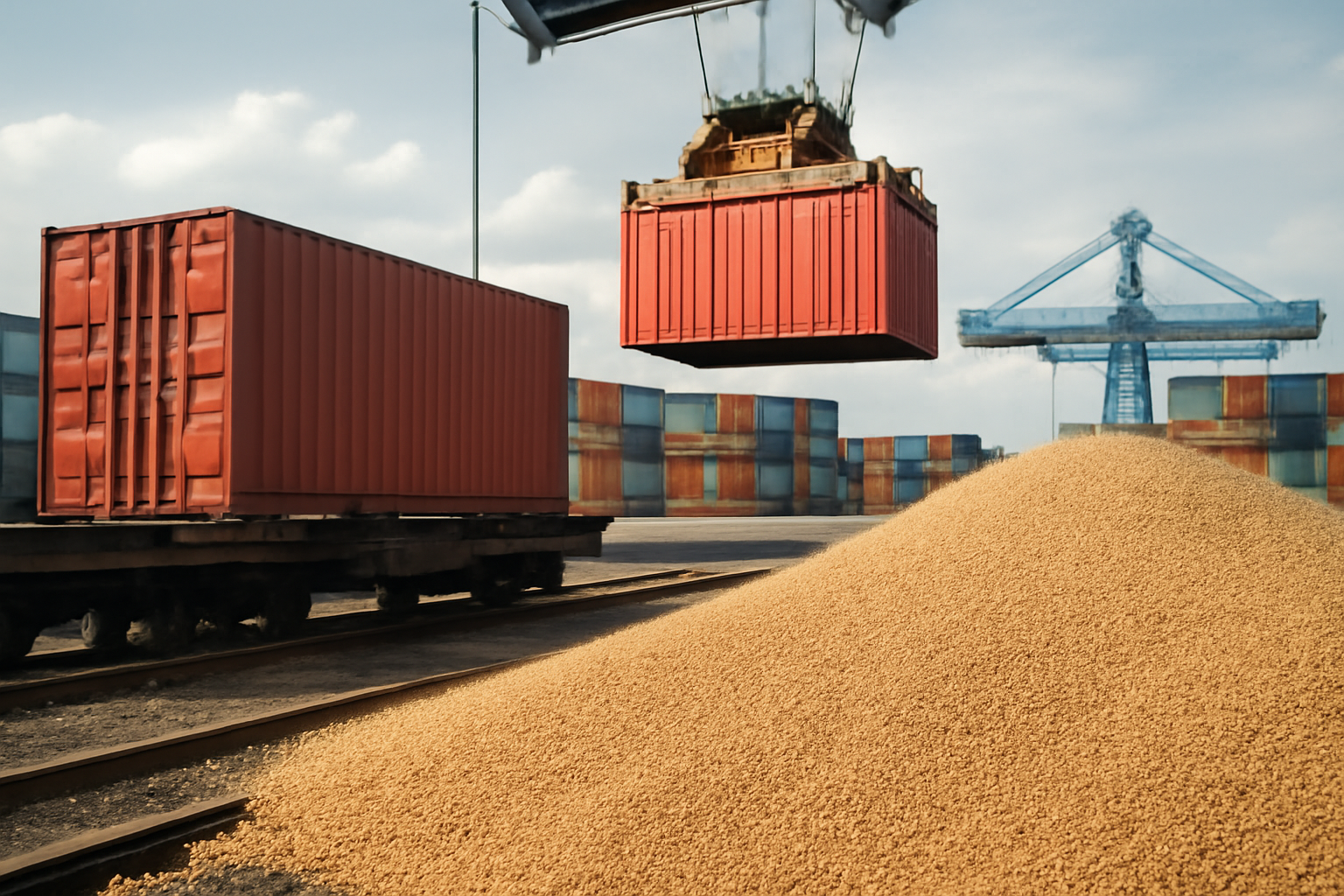
South Africa secures record shipment
A South African grain and oilseed trader has secured a deal to ship 200,000 tonnes of soybeans to China in November, marking the country’s largest single soybean consignment to the Chinese market. Farmer’s Weekly reported that the transaction is 36% larger than the total volume South Africa sent to China three years earlier.
The shipment will depart from Durban and represents South Africa’s first soybean exports to China since 2023, when three separate cargoes totalled 147,000 tonnes. The seller has remained anonymous for strategic reasons, according to the South African Cereals and Oilseeds Trade Association, or SACOTA.
The deal emerged despite an initially difficult supply situation. Late rainfall delayed harvesting in the Free State and Mpumalanga, South Africa’s principal soybean-producing areas. Domestic processors were competing for the limited available crop, while yellow maize traditionally receives priority at Durban’s export terminals, potentially restricting capacity for soybean loadings.
Zero tariff changes the calculation
China temporarily extended zero-tariff access to 20 additional African countries, including South Africa, on 1 May. The arrangement runs until 30 April 2028 and follows the zero-tariff treatment granted to 33 least-developed African countries in late 2024. South African soybeans had previously faced a 3% Chinese import duty.
SACOTA calculated that removing the duty cut the landed cost by about $15 per tonne, equivalent to roughly R242 per tonne. Freight from South Africa to China was already $12-$15 per tonne cheaper than freight from South America. Together, the two advantages made South African soybeans competitive with Brazilian and Argentinian supplies at prevailing prices.
SACOTA executive director André van der Vyver told Farmer’s Weekly that no single factor secured the transaction. The tariff concession supported the deal, but the trader had probably hedged prices and accumulated stocks for several weeks before the announcement. That timing became important when forecasts of a developing super El Niño encouraged investors and speculators to buy agricultural commodities, driving South African grain and oilseed prices higher and making subsequent soybean exports less attractive.
Small share, wider market implications
The 200,000-tonne cargo remains small beside China’s annual soybean imports of about 115 million tonnes. It will therefore have little immediate effect on the dominant position of large suppliers such as Brazil and Argentina. For South Africa, however, a shipment of this scale can support repeat business, improve economies of scale and keep silos, terminals and other logistics operators familiar with China’s requirements.
Market access also requires annual registration of originating silos, export terminals and traders. Soybeans must be tested for specified plant diseases, with documentation submitted to the Chinese authorities under a bilateral government protocol. SACOTA manages the process for the industry in cooperation with South Africa’s Directorate of Plant Health.
SACOTA expects South African soybean exports to reach 510,000 tonnes in the current season, including the Chinese shipment. Deep-sea sales to Indonesia and Malaysia and cross-border deliveries to Zimbabwe and Eswatini are expected to continue. That would make this the country’s second-largest soybean export season, behind the record 590,000 tonnes shipped in 2023. Further Chinese deals may depend on domestic prices and weather expectations, but the November cargo establishes a commercial route into the world’s largest soybean market.