China Supplies 99% of the Solar Panels Imported by Brazil
China accounts for 99% of the solar panels imported by Brazil, according to Poder360, which describes Chinese equipment as the beginning and the middle of the country's photovoltaic sector. The share leaves module prices, lead times and duty exposure tied to a single origin, with Brazilian value creation concentrated downstream in distribution, installation and maintenance.
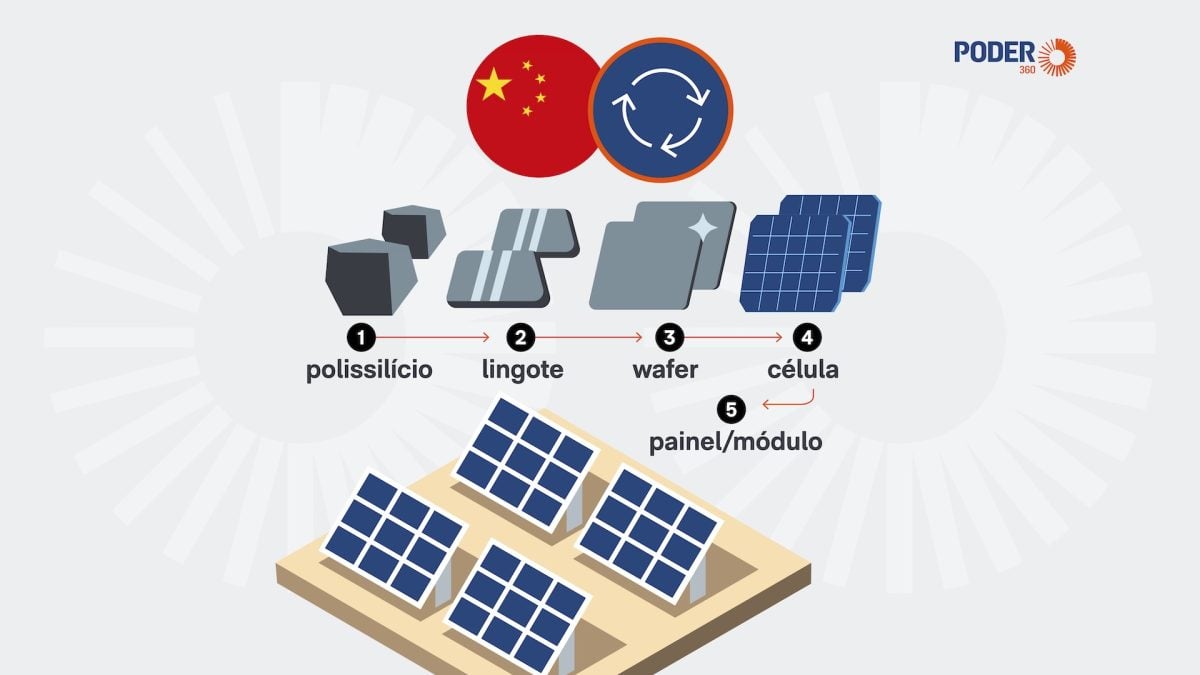
Almost the entire import channel has one origin
China accounts for 99% of the solar panels imported by Brazil, according to Poder360. The publication described Chinese equipment as the beginning and the middle of photovoltaic generation in the country, a source that already supplies a relevant share of the Brazilian electricity mix.
A 99% share leaves no meaningful second origin. Module availability, price levels and delivery times inside Brazil are set by manufacturing conditions, export policy and freight capacity in one country. Distributors and engineering firms buying into the Brazilian market are, in practice, taking a single-country supply position regardless of how many brands appear on their purchase orders.
Why the share matters for project economics
Photovoltaic modules are the largest single equipment item in most solar projects, and imported panels are quoted in dollars. That places three variables outside the reach of Brazilian developers:
- Factory-gate pricing in China, which follows Chinese capacity utilisation rather than Brazilian demand.
- The real-dollar exchange rate, which moves the landed cost of every container.
- Import duties and customs treatment, which apply to virtually all new equipment entering the market.
The concentration has been favourable while the scale of Chinese manufacturing kept module costs falling; cheap modules are one reason distributed generation spread quickly across Brazilian rooftops. The same structure works in reverse if prices firm, if export rules tighten, or if shipping to South America is disrupted. At a 99% import share there is no domestic channel of comparable size to absorb even a short interruption.
Domestic industry sits at the end of the chain
The description used by Poder360 — imports as the beginning and the middle of the sector — points to where Brazilian value is created: at the downstream end. Distribution, mounting structures, installation, project financing and maintenance are performed locally, while the cells and modules themselves arrive finished.
That split shapes the industrial policy debate. Any programme aimed at building a Brazilian panel industry has to contend with a competitor holding 99% of the import channel and the cost base that comes with global-scale production. Final assembly is the easier entry point; the upstream steps that give imports their advantage are the harder and more capital-intensive ones, and they are also the steps that would actually reduce the dependency.
Policy levers and what to watch
Trade measures are the most direct lever and the bluntest. With imports covering essentially the whole market, a duty increase on cells and modules passes through to project costs almost immediately, before any local capacity exists to supply an alternative. Local-content rules attached to subsidised financing face the same timing problem: they raise the cost of equipment that has no domestic substitute yet.
For the market, the variables to track are Chinese export volumes and module pricing, Brazilian customs classification and duty decisions on photovoltaic equipment, and whether any domestic manufacturing investment moves beyond final assembly into cells. Until one of those shifts, the 99% figure reported by Poder360 remains the single most important number in Brazilian solar procurement.