China’s phosphate fertilizer exports fall from 5.3 million tonnes to near zero
China’s phosphate fertilizer exports have fallen from 5.3 million tonnes in 2025 to almost nothing in 2026 as sulfur shortages and export controls prioritize domestic supply. Argus expects a partial recovery to about 2 million tonnes in 2027, while tight availability raises costs for import-dependent agricultural markets.
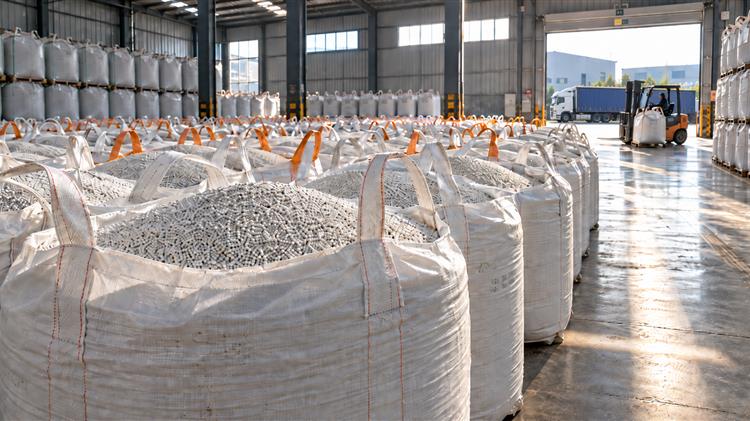
Chinese supply disappears from the world market
China’s phosphate fertilizer exports have fallen to almost zero in 2026 after reaching 5.3 million tonnes in 2025, according to Agrocapital. The withdrawal of such a large volume is adding pressure to an already constrained global supply chain and increasing the risk of higher fertilizer costs for farmers.
Market intelligence company Argus Media attributes the collapse mainly to a shortage of sulfur, a key raw material used in phosphate fertilizer production, and to Beijing’s policy of prioritizing the domestic market. China has imposed export restrictions to maintain balance in its own fertilizer sector, leaving producers focused on domestic demand and with little product available for overseas buyers.
Sulfur shortage constrains operating capacity
The pressure extends beyond finished fertilizers. Beijing also restricts exports of sulfuric acid, which is required to manufacture phosphate products. This means that nominal industrial capacity alone cannot quickly restore exports: plants need adequate raw-material supply before they can raise production and resume international sales.
The same constraint is affecting Brazil, where Agrocapital reports that, within a global MAP market valued at 18.74 USD billion in 2025 according to monoammonium phosphate market analysis, a lack of sulfur has already forced production units making monoammonium phosphate, or MAP, single superphosphate, or SSP, and triple superphosphate, or TSP, to halt operations. These shutdowns remove additional phosphate fertilizer supply and deepen the dependence of agricultural producers on whatever imported volumes remain available.
Affordability worsens as buyers seek alternatives
Import-dependent countries face the greatest exposure because they must compete for fewer cargoes while availability is already limited and prices are high. Argus’s fertilizer affordability index indicates that phosphate fertilizers are now at their least affordable level for producers in several years. The resulting increase in crop input costs is especially significant in regions where farmers rely heavily on imported fertilizers and have limited scope to change suppliers quickly.
Argus forecasts a partial recovery in Chinese phosphate fertilizer exports to about 2 million tonnes in 2027. That would still be 3.3 million tonnes below the 2025 volume. A stronger rebound will depend primarily on stabilization of sulfur supplies to Chinese plants and any relaxation of Beijing’s foreign-trade restrictions, making both raw-material availability and government policy central variables for traders and buyers planning future procurement.
Urea follows a different trajectory
China’s urea trade presents a contrasting picture. Argus expects the country to export about 6 million to 7 million tonnes of the nitrogen fertilizer in 2026, with a similar quantity potentially reaching international markets in 2027. Agrocapital reports that this greater availability has helped international urea prices decline after the start of the military conflict between the United States and Iran.
The divergence means fertilizer buyers cannot treat China’s export position as a single market-wide trend. Urea volumes remain comparatively stable, while phosphate fertilizers face a combination of scarce sulfur, production interruptions and policy restrictions. For producers, processors, importers and traders, the immediate concern is whether alternative phosphate suppliers can cover part of the missing Chinese volume without a further deterioration in affordability before the next planting seasons.