China and India account for about 70% of global coal use in 2025
China and India together consume about 70% of the world’s coal, keeping global demand concentrated in Asia in 2025. Coal remains the leading source of electricity generation worldwide even as investment in renewable energy accelerates.
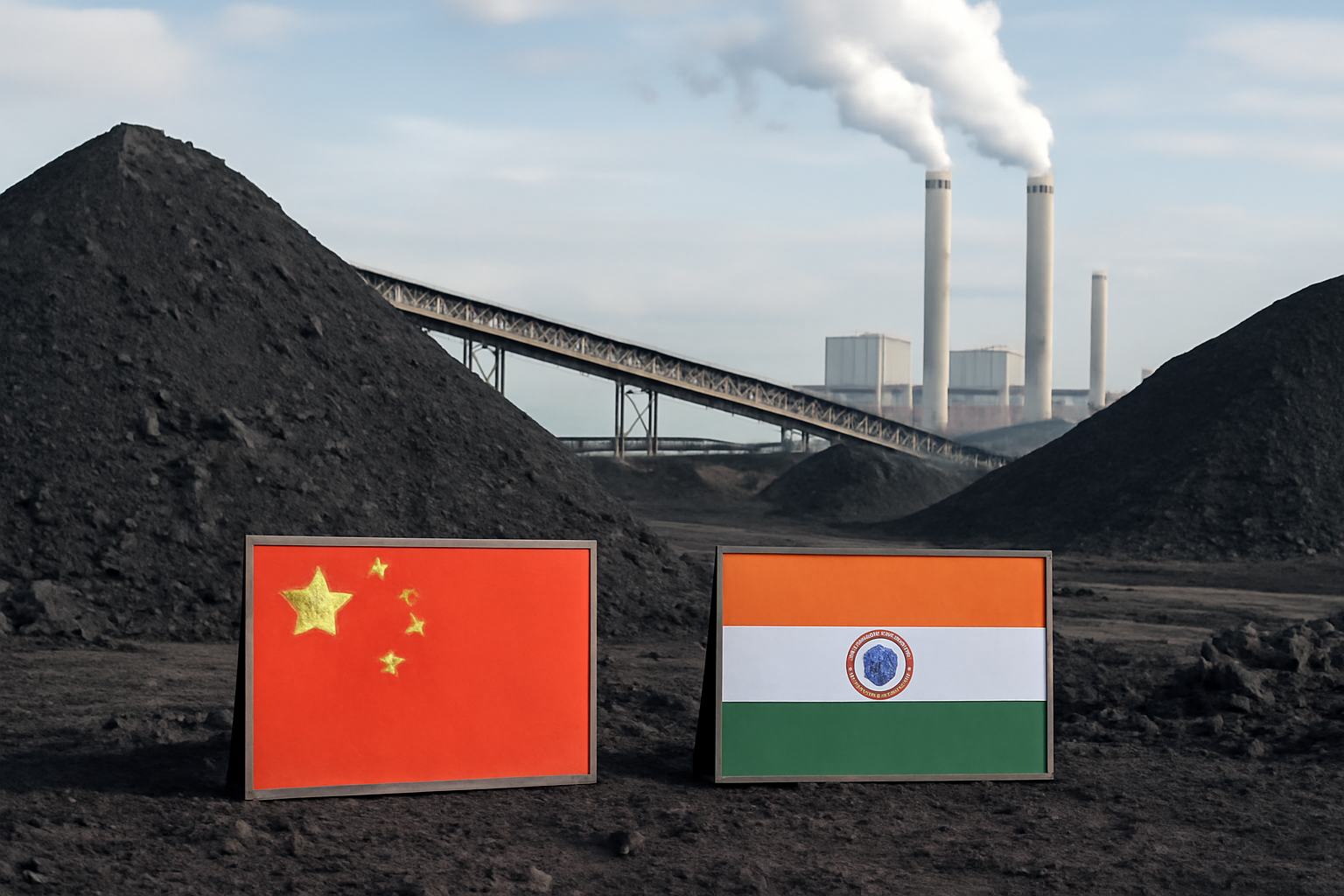
Asian demand sustains global coal use
China and India together consume about 70% of the world’s coal in 2025, underlining the decisive role of Asia’s two largest energy markets in determining the outlook for the fuel. The concentration means that changes in coal consumption in either country can have an outsized effect on global demand, production requirements and market expectations.
Coal also remains the world’s leading source of electricity generation in 2025, despite accelerating investment in renewable energy. The two trends are developing simultaneously: more renewable capacity is being added, while coal continues to occupy a central position in power systems that must serve large and growing electricity markets.
The available source material does not provide separate consumption figures for China and India, a global tonnage estimate or a comparison with previous years. It nevertheless places their combined share at about 70%, showing that the global coal market is highly dependent on demand conditions in those two countries.
Renewable investment has not displaced coal
The continued importance of coal illustrates the difference between expanding renewable capacity and reducing the use of existing fuels. Investment in renewable energy can increase the supply of lower-carbon electricity, but the source material indicates that it has not yet removed coal from its position as the principal fuel for power generation worldwide.
For coal producers and traders, this concentration makes Chinese and Indian electricity demand central to commercial planning. Suppliers serving Asian markets must follow changes in power generation and fuel requirements in both countries, while investors assessing coal assets face a market whose global direction is closely tied to a limited number of major consumers.
The same concentration creates exposure. A change in coal-fired generation in China or India could affect a large portion of world consumption, while continued reliance on the fuel would support demand even if coal use declines elsewhere. The source material does not specify trade volumes, prices or the balance between domestic output and imports, so no conclusion can be drawn about the effect on individual exporting countries.
Southeast Asia continues to add capacity
Several Southeast Asian countries are also continuing to expand capacity, adding another Asian dimension to the coal outlook. The material does not identify the countries, projects, technologies or amount of capacity involved, but the direction suggests that coal-linked power infrastructure is still developing in parts of the region.
For utilities, miners, equipment suppliers and fuel traders, the key issue is therefore the pace at which renewable investment translates into lower coal burn rather than capacity additions alone. In 2025, the available information points to an uneven energy transition: renewable investment is accelerating across many countries, but coal remains the leading source of global electricity and about 70% of consumption is concentrated in China and India.