China Moves Hydrogen From Demonstration to Industrial Scale as Policy Widens to Chemicals, Steel and Power
China is shifting its hydrogen industry from demonstration projects to industrial-scale deployment, widening policy from fuel cell vehicles into chemicals, steel and power generation, according to Maeil Business Newspaper. Alkaline electrolysers hold more than 92% of the Chinese equipment market, and Beijing targets an end-use hydrogen price below 25 yuan per kilogram by 2030. Hyundai Motor Group is countering with a 200 MW electrolysis plant in Saemangeum designed to produce about 30,000 tonnes of clean hydrogen a year.
Beijing widens hydrogen policy beyond vehicles
China is lifting its hydrogen industry out of the demonstration phase and into industrial-scale deployment, drawing on abundant renewable power and a large manufacturing base, according to Maeil Business Newspaper. Policy that once concentrated on fuel cell electric vehicles is being widened to cover chemicals, steel and power generation.
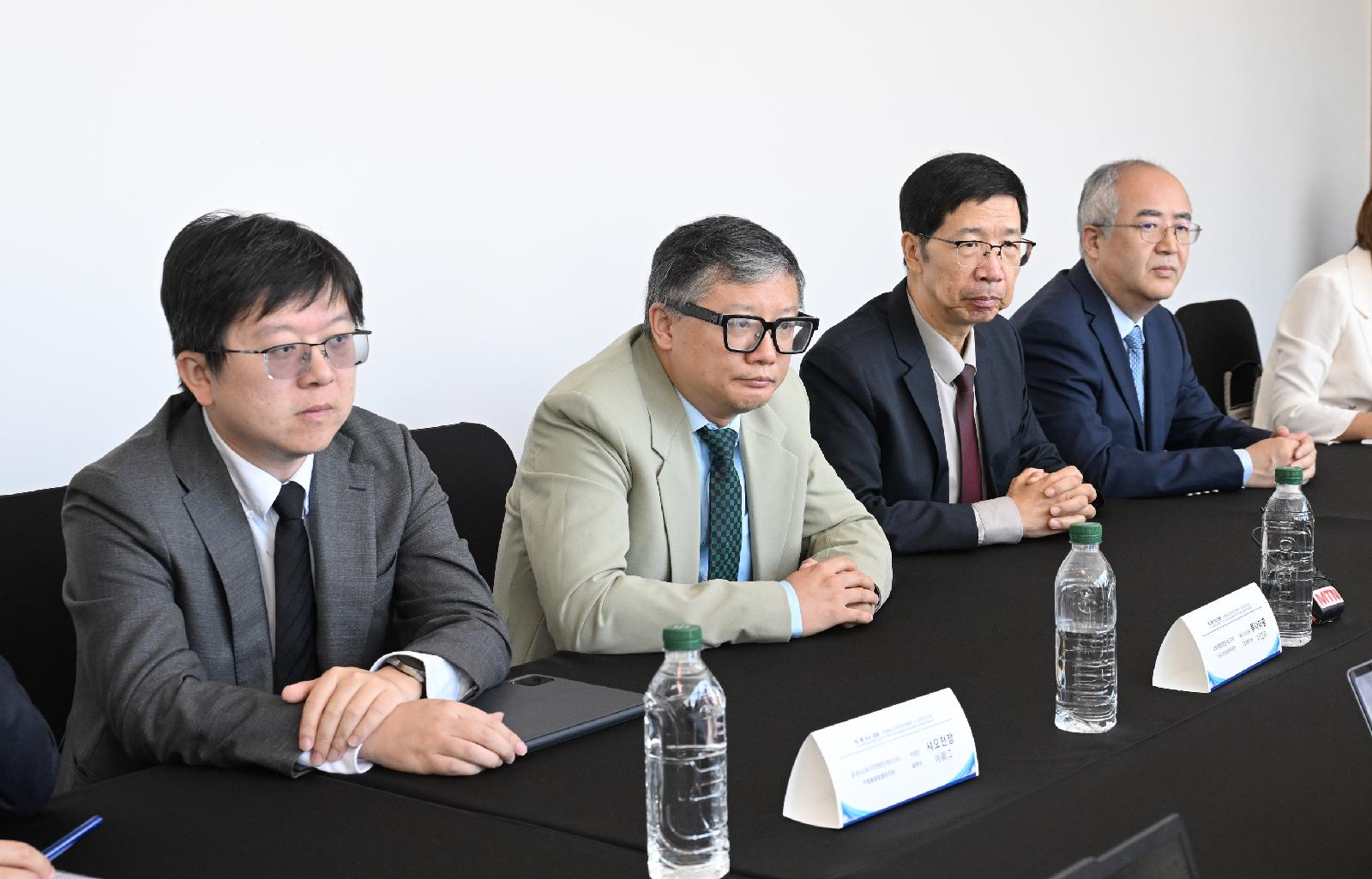
The assessment came at the 2026 Korea-China Hydrogen Policy Forum, held on the 17th at the Novotel Ambassador in Seoul by the Korea Hydrogen Alliance under the title “Korea-China Hydrogen Dialogue: Renewable Energy Expansion and the Future of the Northeast Asian Hydrogen Economy”. About 200 participants from industry, academia and research institutes in both countries discussed the fuel cell vehicle market, regional hydrogen ecosystems and the construction of a joint Northeast Asian value chain.
China has promoted fuel cell vehicles and fuel cell deployment since 2020 through five demonstration city clusters. More recently the policy perimeter has widened to link clean hydrogen production, storage and transport with large industrial demand in chemicals, steel and power generation.
Alkaline electrolysis dominates the equipment market
According to Yang Fuyuan, professor at the School of Vehicle and Mobility at Tsinghua University, China holds the world's largest hydrogen production capacity and is accelerating the build-out of a value chain running from production through to end use. The forum presentation identified the mismatch between renewable generation sites and demand centres, output curtailment, and long-duration and seasonal storage as the problems where hydrogen's role will grow. On that reading, hydrogen should be treated not as an energy source competing with renewables but as complementary infrastructure that raises renewable utilisation.
In green hydrogen — produced by splitting water with renewable electricity — China is raising installed capacity and manufacturing competitiveness quickly. Alkaline electrolysers, which pass current through an alkaline electrolyte to split water into hydrogen and oxygen, account for more than 92% of the Chinese market. Units with a production capacity of up to 3,000 cubic metres of hydrogen per hour have appeared. Manufacturers are working to cut production costs through automated assembly lines, localisation of core components and larger equipment sizes.
Liu Jianguo, professor at the Energy and Power Innovation Research Institute of North China Electric Power University, said: “China is expanding large-scale green hydrogen projects on the basis of abundant renewable energy resources and is moving beyond demonstration into industrialisation.” Securing price competitiveness, according to that presentation, requires both larger production facilities and stable industrial demand from refining, chemicals, steelmaking and ammonia.
Projects that use green hydrogen to make green ammonia and methanol for power generation and marine fuel are also under way. The stated Chinese target is to bring the average end-use hydrogen price below 25 yuan per kilogram, about 5,000 won, by 2030 — the level regarded as necessary to convert policy- and subsidy-driven demonstration work into a real market.
Korea extends from cars into production and power
Korea is extending the competitiveness it built in fuel cell passenger cars into commercial vehicles and industrial and energy applications. Hong Eun-hee, executive vice president and head of the Energy and Hydrogen Business Division at Hyundai Motor Group, said the company has sold more than 48,000 fuel cell passenger cars across 25 countries, and that hydrogen trucks and buses supplied to 16 countries since 2020 total about 4,000 units.
Hyundai Motor Group is expanding beyond mobility into clean hydrogen production, storage, transport and power generation. It is preparing to operate 1 MW domestically developed polymer electrolyte membrane (PEM) electrolysis units in Buan, North Jeolla Province, and Boryeong, South Chungcheong Province, and is developing a 200 MW electrolysis plant in Saemangeum linked to renewable generation. The plan is to produce about 30,000 tonnes of clean hydrogen a year for supply to AI data centres, hydrogen cities, autonomous mobility and robot factories.
The industry has passed the stage of verifying technical feasibility and must now accumulate commercial cases and reduce costs, Hong said, adding that policy continuity and predictability are important if companies are to sustain investment over the medium and long term. “If Korea and China share policy and demonstration experience and build competitiveness together, they can lead the growth of the Northeast Asian hydrogen economy,” Hong said.
Participants examined cooperation in commercial mobility, electrolysis equipment, green ammonia and methanol, refuelling infrastructure, technical standards and joint demonstrations, setting China's strengths in market scale and policy testing against Korea's in fuel cell vehicles, core materials, shipbuilding and manufacturing. Jeong Seok-jin, secretary general of the Korea Hydrogen Alliance, said both countries are expanding clean hydrogen supply and creating practical demand across industries, and need to share policy directions and cases to identify concrete areas of cooperation.