Harvest rain leaves 40% of China’s garlic below standard as prices rise
Harvest-season rain has left an estimated 40% of China’s current garlic crop below quality standards. Prices are rising as Brazil and Argentina also reduce planting, although a favorable Spanish harvest could provide some relief.
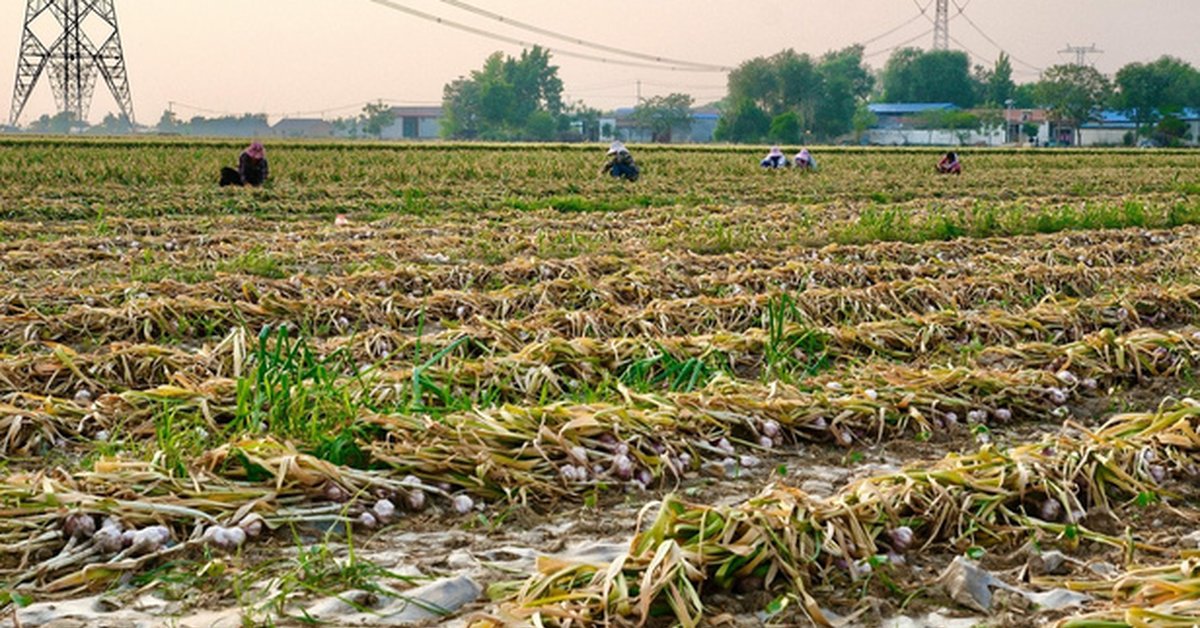
Rain damages China’s garlic during harvest
Harvest-season rain has caused serious quality problems for garlic in China, tightening supplies from one of the world’s major producing countries and lifting prices on the international market. Luís Carlos de Souza, an importer and producer with Brazil’s Fortaleza and Realeza Group, estimated that around 40% of China’s garlic output in the current season does not meet required standards, according to Soha.
The damage concerns quality rather than a confirmed 40% fall in total harvested volume. Even so, the reduced availability of marketable garlic is affecting quotations. Garlic in the 60–65 size category is priced at about $17.5 per kilogram, while high-quality Chinese garlic exported to Brazil is trading at approximately $24 per kilogram. The widening premium illustrates the value of export-grade supply when weather has reduced the share of the crop suitable for demanding markets.
Brazil and Argentina cut planted area
China’s quality losses coincide with weaker production prospects in South America. Brazil’s garlic output in the new season is forecast to decline by 20–25%, with bulbs also expected to be smaller than in previous years. De Souza attributed the contraction to selling prices over the past two seasons that failed to cover production costs, prompting farmers to reduce the area allocated to the crop.
Brazilian garlic acreage has fallen by around 20–25% in the current season and could decline by a further 25% next season if market conditions do not improve. Argentina, an important regional garlic exporter, has also recorded a 20–30% reduction in planted area after low prices in previous seasons weakened growers’ incentive to produce. These cuts limit the ability of South American suppliers to compensate quickly for shortages of higher-quality Chinese garlic.
Costs and trade rules shape Brazil’s ceiling
Brazil and China had previously reached a price agreement at around $16. After costs and taxes were added, the domestic Brazilian selling price rose to approximately $23. Brazilian producers received an average of only about $20 in the previous season, resulting in a loss of roughly $3 for every box of garlic sold. De Souza called for a review of price arrangements and anti-dumping tax policies applying to certain exporters.
Despite current upward pressure, De Souza expects garlic prices in Brazil to remain below $24–27 because of the price-agreement mechanism between the Brazilian and Chinese governments. Spain is forecast to have a favorable harvest this year, which could partly replenish international supply. Demand patterns are also changing within Brazil: purple garlic is gaining favor in São Paulo, Rio de Janeiro and Minas Gerais because of its darker skin and appearance, while Chinese garlic continues to command a higher price in the Brazilian market.