China Books About 1 Million Tonnes of US Soybeans Ahead of Xi's Washington Visit
China bought roughly 1 million tonnes of US soybeans in a single week, Reuters reported, citing four trade sources. The purchases came ahead of Chinese President Xi Jinping's visit to Washington. China is the world's largest importer of oilseeds, and business of this size redirects demand away from South American origins.
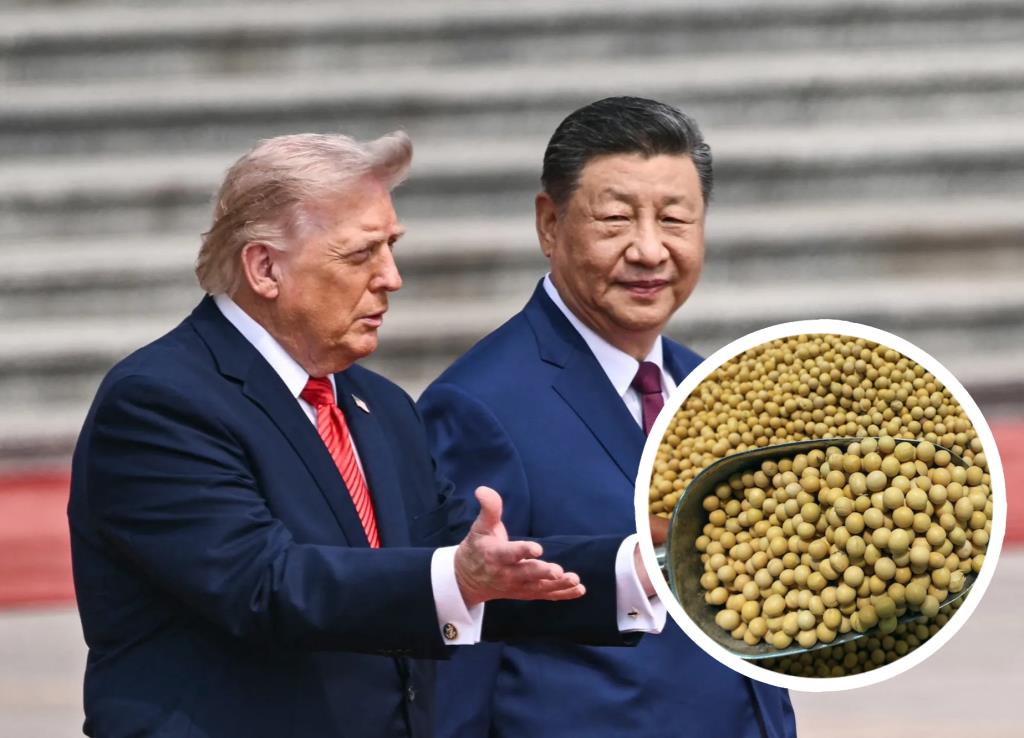
China purchased about 1 million tonnes of US soybeans this week, Reuters reported, citing four trade sources. The buying took place ahead of a visit by Chinese President Xi Jinping to Washington. China is the world's largest importer of oilseeds.
A week's buying on an unusual scale
The volume described by the trade sources — roughly 1 million tonnes booked within a single week — is large for one origin over such a short period. The account carried by Reuters and relayed by Thai outlet MGR Online does not identify the individual buyers, the destination crush plants or ports, or the shipment periods involved.
For the US export chain, business of this size is felt first at the origin. It works through loading programmes at the Gulf and the Pacific Northwest, barge and rail movement out of the interior, and the basis paid to farmers at the elevator. Soybeans bought by China are crushed into meal for animal feed and oil for food use, which ties the trade directly to the cost base of Chinese hog and poultry producers.
Timing ahead of the Washington meeting
The purchases were reported in the run-up to Xi's trip to Washington. Agricultural commodities, and soybeans in particular, have repeatedly served as the most visible instrument in the trade relationship between the two countries: the volumes are large, contracts can be executed within days, and the effect shows up quickly in official export data.
That timing matters for anyone modelling forward demand. Commercial buying follows crush margins, replacement costs and vessel availability. Buying that is timed to a diplomatic calendar does not have to follow any of them. Until follow-through appears in weekly export sales and inspection figures, one week's total says little about the pace of shipments across the rest of the season.
What it means for competing origins
Brazil and Argentina are the main alternative origins for Chinese soybean demand. Cargoes booked from the United States are cargoes not booked in South America, and the substitution tends to show up quickly in FOB premiums at Brazilian ports and in freight demand out of the Atlantic. Exporters who had assumed a stable Chinese programme are now dealing with a buyer that has a second, politically weighted option.
The effect is not confined to price. Chinese crushers work on thin margins and buy origin by origin against those margins. If US beans are being taken for reasons other than margin, the reference price South American sellers use loses part of its predictive value for the remainder of the marketing year.
Points to watch
- Whether official US export sales data confirms the volume described by trade sources, and how it splits by shipment period.
- Whether buying continues after the Washington meeting, which would point to commercial rather than political demand.
- The reaction of Brazilian FOB premiums and Atlantic freight as demand moves between origins.
- Chinese crush margins and feed demand from the hog sector, which set the ceiling on how much can be absorbed.
- The split between state-linked buyers and private crushers, which usually separates strategic purchases from commercial ones.