China Commits to At Least $17 Billion a Year in US Farm Purchases Through 2028
The United States says China has agreed to buy at least $17 billion of US agricultural products annually in 2026, 2027 and 2028, with the 2026 total prorated. The commitment is described as additional to existing US farm export obligations, giving American growers a multi-year demand floor.
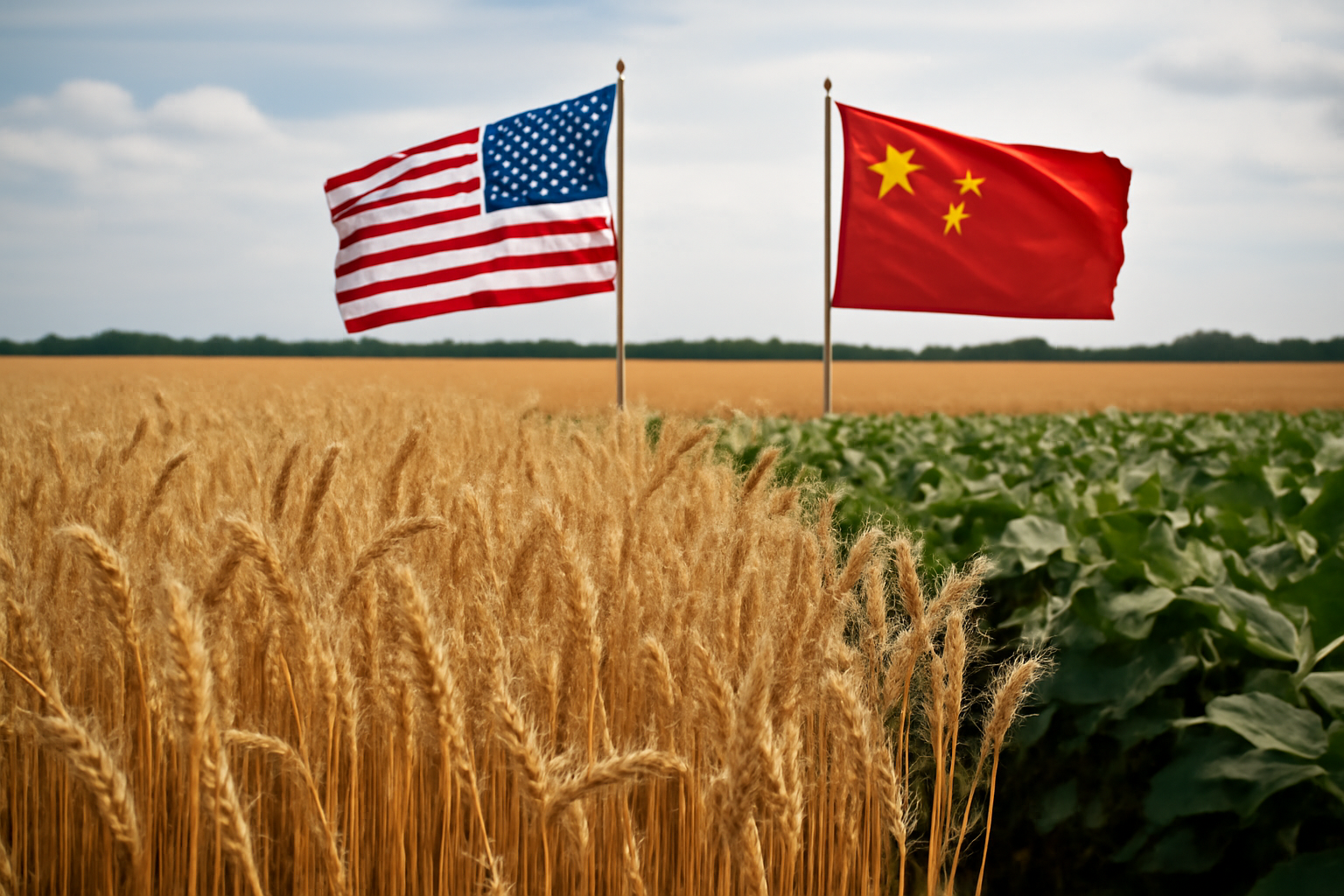
China pledges at least $17 billion a year in US farm goods
China has agreed to purchase at least $17 billion per year of US agricultural products in 2026, 2027 and 2028, according to the United States, in a commitment reported by world-grain.com. The 2026 figure will be prorated to reflect a partial year, while the full annual floor applies to 2027 and 2028. The pledge is described as additional to existing US farm export commitments, handing American growers a multi-year demand baseline from their largest overseas customer for several core crops.
Structure of the commitment
The number is framed as a minimum — "at least" $17 billion each year — rather than a fixed ceiling, leaving room for larger flows if prices or volumes climb. Because 2026 is prorated, first-year buying will land below the full annual level, with 2027 and 2028 standing as the first complete years under the arrangement. A three-year horizon gives both exporters and importers a planning window that spans multiple planting and harvest cycles, a rarity in a bilateral trade relationship that has swung sharply in recent years.
world-grain.com reports the commitment as being on top of existing US farm export obligations. The scale of that underlying baseline was not detailed in the material available, so the combined annual total cannot be stated precisely. What is clear is that the $17 billion floor represents new, incremental demand layered onto whatever China was already committed to buy.
What it means for trade flows
Agricultural trade between the two countries is dominated by bulk commodities. Soybeans are historically the single largest US farm export to China by value, followed by grains such as corn, wheat and sorghum, along with cotton and meat products. A committed annual purchase floor of this size points most directly at these high-volume categories, where Chinese buying decisions move global benchmark prices and reshape freight and origination patterns.
For US exporters, a defined multi-year floor reduces the uncertainty that has weighed on the sector since bilateral tariff disputes disrupted flows. For competing suppliers — among them Brazil, Argentina and the Black Sea grain exporters — larger guaranteed US shipments to China could tighten the volumes available for other destinations and shift the balance of origin competition in key markets. Importers outside China will be watching whether redirected US supply eases or tightens availability elsewhere.
Open questions
Several details remain unresolved in the reported terms. The material does not specify a product-by-product breakdown, so it is not known how the $17 billion is expected to be split across soybeans, grains, cotton and other categories. Nor is it clear how the prorated 2026 figure will be calculated, or what enforcement or review mechanisms accompany the targets.
- The floor is a minimum of $17 billion per year, not a fixed or maximum figure.
- The commitment runs across 2026 (prorated), 2027 and 2028.
- The purchases are described as additional to existing US farm export commitments.
- A product-level breakdown was not provided in the reported terms.
The commitment fits within a broader easing of trade tensions between Washington and Beijing. For grain and oilseed markets, the immediate significance lies in the predictability a three-year purchase floor offers — a fixed anchor of Chinese demand that traders can price against as the 2026 marketing year approaches.