Chile’s Last Sugar-Beet Refinery Receives Final Domestic Crop
Iansa’s Cocharcas plant has received its final sugar-beet delivery, ending domestic beet-sugar refining in Chile. The plant will process imported raw sugar instead, while about 300 growers and a wider agricultural network must adjust to the loss of the crop.
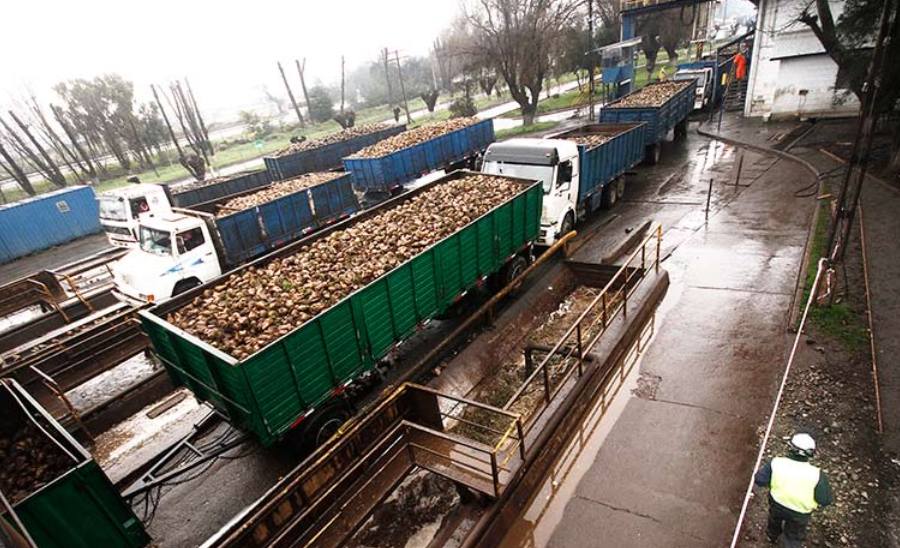
Final delivery closes a 73-year chapter
Iansa’s Cocharcas plant has received its final delivery of domestically grown sugar beet, bringing beet-sugar refining in Chile to an end. The facility in San Carlos, Ñuble, was the country’s last refinery still accepting the crop. La Discusión reported that the final intake closes an agricultural chapter that began with Iansa’s creation in 1953 and the opening of the Cocharcas plant in 1967.
The decision follows two decades of refinery closures and declining plantings. Chile’s sugar-beet area fell from about 60,000 hectares at its peak to around 7,000 hectares in recent years. According to the Office of Agricultural Studies and Policies, Odepa, farmers planted 7,892 hectares in the 2024-25 season, including 4,423 hectares in Ñuble.
On 29 April, Empresas Iansa told growers, employees and the local community that it would neither contract acreage nor purchase beet for the 2026-27 season. The measure directly affects about 300 farmers. La Discusión said the wider production chain—including transport companies, suppliers, service providers, technicians and agricultural workers—comprises an estimated 3,000 people.
Cocharcas turns to imported raw sugar
Iansa will use the Cocharcas plant to refine imported raw sugar. The company opened that processing line in 2012 with a focus on cane sugar, whose production costs are lower. The additional capacity had helped offset the reduction in beet acreage after the closures of the Linares refinery in 2018 and the Los Ángeles plant in 2020.
Renato Segura, an economist at Federico Santa María Technical University, told La Discusión that producing one kilogram of refined sugar from beet costs twice as much as producing the same quantity from sugar cane. He also identified trade opening, imported sugar or feedstock, the bargaining power of a dominant beet buyer and the expansion of low-cost sweeteners as pressures on Iansa and its supply chain.
The change therefore does not mean the end of sugar refining at Cocharcas, but it does replace a domestic agricultural raw material with imported supply. For Chile’s sugar market, the plant’s future activity will depend more directly on access to foreign raw sugar and the economics of cane-based processing. Domestic growers, meanwhile, lose the country’s remaining industrial buyer for sugar beet from the 2026-27 season.
Growers lose a crop that drove modernization
The consequences extend beyond the hectares leaving production. Raúl Cerda of the University of Concepción said the beet industry helped transform agriculture in Ñuble through mechanization, irrigation, fertilization, new varieties, credit and technical assistance. Yields that once had a floor of 30 tonnes per hectare eventually reached 100 tonnes and more, according to Cerda.
Iansa financed equipment, supplied technical support and helped farmers adopt sprinkler and pivot irrigation, including access to Chile’s Law 18.450 irrigation incentives. Beet also formed part of rotations with maize and wheat, leaving well-fertilized land for the following crop. Its disappearance forces producers to replace not only an income source but also a crop that shaped farm investment, rotations and local demand for transport and agricultural services.