Chicken prices in Bangka Belitung pass Rp49,000 per kilogram, nearing Rp50,000
Broiler chicken in Indonesia's Bangka Belitung province averaged Rp49,354 per kilogram in September 2026, according to Media Indonesia, which linked the rise to demand from the Free Nutritious Meal Program. A University of Bangka Belitung academic told Tribun Bangka that supply is the main constraint, while Kompas reported that traders in Pangkalpinang are seeing weaker sales as prices climb.
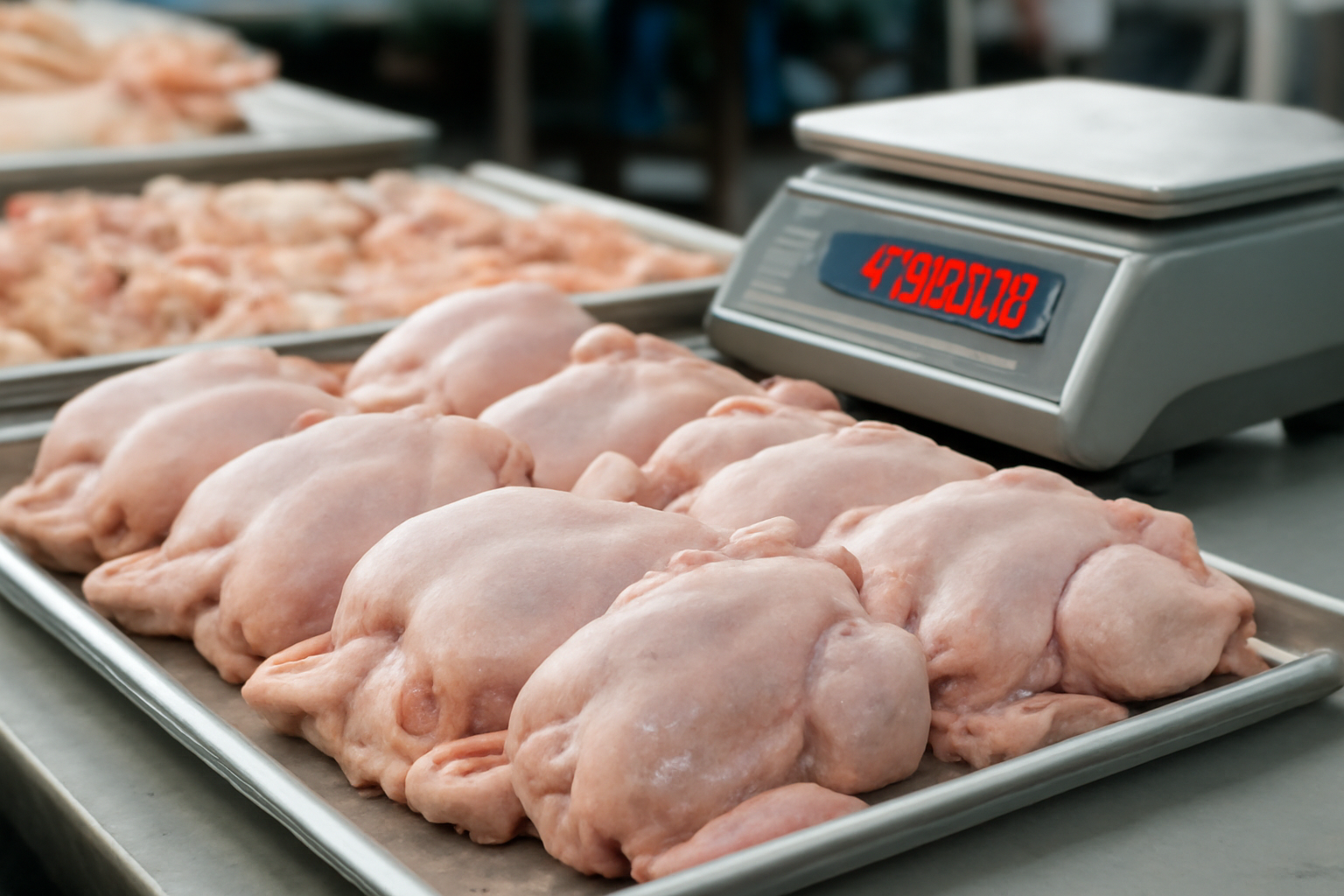
Provincial price approaches the Rp50,000 mark
Broiler chicken prices in Indonesia's Bangka Belitung province have moved past Rp49,000 per kilogram. Media Indonesia reported an average of Rp49,354 per kilogram in September 2026, describing the move as a significant jump that brings the commodity close to Rp50,000 per kilogram. The outlet attributed the pressure to demand created by the government's Free Nutritious Meal Program (Program Makan Bergizi Gratis), which channels regular protein volumes into institutional kitchens.
Tribun Bangka reported the same threshold being crossed, framing the increase as a province-wide issue in the market for ayam ras, or commercially farmed broiler chicken. Neither report quantifies how far local supply has fallen short of demand, and no figure has been published for the volume of chicken absorbed by the meal programme in the province.
Academic points to supply as the main constraint
Darman Saputra, an academic at Universitas Bangka Belitung (UBB), told Tribun Bangka that the increase in broiler prices in the province is a combination of supply problems and higher demand, with supply the principal issue. That assessment places the source of the move upstream — in the availability of birds reaching the provincial market — rather than purely in a consumption spike.
The distinction matters for how quickly the price can normalise. Demand-led spikes tend to unwind when the calendar event driving them passes; supply-led moves persist until placements, slaughter volumes and inbound shipments are rebuilt. The reporting to date sets out the following picture:
- Price level: an average of Rp49,354 per kilogram in Bangka Belitung in September 2026, below but close to Rp50,000 per kilogram, according to Media Indonesia.
- Supply: identified by Darman Saputra as the main driver of the increase, in comments to Tribun Bangka.
- Demand: the Free Nutritious Meal Program cited by Media Indonesia as an additional source of pressure on the local market.
Traders in Pangkalpinang report weaker turnover
At retail level, the higher price is not translating into stronger trade. Kompas reported that chicken vendors in Pangkalpinang, the provincial capital, are complaining of quiet stalls as prices rise, with weak household purchasing power and falling turnover. Traders quoted by the outlet indicated they have no alternative but to sell at prevailing prices, since their own buying costs have moved with the market.
That combination — record local prices alongside shrinking volumes — is characteristic of a market where the increase originates in cost and availability rather than in consumer demand. Retail chicken buyers in Indonesia are price-sensitive, and at the point where the shelf price nears a round number such as Rp50,000 per kilogram, households typically reduce portion sizes, buy less frequently or substitute towards cheaper protein. Margin pressure then concentrates on the smallest link in the chain, the market trader, who cannot pass on the full increase without losing customers.
What the sources do not yet show
The published reporting does not include data on how many birds are being placed or slaughtered in Bangka Belitung, on the share of provincial output taken by the Free Nutritious Meal Program, or on shipments of chicken into the province from other parts of Indonesia. Nor is there a published price comparison with the national average or with the government's reference price for broiler chicken at consumer level.
For processors, distributors and institutional buyers operating in the province, the operative facts are those confirmed by the three outlets: a September 2026 average of Rp49,354 per kilogram, a supply-side diagnosis from UBB, an identified institutional demand source, and falling sales volumes at the retail end. Any assessment of how long the level persists depends on data that has not yet been made public.