Cheap African Road Salt Puts Pressure on Polish Mines Despite Vast Reserves
Poland continues to import competitively priced road salt from Europe and North Africa despite holding billions of tonnes of domestic rock-salt reserves. Lower mining demand, mild winters and cheaper sea-salt production are squeezing the economics of Polish suppliers.
Imports compete with extensive domestic resources
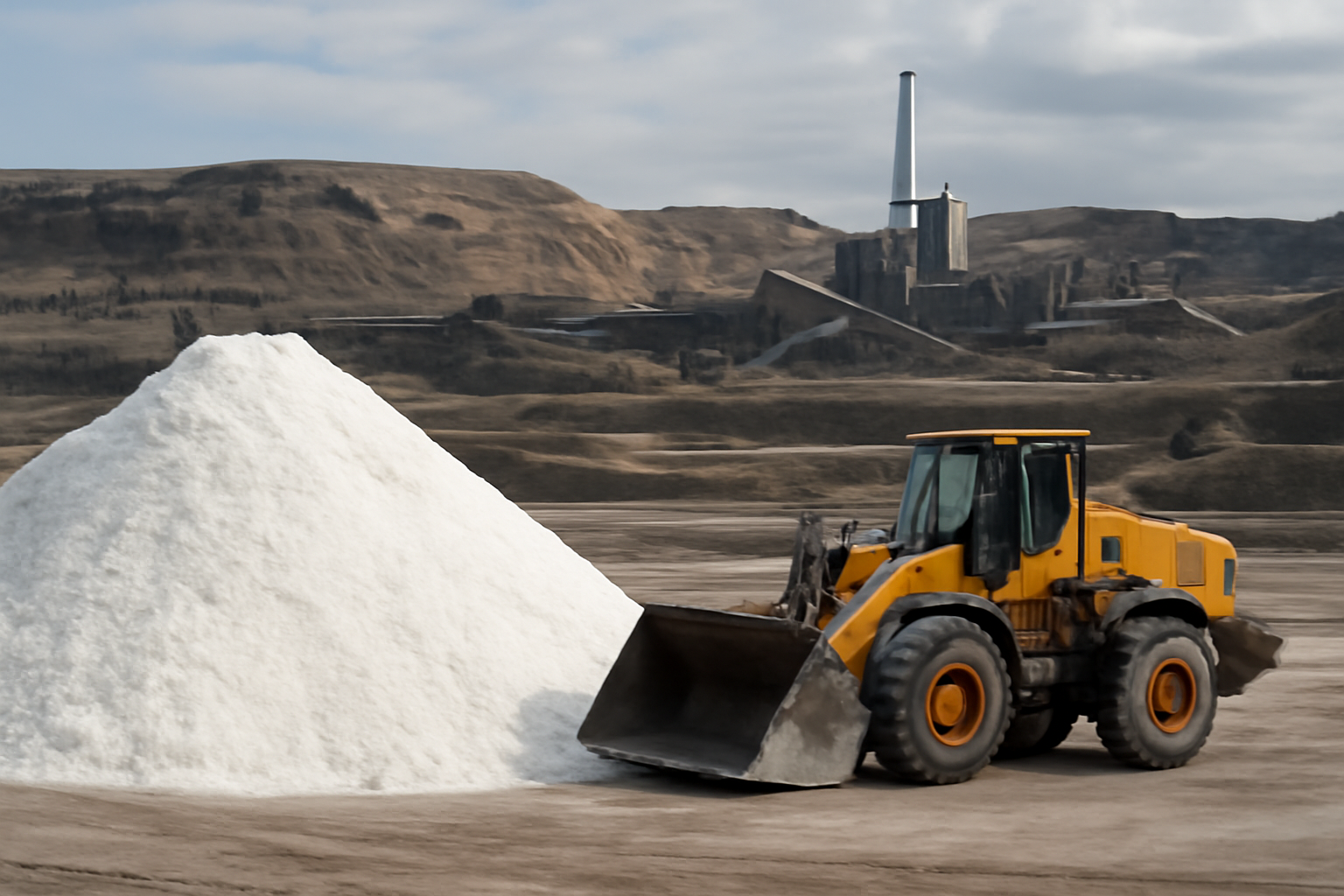
Poland holds billions of tonnes of rock-salt resources, yet buyers continue to source salt from abroad. Imports arrive from European suppliers, including Germany, and from North African producers in Egypt, Tunisia and Morocco. The central commercial issue is not geological availability but the cost of delivering a product that can compete in procurement for winter road maintenance.
According to FXMAG, Poland currently has two operating rock-salt mining centres: the Kłodawa Salt Mine and the Polkowice-Sieroszowice mining complex. At Polkowice-Sieroszowice, salt is produced as a by-product of copper extraction by KGHM Polska Miedź. These domestic operations face both imports from outside the European Union and strong competition within the bloc.
Much of the African material is produced by evaporating seawater. That process requires less energy than extracting and processing salt underground, giving suppliers a lower production-cost base. FXMAG reports that the price advantage can remain intact even after the cost of transporting the salt to Europe is included.
Road demand has fallen
The pressure from imports comes as Poland’s demand for road salt has weakened. Companies responsible for winter road maintenance ordered 2.9 million tonnes in 2024, compared with almost 3.3 million tonnes one year earlier, according to FXMAG. The decline of roughly 400,000 tonnes reduced the market available to domestic mines and intensified competition for individual contracts.
Demand is closely tied to winter weather. Several relatively mild winters reduced requirements for de-icing material, although the most recent winter was an exception to that pattern. This volatility complicates production planning: mines carry fixed costs and must maintain equipment and underground infrastructure even when municipal authorities and road operators cut seasonal purchases.
The result is a difficult price equation for Polish suppliers. A large domestic resource does not automatically translate into competitive output when underground extraction consumes more energy and imported material can reach customers at a lower delivered price. For road-maintenance buyers operating through tenders, price differences can outweigh arguments about the origin of the salt.
Industrial role raises policy questions
Road treatment is only one use for salt. The mineral is also an important feedstock for the chemical industry, including chlorine production. Chlorine, in turn, is used in the manufacture of plastics, medicines and disinfectants. The debate therefore extends beyond seasonal road procurement to the continuity of a domestic raw-material base serving industrial users.
FXMAG argues that national production could become more viable if procurement or other regulations gave domestic material priority over imports. Such an approach would involve a trade-off. Preferential treatment could support mining capacity and supply security, but it could also raise costs for road authorities or industrial customers that currently have access to cheaper foreign salt.
For Polish producers, the immediate challenge is to preserve output and operational capability in a mature market exposed to weather-driven demand. Importers benefit from lower-cost African production and access to competing European supply, while buyers retain leverage through multiple sourcing options. Poland’s reserves provide long-term physical availability, but the future of domestic mining will depend on whether producers can close the delivered-cost gap or secure a policy-backed role in strategic supply.