Certification and traceability become essential for Vietnam’s wood processors
Vietnamese wood processors face rising requirements for legal sourcing, traceability and greenhouse gas reporting in export markets. Industry representatives say securing mature timber for higher-value processing is also critical as wood-chip buyers compete for acacia supplies.
Export markets demand evidence
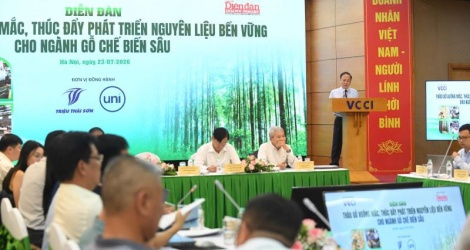
Certification, traceability and emissions data are becoming essential operating requirements for Vietnam’s wood industry as export markets tighten their rules. Báo Đầu tư reported that legal raw materials, sustainable forest management, supply-chain traceability and lower greenhouse gas emissions were central topics at a forum on developing sustainable inputs for the country’s higher-value wood-processing sector.
Bùi Thị Nha Trang, sustainability standards certification manager at Control Union Vietnam, said regulations and commitments including the European Union Deforestation Regulation, RED III, Net Zero targets and environmental, social and governance standards are changing global forest-product supply chains. Buyers increasingly expect data demonstrating legal origin, traceability and a product’s carbon footprint rather than assessing only the finished wood product.
This shift is moving forest-product trade from trust-based relationships toward documented evidence. International schemes such as FSC, PEFC, ISCC, GGL and SBP are consequently becoming components of corporate supply-chain management rather than certificates obtained only to satisfy individual customers.
Chip demand competes with deeper processing
Phạm Đình Thắng, chairman of Triệu Thái Sơn, identified stable, legal and sufficiently high-quality raw-material supply as the industry’s main bottleneck. He said processors face intense competition from wood-chip purchasing facilities, while widespread harvesting of young acacia trees makes supplies for higher-value production less reliable.
The value difference is substantial. According to Thắng, approximately 3 tonnes of fresh acacia generate around 3 million đồng when exported as wood chips. Processing the same quantity into pellets produces around 6 million đồng, while using it for plywood and other higher-value products, including the utilization of by-products, can generate more than 20 million đồng.
Triệu Thái Sơn proposed tighter oversight of raw-material purchasing, limits on harvesting immature forests, incentives for growing large-diameter timber and a digital database covering production areas and origin tracing. These measures would help processors retain more value in Vietnam and document compliance for demanding export destinations.
Carbon becomes a product attribute
MDF Mekong chairman Đoàn Văn Tỉnh called for obstacles involving production areas, policy and support for higher-value processors to be addressed. He said closer links between forest growers, companies and regulators were necessary, alongside conditions that allow businesses to invest in technology instead of exporting low-value raw materials. Nguyễn Thế Mai, chief executive of May Forestry Joint Stock Company, similarly advocated sustainable forest areas, stronger cooperation with growers and mechanisms supporting long-term corporate investment.
Emissions management is emerging as another competitive criterion. Control Union Vietnam said many international groups now require suppliers to disclose greenhouse gas information, particularly Scope 3 emissions across the value chain. Carbon footprint data may therefore become a wood-product attribute alongside quality and price.
Experts cited by Báo Đầu tư said sustainably managed production areas, digital supply chains, emissions inventories aligned with international standards and carbon-credit projects could improve access to higher-value markets and create carbon-related revenue. For Vietnamese producers, the competitive advantage is increasingly tied to verifiable data, sustainable timber and deeper processing rather than primarily to labor costs or manufacturing capacity.