Central Russia's Potato Harvest Peaks: Bryansk Nears 500,000 Tonnes, Tula Targets 650,000
Potato harvesting in central Russia has entered its peak phase. The Bryansk region has lifted almost 500,000 tonnes from 15,100 hectares at an average yield of 321 centners per hectare and plans more than 1.7 million tonnes, while Tula targets at least 650,000 tonnes. Seed material remains the sector's main import dependence, with domestic self-sufficiency targeted at 50 percent by 2030.
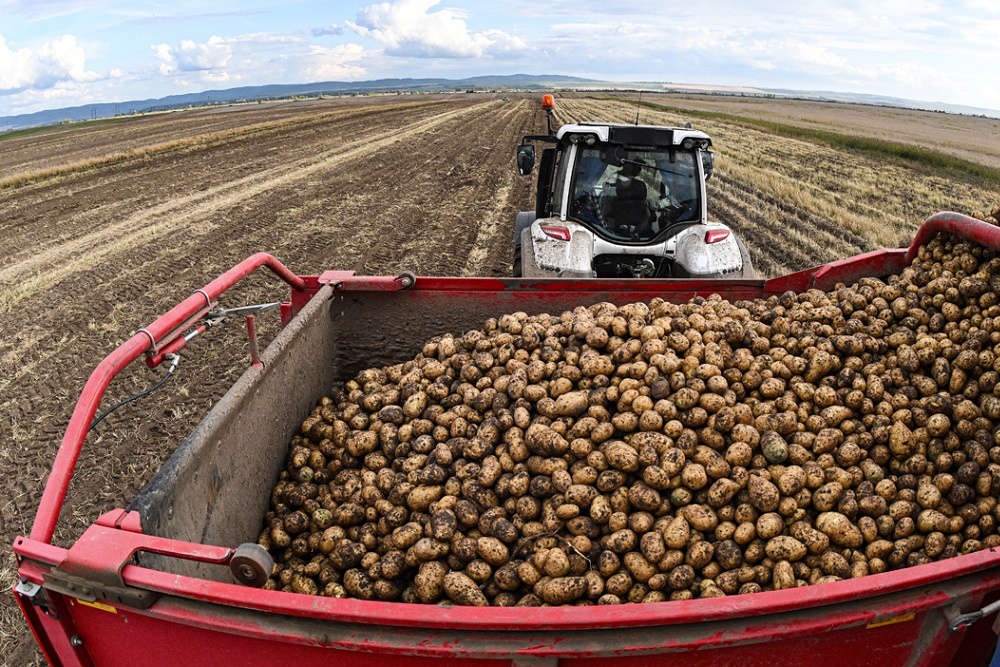
Potato harvesting across central Russia has entered its peak phase, with the Bryansk and Tula regions — the country's two leaders by area under industrial potato cultivation — reporting steady progress, Rossiyskaya Gazeta reported.
Bryansk lifts almost 500,000 tonnes
According to the regional agriculture department of the Bryansk region, potatoes occupy more than 37,000 hectares at agricultural enterprises and peasant farms this season, 2,200 hectares more than a year earlier. More than 170 farming businesses in the region grow the crop. Counting all categories of growers, including household plots, the total area exceeds 52,000 hectares.
As of mid-September, potatoes had been harvested from 15,100 hectares, or 41 percent of the plan. Work is under way in all 25 districts of the region, including those along the border; the department said growers had moved plantings away from the border by 112,000 hectares and continue to harvest despite the difficult situation in the border area. Combines are covering more than 5,000 hectares a week.
Almost 500,000 tonnes had been dug by the time of the report. The average yield stands at 321 centners per hectare (one centner equals 100 kilogrammes), while individual farms are taking off 400 and even 700 centners. The highest yields were recorded in the Dyatkovsky, Klintsovsky, Dubrovsky and Rognedinsky districts. The region plans to collect more than 1.7 million tonnes if the weather holds.
Nina Kineva, head of the crop production division at the regional agriculture department, said tuber quality is good, including at small farms, and that results depend both on the fields themselves and on husbandry — treated seed material and timely crop protection.
Tula plans 650,000 tonnes, Kaluga shows the household-plot gap
The Tula region, which holds second place by potato acreage with just under 20,000 hectares, plans to harvest at least 650,000 tonnes. At the farm of Manuk Avetisyan, one of the region's largest potato producers, the season is assessed as average — neither records nor anti-records. Chief agronomist Roland Kaplanyan put the yield at about 400 centners per hectare and described tuber quality as good.
Buyers now specify what they need rather than ordering potatoes in general. Chipping varieties are small tubers, while French fries require large ones; growers say tuber size this year matches the varieties planted. Moscow restaurants buy small potatoes in the Bryansk region. The Avetisyan farm grows more than 25 varieties for boiling and frying and runs its own processing plant.
The neighbouring Kaluga region illustrates what happens without proper agronomy: 70 percent of tubers there are grown on household plots, where treatment is often skipped, and the average yield is put at 227 centners per hectare. Vladimir Mazurov, director of the Kaluga agricultural research institute, a branch of the Lorkh Federal Research Centre for Potato, linked low private-sector yields to late blight and added that prolonged rains this season favoured lighter soils over heavy ones.
Seed material remains the bottleneck
Russia is practically independent of imported seed for cereals and pulses, but potatoes remain in the import-dependent category, Mazurov said. Planting material self-sufficiency is targeted at 50 percent by 2030. Breeding and seed production have been placed under the Russian Ministry of Agriculture, which he said moved science closer to the end user. Competitive domestic varieties exist and outperformed imported ones in a difficult season, but volumes of planting material are insufficient.
In the Bryansk region, about 15 to 20 percent of seed used is of domestic breeding, according to the regional agriculture department. At the Avetisyan farm the varieties are imported, but part of the planting material is bought in and part grown on site as first and second reproduction, Kaplanyan said.
The Kaluga institute produced 135,000 mini-tubers from test tubes last year, the primary link in seed production, and planted them this season. They must pass through super-superelite and superelite stages before elite planting material can be sold to farms in the third year. The institute has signed an agreement with the Pogarskaya Potato Factory, one of the largest potato businesses in the Bryansk region, to supply mini-tubers for seed production, and other branches of the Lorkh centre are concluding similar contracts.
Storage capacity and the current price window
Storage is no longer a constraint in the traditional potato regions. In the Bryansk region, potato storage capacity exceeds 750,000 tonnes, enough to supply retail until the new crop. Volumes not placed in storage are sold as new potatoes or bought by households for cellars. Weekend fairs where farmers sell without intermediaries have operated in Bryansk and all municipalities since August. Reported prices:
- Bryansk region: from 20 rubles per kilogramme at fairs, 34 rubles on average across the region.
- Kaluga region: wholesale from 20 rubles, retail 34 rubles.
- Tula region: 14 to 15 rubles per kilogramme from farms, 20 rubles at farmers' markets, from 35 rubles in shops.
Growers advise buying tubers for cellar storage now. Large farms that have filled their warehouses will sell actively later, when prices rise, while small producers and household plots without storage capacity are selling immediately — making small-lot wholesale cheapest at this point in the season. Resellers buying at the field for later resale at urban markets follow the same calendar.