Cassava shortage supports Brazilian root prices and constrains derivative output
Brazilian cassava supply remains restricted as growers prioritize planting, delay sales and face weather-related field disruptions. Lower starch content is also reducing industrial yields and limiting production of cassava starch and sour starch.
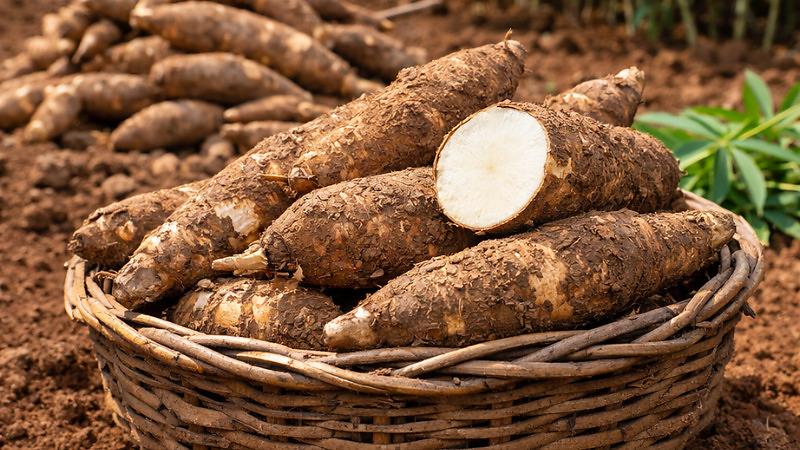
Restricted harvesting keeps cassava supply tight
Brazil’s cassava market is facing a shortage of roots that is supporting prices and reducing the volume of processed derivatives available to industrial buyers. VG Notícias reports that the pressure reflects a combination of lower harvested volumes, growers concentrating on planting and a decline in industrial yields.
A survey released by the Center for Advanced Studies on Applied Economics (Cepea) on July 27 found that many producers are still prioritizing the planting of the new crop. Other growers are postponing sales of younger roots because returns are considered insufficient or because pruned fields are not yet ready for harvesting.
Recent rainfall has reinforced the constraint. Although the precipitation was scattered, it disrupted fieldwork and prevented the harvested supply from expanding. The effect is particularly significant while producers are allocating labor and machinery to establish the next crop rather than lifting roots for immediate delivery.
Lower starch content reduces factory yields
The shortage is not limited to the physical volume arriving at processing plants. Cepea researchers also identified a sharper decline in the starch content of cassava roots. The institution said the change could be connected to the crop’s vegetative cycle, the varieties being cultivated or prevailing weather conditions.
Lower starch content means processors obtain less finished product from each quantity of roots. This reduces industrial efficiency and restricts production of derivatives including cassava starch and sour starch. As a result, factories and their customers face a supply squeeze even when some roots remain available for processing.
The two pressures reinforce each other: processors have fewer roots to work with, while each delivered load produces less derivative output. This leaves industrial supply more constrained than raw root availability alone would suggest and supports competition for cassava among processors.
Deliveries may improve after mid-August
Most producers surveyed by Cepea expect to complete planting by mid-August. Once that work is finished, more labor and equipment could return to harvesting. Researchers expect the pace of deliveries to processing industries to increase from the second half of August, particularly if rainfall decreases as anticipated.
That timetable offers the market a potential easing point, but it does not guarantee an immediate recovery in derivative production. The volume of roots released by growers and their starch content will both determine how quickly factories can rebuild output. Producers may also continue withholding younger roots if commercial returns remain unattractive.
Until deliveries accelerate, restricted root supply and weak industrial yields are expected to keep cassava prices supported and derivative availability limited. For processors, the central issue is not only procurement cost but also the amount of starch recovered from every load. Industrial buyers of cassava starch and sour starch therefore remain exposed to tighter availability until harvesting conditions and factory yields improve.