Carbo-FORCE Plans Biomass Pyrolysis and Biochar Plant in Oradea, Romania
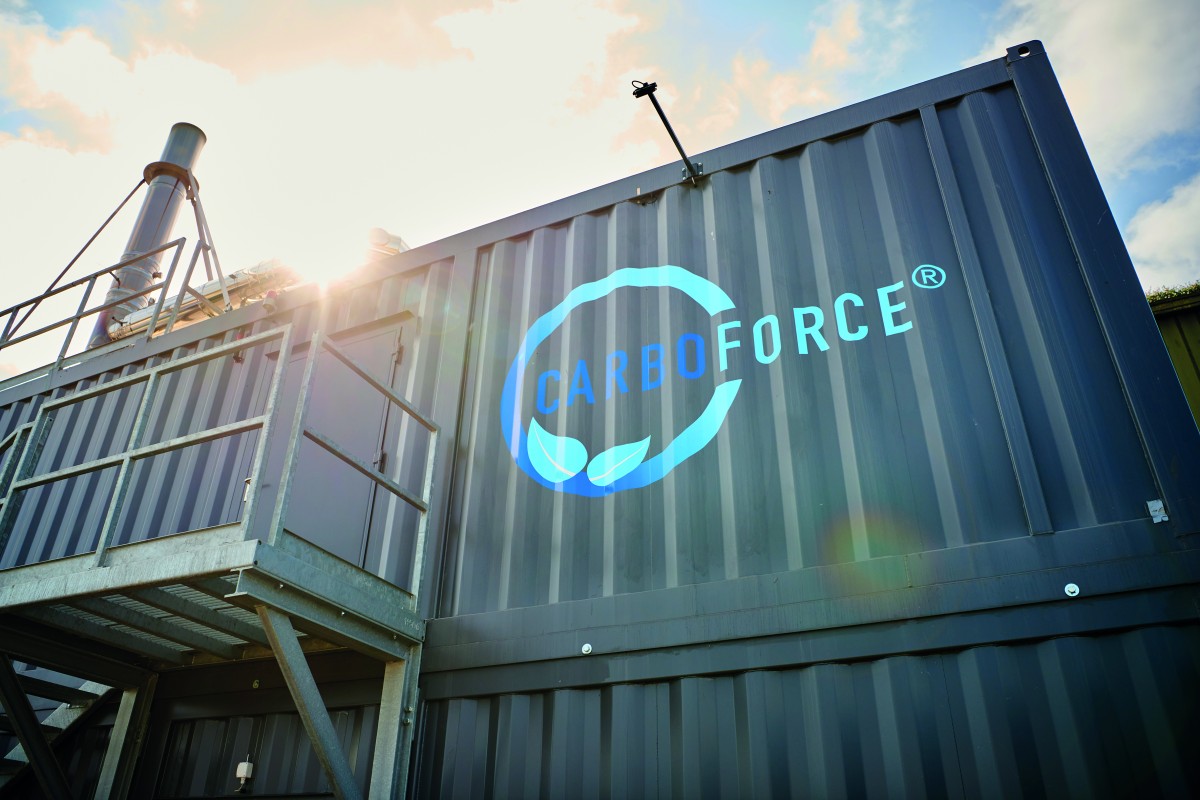
Germany’s Carbo-FORCE has signed an agreement for its first Romanian plant, partnering with Oradea-based Pure Carbon Solution and US company CO2-Sync. The facility will use a CF-250 pyrolysis system capable of processing up to 280 kilograms of biomass per hour into biochar, renewable energy and storable carbon.
First Romanian project secured
German climate technology company Carbo-FORCE plans to establish a biomass pyrolysis and biochar production facility in Oradea, Romania, through a strategic partnership with local company Pure Carbon Solution. According to Economica.net, the agreement for Carbo-FORCE’s first Romanian plant has been signed, and the company intends to use the partnership as a base for expansion in Romania and neighboring markets.
Observator News reports that the project will also involve US company CO2-Sync. The facility will convert biomass into biochar, renewable energy and carbon that can be stored over the long term. Neither publication disclosed the project’s investment value, construction timetable, annual production target or expected employment.
Carbo-FORCE Chief Executive Kai Alberding said the company’s first CF-250 system in Romania was moving toward implementation as quickly as possible. The CF-250 can process up to 280 kilograms of biomass per hour, according to the company information cited by both publications. At continuous operation, that nameplate throughput would define the plant’s input capacity, although actual output will depend on operating hours, feedstock properties and conversion yields, none of which were provided.
Local partner to manage feedstock and operations
Pure Carbon Solution will serve as Carbo-FORCE’s official Romanian partner. Its responsibilities include biomass analysis, plant design and adaptation, implementation and operation. This local role is important because the system can accept a broad range of feedstocks that may require different preparation and processing conditions.
The companies identify agricultural and forestry residues, straw, vine cuttings, shells, food-industry waste and wood chips as potential raw materials. That feedstock flexibility could connect the Oradea project with several Romanian supply chains, including farming, forestry, vineyards and food processing, while providing an outlet for organic residues that might otherwise have limited commercial value.
The partners aim to produce biochar certified under the European Biochar Certificate framework, generate renewable energy and retain carbon in a form designed for long-term storage. The source material does not specify how much energy the plant will generate, whether it will be used on site or sold, or how carbon-removal claims will be measured and commercialized.
Markets for biochar and regional expansion
Economica.net lists agriculture, construction and industrial water treatment among the intended markets for the resulting biochar. Agricultural applications include use as a fertilizer-related soil input or feed additive, while construction applications include composite materials and lightweight concrete. Biochar can also be used in industrial water-treatment processes.
The planned facility gives Carbo-FORCE a first operating foothold in Romania and a potential platform for neighboring countries. The company is already developing its model in other markets, with Alberding referring to activity connected with sawmills in Utah as well as forests in Romania. The Romanian project therefore combines equipment deployment with local biomass expertise and CO2-Sync’s participation rather than functioning solely as a machinery sale.
Bauer adds to its Romanian industrial presence
Carbo-FORCE was founded in Preetz, Germany, in 2017 and is headquartered in Kassel. It designs and manufactures pyrolysis and carbonization plants. BAUER Resources GmbH acquired a 50% stake in the company in January 2023, according to Economica.net.
Bauer already has an industrial presence in Romania through a compressor factory in Ghimbav, Brașov County, which carries out manufacturing as well as research and development. The Oradea investment would extend the group’s Romanian footprint into biomass conversion and carbon-management technology. Its commercial significance will ultimately depend on reliable residue supply, certified biochar output and the ability to secure buyers across agriculture, construction and water treatment.