Canada regains beef export access to the Dominican Republic after 23 years
The Dominican Republic has approved imports of Canadian beef and beef products, including offal, from cattle of all ages, the Canadian Food Inspection Agency announced on 11 September 2026. The decision ends restrictions imposed in 2003 after Canada's first BSE case. The Canadian Meat Council puts Dominican beef imports at more than $200 million in 2025.
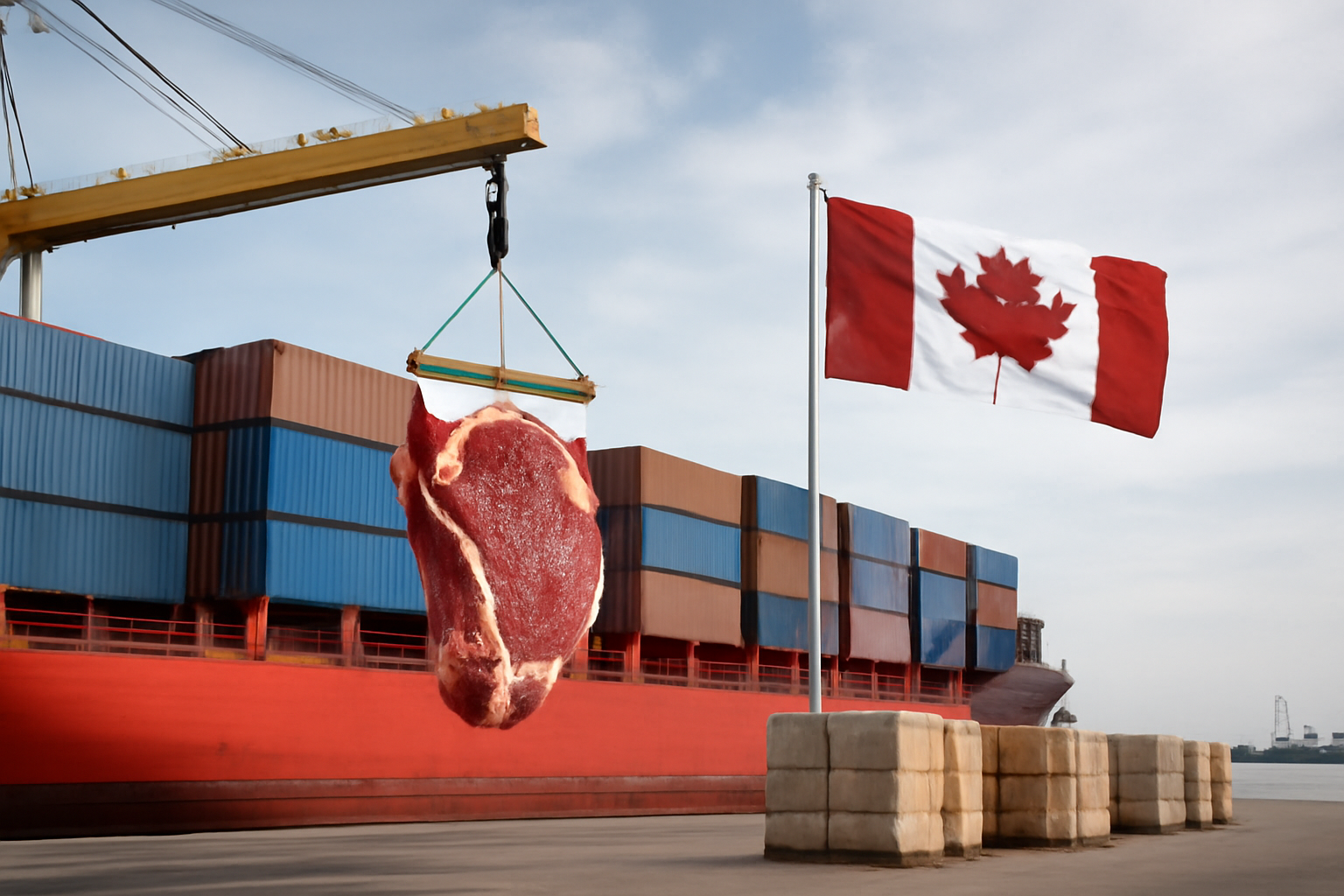
The Dominican Republic has approved imports of Canadian beef and beef products, including offal, from cattle of all ages, the Canadian Food Inspection Agency (CFIA) announced on 11 September 2026. The decision restores Canadian access to a significant Caribbean market for the first time since 2003, the year the Dominican Republic imposed restrictions after the first case of bovine spongiform encephalopathy (BSE) was detected in Canada.
The announcement, issued from Ottawa and carried by Les Affaires, sets no age limit on the cattle from which eligible product is derived and explicitly includes offal. Canadian beef processing establishments are now authorised to ship to the country. Coverage of cattle of all ages together with offal is the widest form of access available, since it leaves no category of eligible beef product outside the approval.
An audit, not a trade negotiation, reopened the market
The Dominican Republic reopened its market following an audit of the Canadian beef inspection system carried out by the country's Directorate General of Medicines, Food and Health Products (DIGEMAPS) and its Directorate General of Livestock (DIGEGA). According to the CFIA, the audit confirmed the strength and reliability of Canadian controls over food safety, inspection and animal health, and led the Dominican authorities to lift restrictions that had stood for more than two decades.
Canada holds negligible BSE risk status, an internationally recognised designation that the CFIA describes as reflecting its science-based animal health and food safety framework. The agency said the status underpins its work to widen market access, strengthen global food security and supply high-quality Canadian beef to consumers worldwide. In this case the credential was converted into commercial access only after on-site verification by the importing country's own regulators.
A beef import market worth more than $200 million
The Canadian Meat Council said the Dominican Republic imported more than $200 million of beef in 2025, describing it as a significant meat import market. Kyle Larkin, the council's president and chief executive, said the organisation had been advocating for access since 2023 and had hosted and funded the Dominican audit mission during its visit to Canada.
Larkin said that without the audit, and ultimately without the Dominican authorisation, Canadian establishments would not have been able to export to the market. With access granted, he said, Canadian processors can compete to supply Dominican consumers with high-quality Canadian beef, and the outcome opens the way to further export opportunities and greater market diversification across the supply chain.
- Scope: beef and beef products, including offal, from cattle of all ages.
- Market closed since 2003, following Canada's first BSE case.
- Trigger: an audit of Canada's inspection system by DIGEMAPS and DIGEGA.
- Size: Dominican beef imports of more than $200 million in 2025, according to the Canadian Meat Council.
What it means for producers and processors
Agriculture and Agri-Food Minister Heath MacDonald described the Dominican Republic as an important and growing market in the Americas and said restoring access creates opportunities for Canadian farmers and processors to expand their presence, strengthen their operations and support employment across Canada. He said the government would continue working with industry and international partners to open new markets.
The CFIA framed the approval as part of a continuing effort to secure international openings for Canadian agriculture and agri-food products. For processors, the practical work now shifts to certification of eligible establishments and to winning listings with Dominican importers, who have sourced from other suppliers throughout the 23 years the Canadian market was closed.