Cameroon leads Central Africa’s market for imported sugar as consumption needs rise
Cameroon is Central Africa’s leading market for imported sugar, according to Agence Ecofin. The country’s position is becoming more significant as regional consumption needs continue to increase.
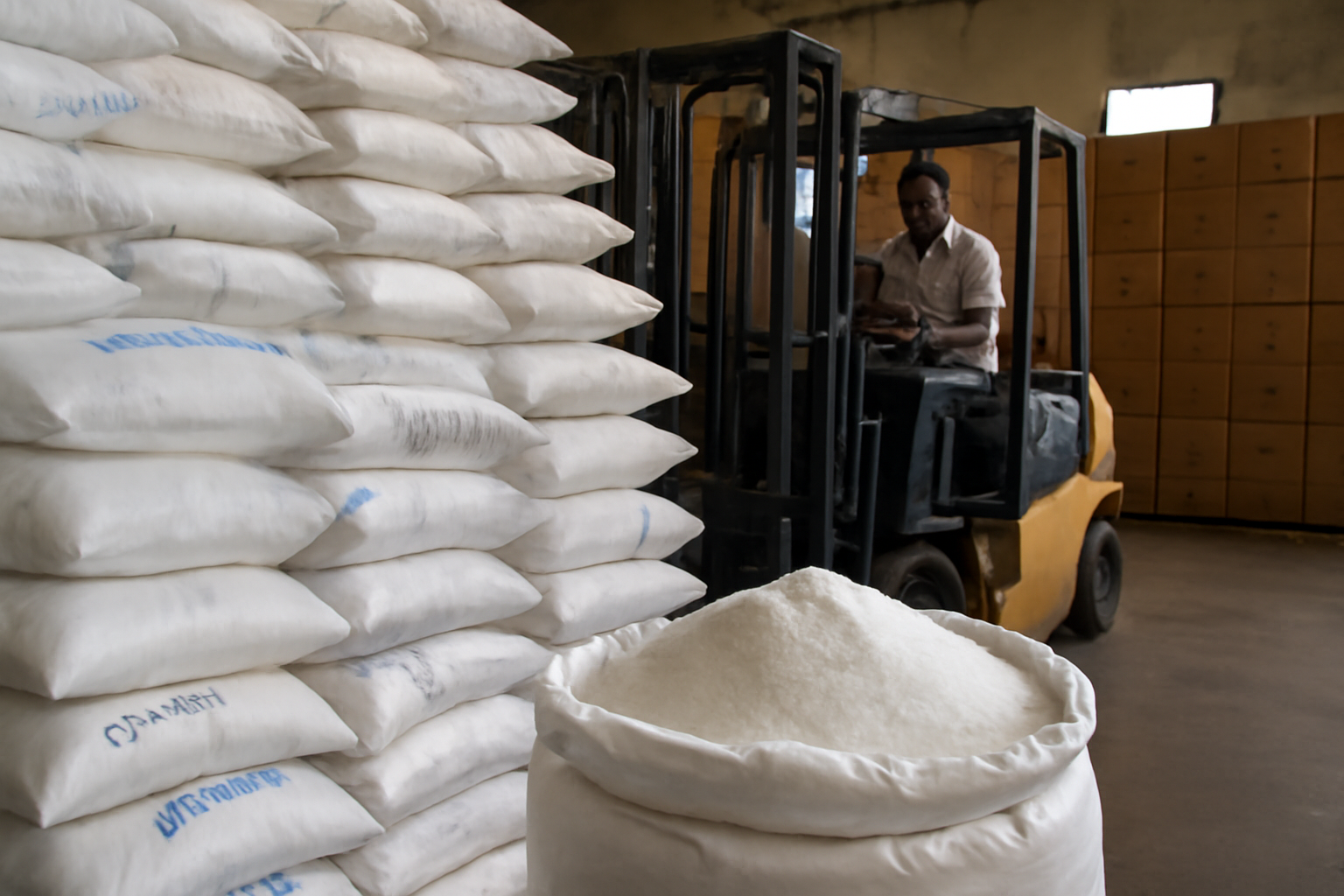
Cameroon takes the lead in regional sugar imports
Cameroon is the principal market for imported sugar in Central Africa, according to Agence Ecofin. Its position places the country at the centre of the region’s response to steadily rising consumption needs and makes developments in the Cameroonian market relevant to sugar producers, traders, processors and industrial buyers.
The available source material does not provide import volumes, prices, supplier countries or a timetable for the increase in demand. It nevertheless identifies two defining features of the market: Cameroon is the leading regional destination for imported sugar, and consumption requirements continue to grow. Together, these factors indicate that imported supply remains an important part of the country’s sugar balance.
Sugar demand extends beyond direct household consumption. The commodity is also a basic input for food and beverage processing. Consequently, the availability and cost of imported sugar can affect purchasing decisions across several parts of the value chain, even though the source does not quantify demand from individual industries.
Rising needs increase the importance of supply continuity
For importers and processors, expanding consumption needs make continuity of supply a central commercial issue. Cameroon’s role as Central Africa’s largest import market means disruptions affecting its purchases could have consequences beyond individual transactions, particularly for buyers that depend on predictable access to raw materials.
The source does not identify whether growing requirements are being driven by population, household use, industrial processing or another factor. It also does not state how much domestic production contributes to consumption. Those gaps prevent a firm assessment of the size of Cameroon’s supply deficit or the speed at which import requirements may change.
Even so, the country’s leading position gives suppliers a clear reason to monitor its market. Exporters seeking demand in Central Africa are likely to view Cameroon as a key destination, while local buyers must manage exposure to external supply conditions. Without published figures on origins and volumes in the supplied material, the level of supplier concentration cannot be established.
Market data will determine the commercial opportunity
The next questions for industry participants concern scale and sourcing. Import volumes would show how quickly the market is expanding, while supplier-country data would reveal which exporters currently serve Cameroon and whether purchasing is concentrated among a small number of origins. Price information would clarify the cost pressure facing importers and processors.
Domestic production data would also be necessary to distinguish between growth in total consumption and growth specifically in import demand. Rising consumption does not automatically produce an equivalent rise in imports if local output expands at the same time. Conversely, limited domestic growth could make imported sugar increasingly important.
For now, Agence Ecofin’s assessment establishes Cameroon as the anchor market for imported sugar in Central Africa. The direction of consumption is upward, but the source material does not provide enough quantitative evidence to measure the pace of growth. Producers, exporters and buyers will therefore need volume, price, origin and domestic-output data before translating the market’s regional importance into investment or procurement decisions.