Cameroon’s fish and milk powder imports rise despite local production drive
Cameroon spent CFA264.1 billion on fish and milk powder imports in 2025, up 31.4% from 2024. Domestic production grew only slightly, leaving the government well short of its 2026 output targets.
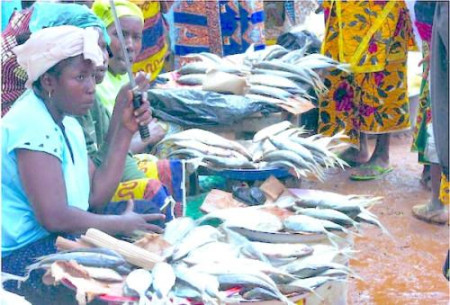
Fish drives a 31.4% increase in the import bill
Cameroon imported more fish and milk powder in 2025 even as it implemented a government program intended to expand domestic supply and reduce reliance on foreign products. Provisional data from the National Institute of Statistics, reported by Business in Cameroon, put the combined cost of the two categories at CFA264.1 billion, up 31.4% from CFA201 billion in 2024.
Fish and crustacean imports increased 29% to 267,601 metric tons from 207,408 tons a year earlier. Their value rose faster, climbing 37.8% to CFA231.3 billion. Nearly all the volume consisted of frozen sea fish: 267,259 tons valued at CFA230.9 billion.
The average import value for fish rose 6.8% to about CFA864 per kilogram from CFA809 in 2024. The combination of higher volumes and a higher average value explains why spending grew more quickly than imported quantities.
Powdered or concentrated milk imports followed a different price pattern. Volumes increased 8% to 17,880 tons from 16,555 tons, but their value declined 1.2% to CFA32.8 billion. The average import value fell about 8.5% to CFA1,832 per kilogram, limiting the cost of the additional volume.
Domestic output remains far below 2026 targets
The rise in imports occurred during the government’s 2024-2026 Integrated Agropastoral and Fisheries Import-Substitution Plan, known as Piisah. According to the Ministry of Livestock, Fisheries and Animal Industries’ 2025 review, Cameroon produced an estimated 249,083 tons of fish and 183,286 tons of milk. Output was only 1.2% and 1.5% higher, respectively, than the ministry’s 2024 figures.
The government is targeting 602,500 tons of fish and 351,900 tons of milk by 2026. Production in 2025 equaled only 41.3% of the fish target and 52.1% of the milk target, leaving gaps of 353,417 tons and 168,614 tons. Meeting the targets within one year would require increases of about 142% for fish and 92% for milk, far above the growth recorded so far.
The statistics do not establish why output has increased slowly. Business in Cameroon identified possible constraints including feed costs, access to fingerlings and breeding stock, financing, cold storage, logistics and the time needed for publicly supported projects to deliver marketable supply.
Budget commitments have yet to become physical capacity
Implementation figures show a gap between administrative commitments and work on the ground. Piisah registered an 87% commitment rate in 2025 but a physical execution rate of 30.18%, according to the ministry’s review. The dairy component reached 40.56%. Budget commitments do not necessarily mean that funds have been disbursed or projects completed.
For 2026, the review listed a CFA12.5 billion allocation, of which 76.93% had been committed. Physical execution was still at zero at the time of assessment across the six agencies concerned. In August 2026, the livestock ministry and Cameroon SME Bank announced an additional CFA6.5 billion for the cattle, dairy and fisheries industries, but its effect will depend on how quickly financing reaches beneficiaries and produces additional supply.
More recent figures provide an early but incomplete counterpoint. Cameroon’s fish and crustacean import bill fell 35.5% year over year to CFA26.8 billion in the first quarter of 2026, according to the National Economic and Financial Committee. Without comparable volume and production data, a three-month fall in spending does not demonstrate successful import substitution. Evidence of progress would require higher domestic output, a sustained reduction in import volumes and stronger physical execution of production projects.