Cameroon cocoa growers said to bear cost of EU deforestation rules amid record food inflation
Commentary in the Cameroonian press accuses the European Union of pushing the cost of complying with its deforestation regulation onto local cocoa planters. The criticism lands as households in Cameroon face record food inflation, sharpening a dispute over who pays for cleaner supply chains between Brussels and Yaoundé.
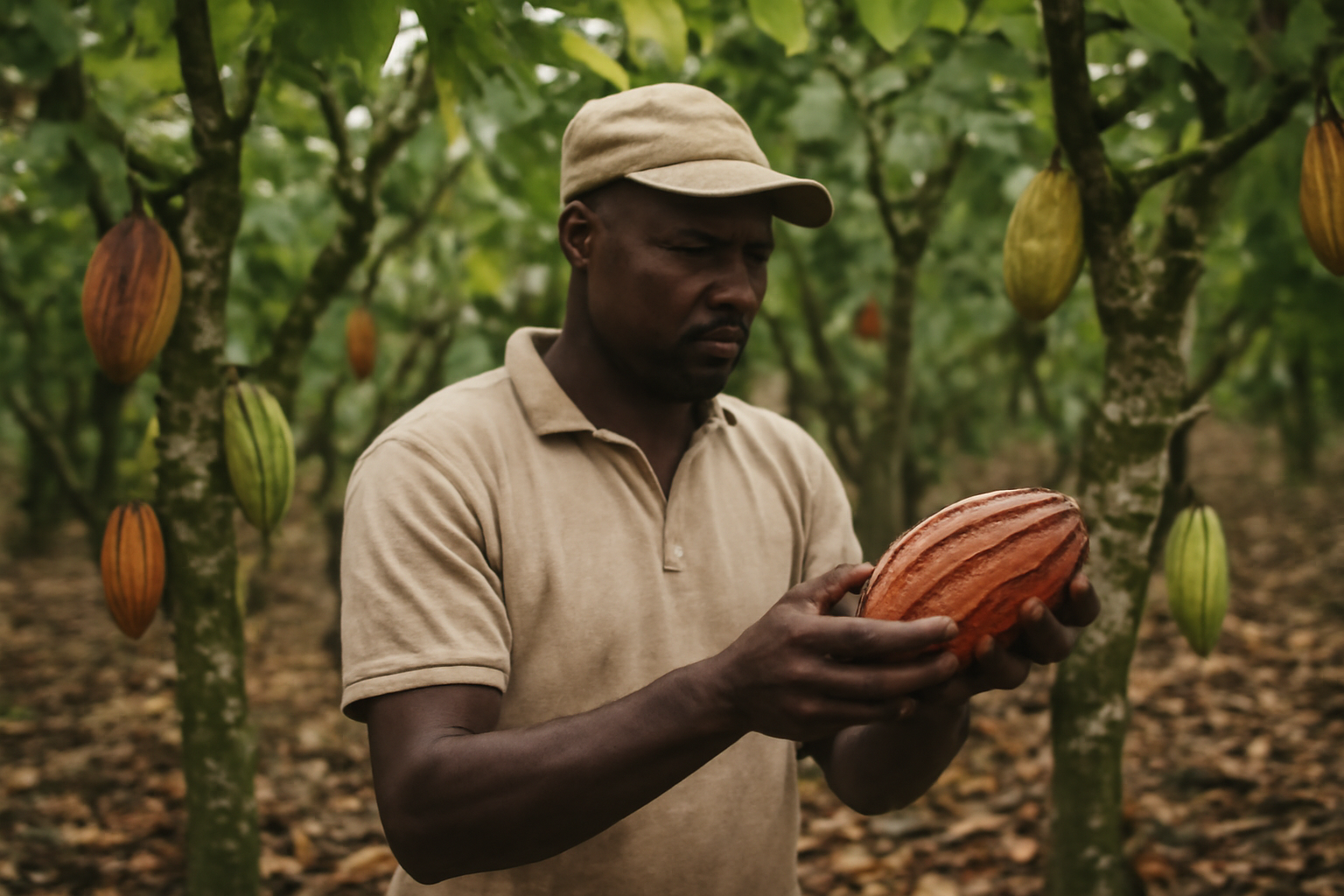
Farmers said to bear the cost of EU rules
Cocoa growers in Cameroon are being asked to shoulder the cost of complying with the European Union's deforestation regulation, according to commentary in the Cameroonian press, at a time when households in the country face record food inflation. The criticism frames the arrangement between Brussels and Yaoundé as one in which planters, rather than governments or buyers, absorb the practical burden of the new environmental rules.
The EU regulation requires that cocoa and other commodities entering the European market be shown to come from land that was not deforested. Meeting that standard involves mapping plots, documenting their origin and building traceability from the farm upward. In Cameroon, a significant cocoa exporter to Europe, that documentation work reaches down to the smallholders who supply much of the crop.
Food inflation sharpens the strain
The complaint gains force because it lands during a period of record food inflation for Cameroonian households. Rising prices for staple foods reduce the room farming families have to spend on compliance tasks, from surveying plots to gathering the paperwork buyers now demand. Critics argue that the environmental agenda, however it is framed in Brussels, translates on the ground into added costs for the people least able to carry them.
Why the arrangement draws criticism
The central charge is one of duplicity: that the environmental goodwill claimed at the political level is financed, in practice, by cocoa planters. Where governments and large buyers set the terms, it is the farmer at the base of the chain who pays the ecology bill, as the Cameroonian commentary puts it. That framing pits the stated aims of the regulation against the way its costs are distributed.
What it means for the cocoa trade
For importers and exporters, the dispute is a signal about how the cost of the EU's deforestation rules is settling across the cocoa supply chain. If compliance expenses concentrate at the farm level in origin countries such as Cameroon, they can affect the supply, price and traceability of cocoa reaching Europe. Buyers sourcing from Cameroon face a supply base under financial pressure, while planters weigh whether continued access to the European market justifies the added work and expense.
- Cameroon is a notable cocoa supplier to the European market.
- The EU deforestation regulation requires proof that cocoa is not linked to deforested land.
- Cameroonian commentary says planters are absorbing the compliance burden amid record domestic food inflation.
The wider question raised in Cameroon is who ultimately pays for cleaner supply chains. As long as that cost falls disproportionately on smallholders, the country's cocoa sector faces friction between meeting European standards and sustaining the growers who produce the crop.