Cambodia's rubber revenue rises about 40% to over $560 million in seven months of 2026
Cambodia's rubber sector earned more than $560 million in the first seven months of 2026, up roughly 40% year on year, with exports of latex and rubber wood accounting for over $360 million. Latex export volumes rose 25.7% to 184,560 tonnes, while rubber wood shipments jumped 441%. Domestic tire plants continue to pay above export parity.
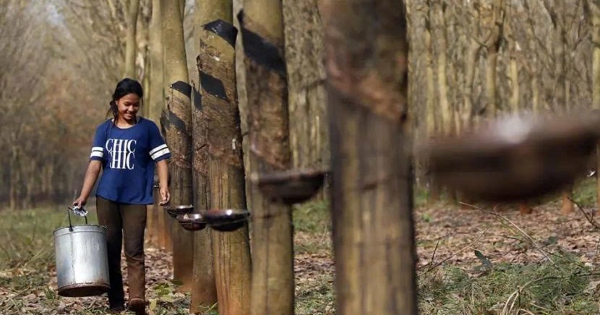
Cambodia's rubber sector generated more than $560 million in revenue during the first seven months of 2026, an increase of about 40% against the same period of 2025, according to figures from the General Directorate of Rubber at the Ministry of Agriculture, Forestry and Fisheries, cited by The Phnom Penh Post. Exports of latex and rubber wood accounted for more than $360 million of that total; the balance came from direct deliveries to tire plants operating inside the country.
Latex volumes rise 25.7%, rubber wood shipments multiply
Cambodia exported 184,560 tonnes of rubber latex between January and July 2026, up 25.7% year on year. Rubber wood exports grew far faster, reaching 61,878 cubic metres, a 441% jump from the same period of 2025. In July alone, receipts from exports of latex and rubber-based goods exceeded $111 million.
The scale of the timber increase explains part of the gap between 40% revenue growth and the 25.7% rise in latex tonnage, since export prices moved only marginally over the period. Volumes of rubber wood remain small in absolute terms next to latex, but they now form a visible second revenue line for plantation operators.
Domestic buyers pay above export parity
Average export prices for Cambodian latex reached $1,875 per tonne over the seven months, $64 more than a year earlier, a gain of 3.5%. Latex sold on the domestic market averaged $1,919 per tonne, up $66, also 3.5%. The domestic price has stayed above the export price, which the General Directorate attributes to steady purchasing by the country's automotive tire manufacturing complexes. The spread works out at $44 per tonne in favour of local sales, before transport and handling costs to port are counted.
Sales into the domestic tire industry account for close to $200 million of the seven-month total, or around one third of sector revenue. For processors, that channel shortens the cash cycle and removes exposure to freight rates and port timing.
Plantations ran without disruption in July
A representative of the General Directorate of Rubber said operations across the value chain ran normally in July at both large plantation companies and smallholder households nationwide, with tapping maintained at a steady pace and no reported obstacles. Cambodia's planted rubber area now totals 448,051 hectares. Of that, 357,483 hectares, or 80%, are in the tapping phase, while 90,568 hectares, or 20%, remain immature and under basic care and development. That immature share points to further volume growth as those stands enter production over the coming years.
Global supply set to grow 2.1% in 2026
For the full year, the Association of Natural Rubber Producing Countries (ANRPC) forecasts global natural rubber output rising 2.1% to nearly 15.28 million tonnes, from 14.97 million tonnes in 2025. The association describes that growth as restrained by weather-related disruption, low replanting rates, geopolitical tension and other structural constraints, even as producer prices hold firm.
The combination of modest global supply growth and steady prices leaves room for origins able to add tonnage. Cambodia's latex exports over seven months equate to roughly 1.2% of the volume ANRPC expects the world to produce across the full year, keeping the country a mid-sized supplier; its volume growth of 25.7%, however, is running far ahead of the global rate. For importers and tire makers sourcing in Southeast Asia, that makes Cambodia one of the few origins adding meaningful supply into a market where output is expanding by low single digits.