Cambodia lifts rice exports to the Philippines as Signature Rice targets 100,000 tonnes in 2027
Signature Rice, one of Cambodia's largest rice exporters, is moving to full vessel loads for the Philippine market, with 20,000 tonnes planned per month and 100,000 tonnes targeted for 2027. Cambodia shipped 122,102 tonnes to the Philippines in the first eight months of 2026, with full-year volumes seen at about 209,000 tonnes. Total Cambodian rice exports reached 792,212 tonnes in January-August, up 67.5 per cent year on year.
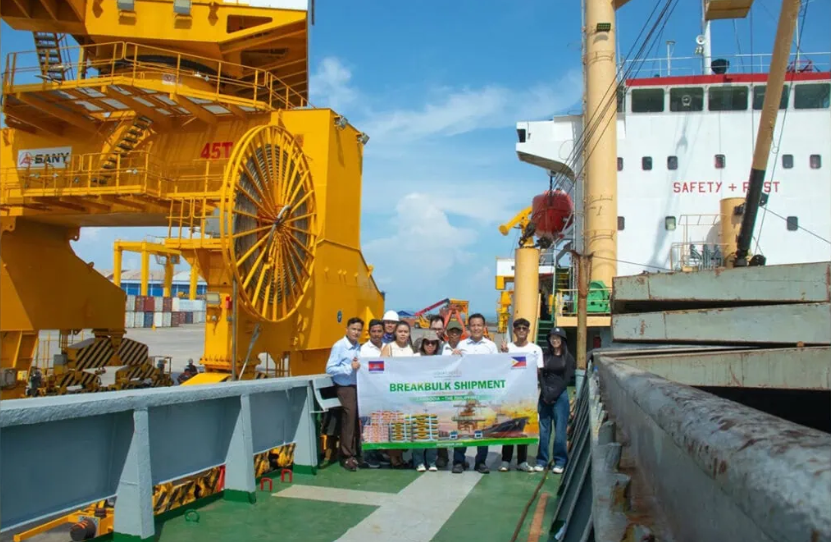
Bulk vessels replace container shipments
Signature Rice, one of Cambodia's largest rice exporters, has outlined plans to step up deliveries to the Philippines, according to The Phnom Penh Post. A 5,000-tonne consignment was loaded onto a vessel at Kampot on 2 November as part of a total of 20,000 tonnes the company intends to ship directly to the Philippine market over the month, a volume it expects to repeat in November and December. For 2027, Signature Rice has set a target of 100,000 tonnes of rice exports to the Philippines, which would make the country one of its largest markets.
The move from containers to full vessel loads is central to the company's commercial case. “Moving rice in full vessels changes the numbers for us and for our buyers,” said Chan Pich, general manager of Signature Rice. “Delivery is faster than by container, and buyers get one large lot of the same quality. That makes Cambodian rice more competitive in the Philippines.” He added that the company can deliver 5,000 tonnes in a single shipment and is ready to do so every week, with the stated aim of becoming “a long-term supplier to the Philippine market, not a one-off seller”.
Cambodian volumes against a record Philippine import year
The Philippines was expected to import a record 5.5 million tonnes of rice in 2026. Measured against that demand, Cambodian shipments remain modest but are expanding quickly: the Cambodia Rice Federation (CRF) reported exports of 122,102 tonnes to the Philippines in the first eight months of 2026, with full-year volumes expected to reach about 209,000 tonnes.
- Exports to the Philippines, January-August 2026: 122,102 tonnes (CRF)
- Expected full-year 2026 exports to the Philippines: about 209,000 tonnes
- Signature Rice target for the Philippines in 2027: 100,000 tonnes
- Total Cambodian rice exports, January-August 2026: 792,212 tonnes, up 67.5 per cent year on year
Across all destinations, the CRF reported total Cambodian rice exports of 792,212 tonnes in the first eight months of 2026, an increase of 67.5 per cent on the same period of 2025. Signature Rice's 2027 target of 100,000 tonnes for the Philippines alone is equivalent to roughly half the volume Cambodia is expected to ship to that market across the whole of 2026.
Policy framework and the one-million-tonne goal
The trade sits inside an existing bilateral framework. Dith Tina, Minister of Agriculture, Forestry and Fisheries, and Francisco Tiu Laurel Jr., the Philippine Agriculture Secretary, signed a memorandum of understanding on agricultural cooperation in Manila in February 2025. The latest shipment also supports the Royal Government's goal of exporting 1 million tonnes of rice annually, a target set in 2015 and still unmet.
What it means for suppliers in the region
Philippine demand is the anchor for the plan. With imports projected at 5.5 million tonnes for 2026, buyers in Manila are sourcing from several origins, and Cambodian exporters are positioning on logistics rather than on scale: direct bulk calls instead of containerised lots shorten transit times and spread freight costs over larger consignments, which is what allows a smaller origin to quote against established suppliers.
The report did not disclose prices or contract terms for the shipments. Execution is the open question: the weekly cadence described by Chan Pich implies a sustained flow of milled rice through Kampot, and the 2027 target depends both on milling supply at home and on Philippine import demand holding near current levels. CRF export data for the remainder of 2026 will be the first test of whether the 20,000-tonne monthly pace is maintained.