Cambodia's cassava exports reach $489 million in first eight months of 2026
Cambodia earned $489 million from cassava exports in the first eight months of 2026, down just 1.86% year on year despite an estimated 30% contraction in planted area. Recovering prices and rising demand for dried cassava chips offset the loss of acreage, continuing a shift away from fresh root exports that was already visible in 2025 trade data.
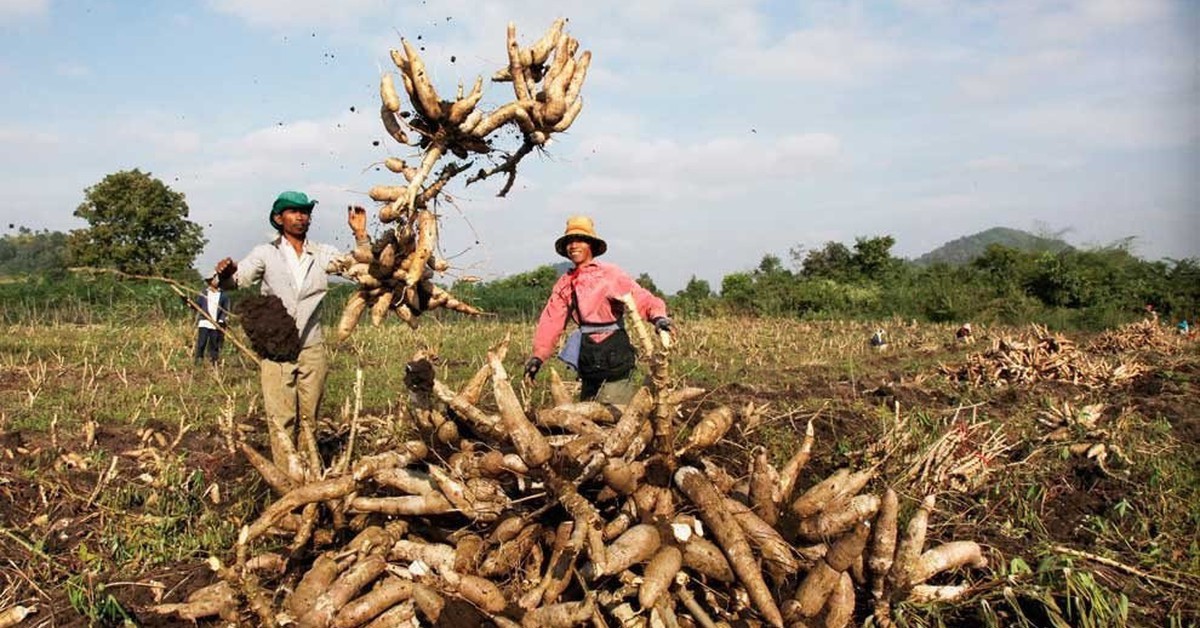
Cambodia generated $489 million from cassava exports in the first eight months of 2026, a decline of just 1.86% from the same period of 2025, even though the area planted to the crop is estimated to have contracted by around 30%, according to the Vietnamese outlet Soha. Recovering prices and stronger demand for dried cassava largely offset the lost acreage.
The figures point to a change in the product mix rather than a contraction of the sector. Cambodian growers and traders are moving away from selling freshly harvested roots and towards dried cassava chips, a semi-processed form that commands a higher price per kilogram and is easier to store and transport. The trend has consequences for processors in neighbouring countries that have built capacity around a steady flow of fresh Cambodian roots.
Acreage falls after two years of weak prices
El Chhinh, president of the Khmer Cassava Farmers Association, said the reduction in planted area was driven mainly by low cassava prices during 2024 and 2025, combined with shortages of production inputs. Growers who absorbed two consecutive seasons of poor returns cut back or moved to other crops.
Prices have since turned. Fresh cassava currently trades between 390 and 480 riel per kilogram, with the association attributing the improvement to stronger market demand and the commodity's own price cycle. Dried cassava chips sell above 600 riel per kilogram, a premium that gives farmers and collection points a direct incentive to dry the crop rather than sell it wet at the farm gate.
Dried chips take share from fresh roots
The shift was already clear in full-year 2025 trade data. Total cassava export revenue reached $646 million, down 14.48% from 2024, but the composition of shipments changed sharply:
- Fresh cassava exports fell by close to 10% to 3.1 million tonnes.
- Dried cassava chip exports rose by more than 62% to 1.56 million tonnes.
- Revenue still fell over the year, reflecting weak prices rather than weak volumes.
Drying and processing also generate demand along the chain — collection, transport, processing, storage and trading — adding value before the product crosses the border. For farmers, drying is an alternative to selling immediately after harvest, though the actual benefit depends on production and processing costs, prevailing market prices and access to drying facilities and warehousing. Producers without that access remain tied to the fresh-root price.
Vietnam and China remain the main markets
Vietnam and China are still Cambodia's two principal cassava export destinations. That concentration leaves shipments exposed to price swings, demand shifts and cross-border trade conditions in a small number of regional markets. Vietnam itself ranks among the world's three largest cassava exporters, making the two countries simultaneously trading partners and competitors in downstream markets for starch and chips.
Cambodia is working to widen its export base while building processing capacity and improving product quality and competitiveness. Processing technology, quality control, supply systems, warehousing and logistics are all identified as conditions for more stable development of the sector. The country is expected to continue expanding export markets and encouraging domestic processing.
Cassava prices and demand for dried product will be the decisive variables for planting decisions in the coming season and for the operations of processors and traders. With planted area already down about 30%, the response of growers to the current 390–480 riel fresh price will determine whether Cambodian supply stabilises or tightens further.