Bushehr starts lime harvest with output forecast at 80,000 tonnes
Iran’s Bushehr province has begun harvesting limes, with annual production forecast at about 80,000 tonnes. The crop covers 4,275 hectares, while 1,100 tonnes have already reached the market from four producing counties.
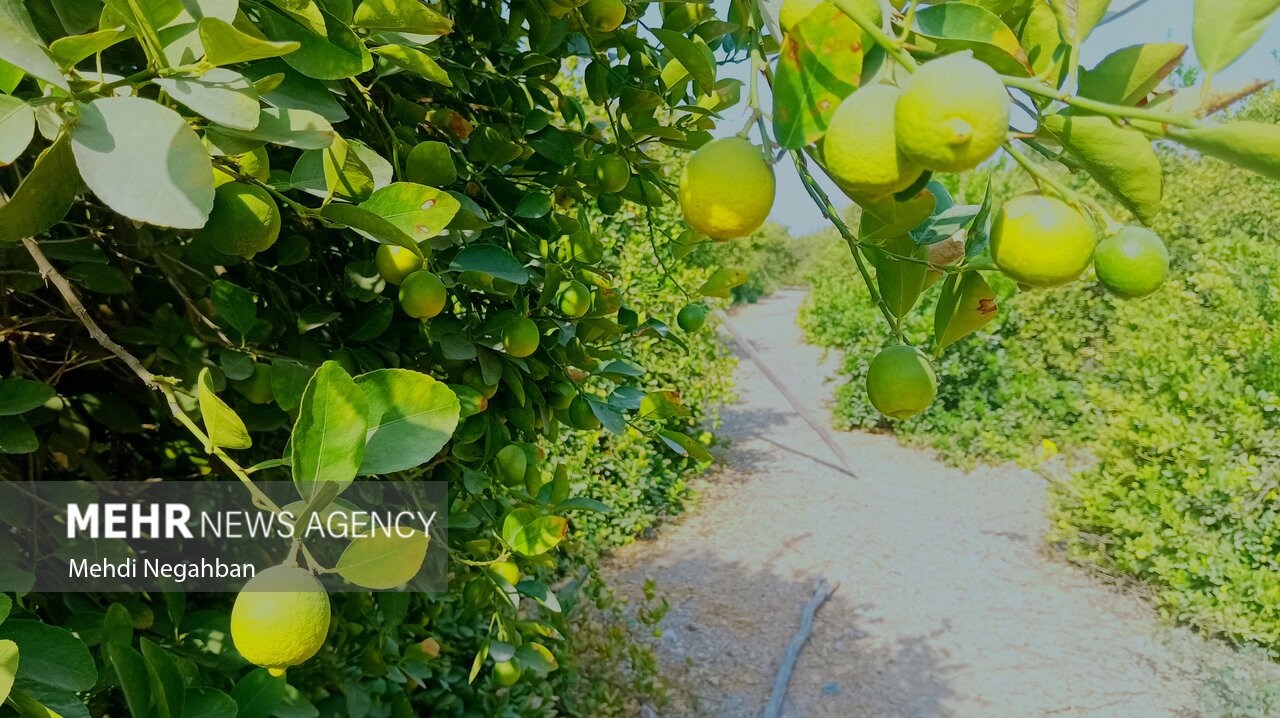
Harvest begins in four counties
Lime harvesting has started in Iran’s Bushehr province, where agricultural authorities expect production to reach about 80,000 tonnes this year. Kobra Tavakoli, deputy for plant production improvement at the provincial Agricultural Jihad Organization, told Mehr News that 1,100 tonnes have already been collected from orchards in Jam, Dashtestan, Dashti and Tangestan counties and sent to the market.
The harvest began in the first half of the Iranian month of Mordad and remains under way. Jam accounts for the largest share of provincial lime production, according to Tavakoli. The figures indicate that most of the expected crop has yet to enter commercial channels, leaving a substantial volume to be harvested and marketed as the season progresses.
Limes dominate the citrus area
Bushehr has 5,233 hectares devoted to citrus cultivation. Lime orchards occupy 4,275 hectares, equivalent to 81.6% of the province’s total citrus area. Based on the production forecast and reported lime acreage, expected output is equivalent to roughly 18.7 tonnes per hectare, although Mehr News did not provide a formal yield estimate or a comparison with previous seasons.
Fars and Persian are among the principal lime varieties grown in Bushehr. The crop supplies the province’s domestic market, while part of production is dispatched to neighboring provinces. The source did not disclose shipment volumes, prices, processor demand or the share of the crop sold outside Bushehr, so the effect of the harvest on regional availability will depend on the pace at which the remaining fruit reaches buyers.
Total citrus crop seen above 91,209 tonnes
Agricultural officials forecast that Bushehr’s citrus orchards will produce more than 91,209 tonnes this year, with limes representing a significant majority. If the lime estimate of about 80,000 tonnes is achieved, the fruit would account for close to 88% of the projected citrus volume. The remaining output would consist of other citrus crops, although the report did not identify them or provide separate forecasts.
The volume already harvested represents less than 2% of the projected lime crop. That early-stage position matters for growers, wholesalers and buyers in nearby provinces because marketable supply is likely to expand during the rest of the campaign. However, no export plans or cross-border trade flows were reported; the stated destinations are Bushehr’s own market and neighboring Iranian provinces.
Heat and water scarcity shape orchard investment
Tavakoli warned that higher temperatures, declining rainfall and limited water resources require changes in agricultural practices. She recommended establishing denser orchards and using modern equipment and technologies, including shade structures, to reduce climate-related damage and improve productivity.
The provincial Agricultural Jihad Organization said it would provide technical support for growers adopting newer methods. For Bushehr’s lime sector, the production forecast therefore sits alongside a longer-term constraint: maintaining an orchard area that supplies most of the province’s citrus crop while using less water and limiting losses from heat stress. The success of those measures will influence whether current production levels can be sustained under increasingly difficult climatic conditions.