Burkina Faso opens $30 million textile complex to process its own cotton
The TEXFORCES-BF complex was inaugurated on 9 September 2026 at Bobo-Dioulasso, with capacity to process more than 12,000 tonnes of cotton a year at the start and a long-term target of 50,000 tonnes. Agence Ecofin puts the investment at $30 million, while AllAfrica reports 17 billion CFA francs. The project is designed to shift Burkina Faso from exporting raw fibre to making fabric and finished clothing at home.
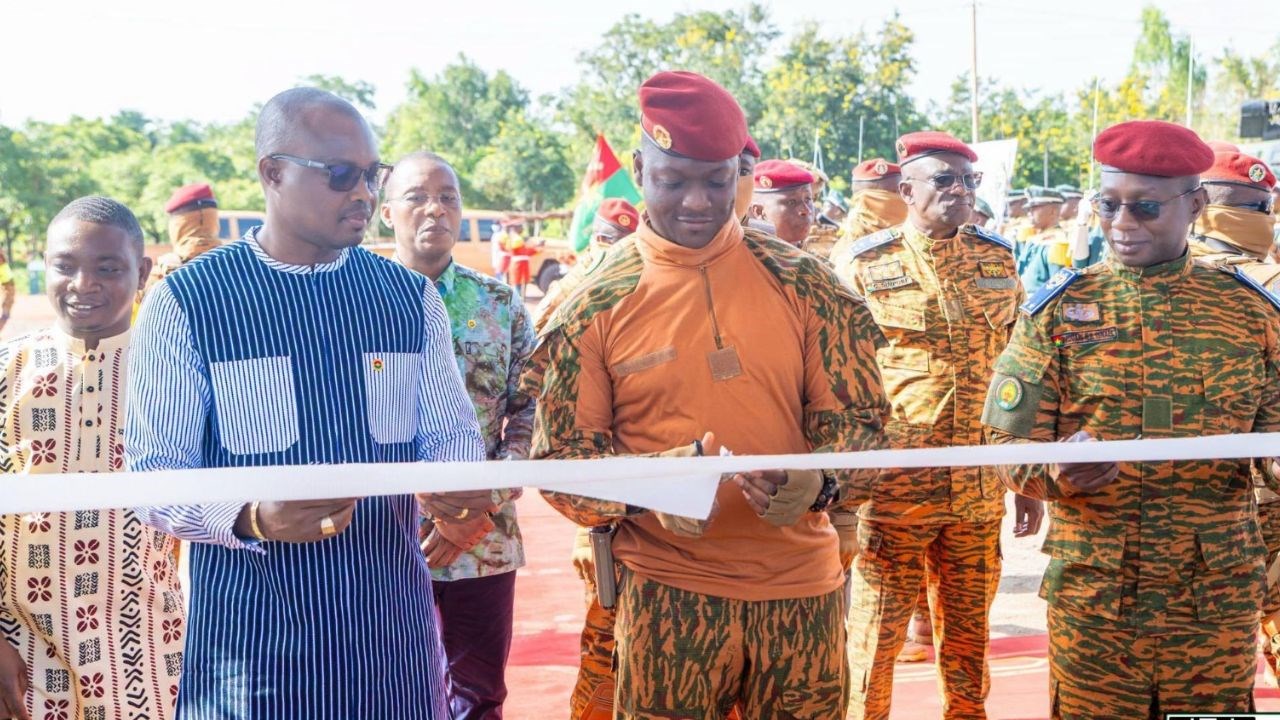
Burkina Faso inaugurated an integrated textile complex at Bobo-Dioulasso on 9 September 2026, a project intended to move the country from exporting raw cotton fibre to producing fabric and finished clothing domestically. Agence Ecofin values the investment at $30 million, while AllAfrica reports a cost of 17 billion CFA francs.
A plant built around domestic cotton
The Textile Complex of the Forces of Burkina Faso (TEXFORCES-BF) is located at Logofourousso, in the commune of Bobo-Dioulasso on the road to Orodara, and was inaugurated by the President of Faso, Captain Ibrahim Traoré, Sikafinance reported. The site covers 9 hectares and combines spinning, weaving and garment-making units with administrative buildings, a warehouse and an infirmary, according to AllAfrica.
Output is aimed first at the defence and security forces and the Volunteers for the Defence of the Homeland, then at paramilitary corps, professional buyers and, progressively, the civilian market. Sikafinance reports that the authorities frame the project as a way to cut dependence on textile imports and retain more value added inside the country. The chairman of the company's board, Brigadier General Ismaël Kiswendsida Diaouari, said a cotton-producing country cannot durably allow most of the value added, the jobs and the skills tied to that raw material to be created outside its borders.
Capacity and the 50,000-tonne target
The complex starts with capacity to process more than 12,000 tonnes of cotton a year, AllAfrica reports. Sikafinance lists the installed industrial capacities as follows:
- 20 million metres of woven fabric a year
- 5 million to 6 million units in knitting
- up to 20 million metres in finishing and dyeing
- 4 million to 6 million uniforms a year in garment-making
- more than 5 million t-shirts and more than 1 million pairs of socks a year
The site is designed to ramp up in stages. The stated long-term ambition is to process up to 50,000 tonnes of cotton a year, with weaving capacity reaching 100 million metres and output above 20 million finished pieces annually. Those volumes are intended to cover part of domestic demand and to position the plant on sub-regional and international markets.
Jobs and the route to civilian markets
The project is projected to create 600 direct jobs and some 15,000 indirect jobs, according to AllAfrica. The same report sets the plant against a long-standing gap: Burkina Faso established itself as one of Africa's large cotton producers, with output approaching 600,000 tonnes in the early 2000s, but local processing never followed. The disappearance of Fasofani left a void in the national textile landscape, while Faso Coton and SOCOMA alongside SOFITEX sustained cotton growing without achieving integrated industrial processing. Private ventures including Filsah and the Pabré hydro-spinning mill showed that skills and entrepreneurs remained in the sector.
Public procurement gives the plant an anchor market but cannot be its only outlet, AllAfrica notes. The complex will have to win orders from companies, administrations, schools and consumers, and then look to the sub-region. Producing locally is not sufficient on its own: output has to be regular, cost-controlled and of a quality able to withstand competition.
Upstream conditions and risks
The security crisis has hit several cotton-growing basins. AllAfrica lists securing the cotton zones, improving productivity, access to inputs, technical support and sufficiently attractive prices for growers as conditions for the textile revival, with the government's Offensive agro-pastorale positioned as the response on yields.
Fraud, unfair competition and imports that undercut local production remain the main threats named in the AllAfrica analysis. The same report points to the state's move to take back control of strategic industrial assets, notably the oilseed processor SN-CITEC, as part of a broader effort to hold more of the cotton value chain at home, where cottonseed already feeds the cooking oil, soap and animal feed industries.