Bulgarian gas upgrades could nearly double capacity into Romania
Planned upgrades could raise annual gas capacity at the Negru Vodă–Kardam interconnection from 5.03 billion to 9.41 billion cubic metres. The projects would strengthen Romania’s role as a supply and transit hub between Greek LNG terminals and Moldova, Ukraine and Central Europe.
Leadership change puts investment timetable in focus
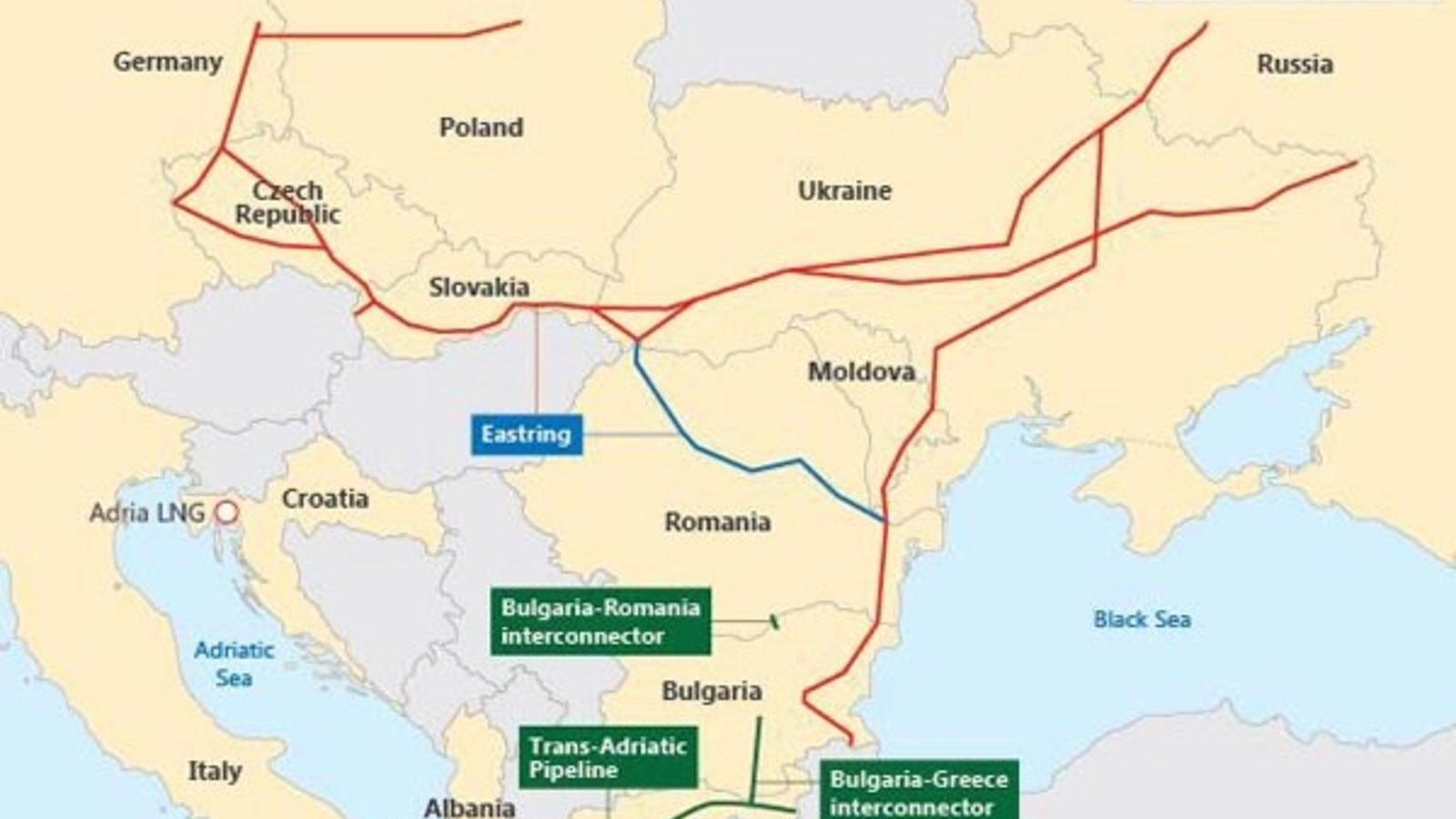
A leadership change at Bulgarian gas transmission operator Bulgartransgaz is drawing attention to projects that could nearly double gas capacity into Romania. Kiril Ravnachki is replacing Vladimir Malinov as the operator works on the Bulgarian sections of the Vertical Corridor, a south-to-north route intended to connect Greek LNG infrastructure with Romania, Moldova, Ukraine and Central Europe.
According to Stiripesurse.ro, the change matters beyond Bulgaria because gas unloaded at the Revithoussa and Alexandroupolis terminals must cross the Bulgarian network before entering Romania at Kardam–Negru Vodă. Ravnachki previously led Bulgartransgaz in 2024 and is familiar with both its infrastructure projects and the Balkan Gas Hub. Malinov will remain in the sector as chairman of the hub’s board.
The central issue for market participants is therefore whether the construction timetable will be maintained. Delays in Bulgaria would restrict the volumes available to Romania and downstream markets, while completion would provide another route for LNG and gas from the eastern Mediterranean or Caspian region as Europe reduces its reliance on Russian supply.
Negru Vodă capacity targeted at 9.41 billion cubic metres
Transgaz says implementation of the Vertical Corridor is expected to raise capacity at Negru Vodă–Kardam from 5.03 billion to 9.41 billion cubic metres per year. Bulgartransgaz plans technical capacity of almost 297 million kWh per day in the Bulgaria-to-Romania direction for the 2027–2028 gas year.
The increase depends on construction of the Rupcha–Vetrino pipeline loop and reversal of the Kardam compressor station. The joint Bulgartransgaz and Transgaz project is expected to add about 137.2 GWh per day to existing capacity. Investments on the Bulgarian section have been valued at nearly €199 million.
Capacity is also due to expand at Kulata–Sidirokastro on the Greek-Bulgarian border. Bulgartransgaz plans approximately 93 million kWh per day from October 1, 2026, followed by about 102.8 million kWh per day after the next stage, scheduled for early 2027. These works are essential because additional capacity into Romania has limited value unless more gas can first move north from Greece.
Bookings show rising commercial demand
Demand at Kardam–Negru Vodă has already increased. Bulgartransgaz reported bookings of about 99,400 MWh per day for the 2025–2026 gas year, more than 70% of the capacity offered. That compares with around 44,700 MWh per day one year earlier and 34,800 MWh per day in 2023–2024. Twenty-one Bulgarian and international companies participated in the auction.
Transmission operators in Greece, Bulgaria, Romania, Moldova and Ukraine have introduced joint capacity products, allowing suppliers to secure a cross-border route without separately purchasing access for every segment. Transgaz has announced the first exports to Ukraine through the Vertical Corridor and says Romania can accept additional volumes from diversified sources.
The route could generate more transmission revenue for Romania and increase use of infrastructure operated by Transgaz. Its significance may grow when production begins at Neptun Deep, potentially allowing Romania to combine domestic production with consumption and regional transit.
More capacity will not automatically reduce consumer bills. LNG must be purchased, regasified and transported across several national systems, each with its own tariffs. Final prices will depend on international gas markets, LNG costs, capacity bookings, demand in Ukraine and Central Europe, and Romanian production. The immediate benefit is greater optionality: Romania and neighbouring markets would have another supply route during a crisis, a difficult winter or disruption elsewhere.
The leadership change also comes amid an investigation into the approximately €285 million expansion of Bulgaria’s Chiren underground storage facility. The project was intended to increase capacity from about 550 million to one billion cubic metres. The European Public Prosecutor’s Office investigated alleged procurement irregularities, and Bulgartransgaz said it supplied requested documents and cooperated with the authorities. For corridor users, however, the decisive test remains delivery of the Greek and Romanian connections on schedule.