Bukit Asam Holds 49.55 Million Tonne Coal Production Target for 2026
PT Bukit Asam Tbk. (PTBA) is keeping its full-year 2026 coal production target at 49.55 million tonnes even after first-half output fell about 10% year on year, according to Bisnis Indonesia. The company links its confidence to efficiency gains in its mining operations, which now have to close the gap in the second half.
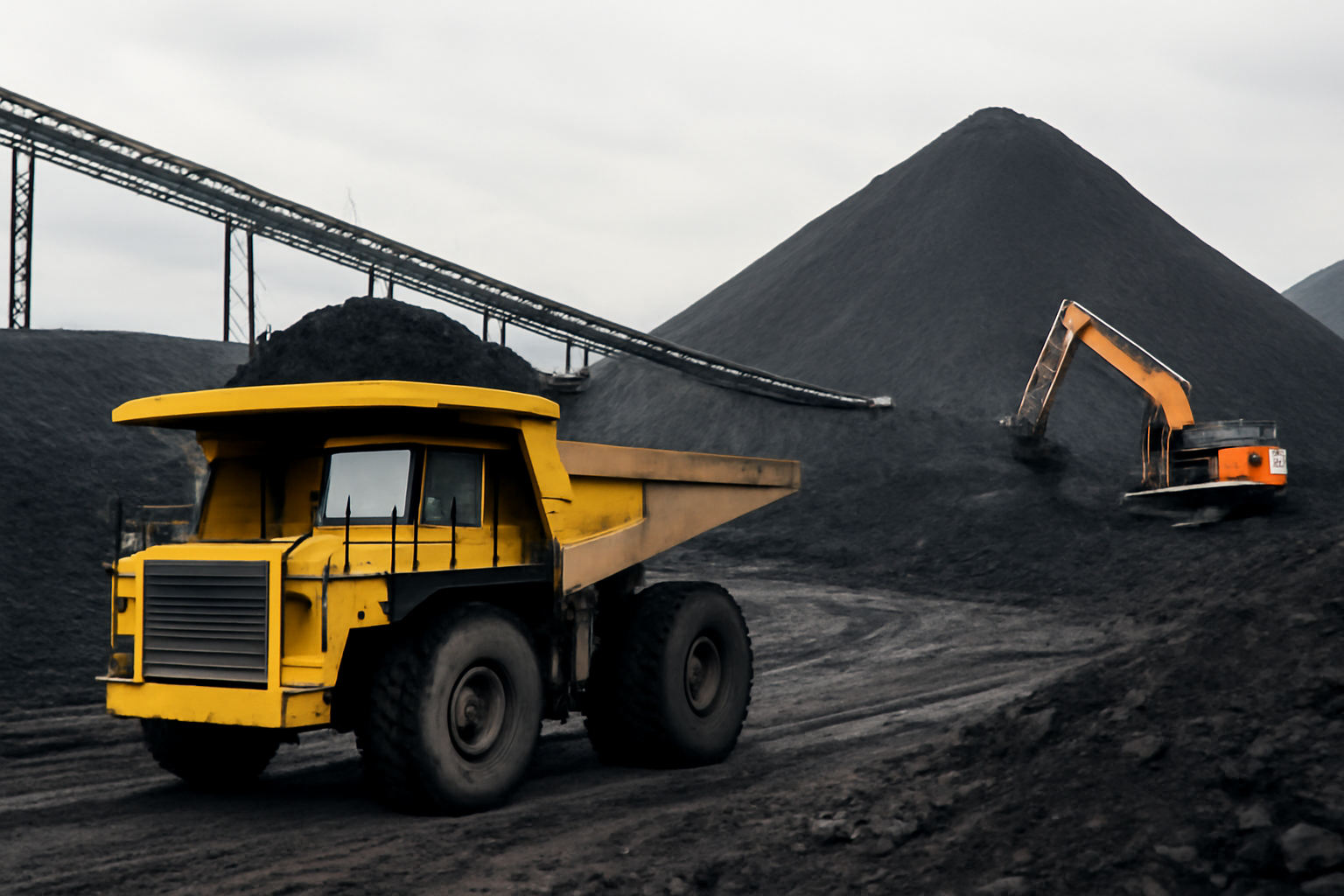
PT Bukit Asam Tbk. (PTBA) is holding to a coal production target of 49.55 million tonnes for 2026, even though output in the first half of the year fell around 10% compared with the same period a year earlier. According to the Indonesian business publication Bisnis Indonesia, the company attributes its confidence in the target to efficiency gains across its mining operations.
A full-year target against a weaker first half
The 49.55 million tonne figure is a full-year number, and the first-half shortfall reported by Bisnis Indonesia changes the arithmetic behind it rather than the target itself. A double-digit decline over the first six months means the remainder of the year has to deliver a disproportionate share of the annual volume, with little room for the kind of disruption that regularly affects Indonesian open-pit operations.
Seasonality is the first variable. Rainfall governs pit access, haul-road conditions and dewatering requirements in South Sumatra, and a wet stretch translates directly into lost coal-getting days. Equipment availability and contractor productivity are the second. Neither is fully within a producer's control, which is why a first-half gap of this size is normally closed through a combination of higher overburden removal, longer operating hours and tighter mine-plan sequencing rather than through any single lever.
Efficiency as the stated lever
Bisnis Indonesia identifies mining efficiency as the basis for PTBA's optimism. In Indonesian coal operations, efficiency programmes usually concentrate on a familiar set of items:
- stripping ratio discipline and the scheduling of overburden removal;
- fuel consumption per tonne moved, typically the largest single cost input;
- equipment availability and utilisation, including contractor fleet performance;
- haulage and blending choices that lift the realised value of each tonne.
The commercial logic is straightforward. When prices are soft, cost per tonne decides which volumes remain profitable and which are better left in the ground. A producer that lowers its cash cost can defend margin without waiting for a price recovery, and can keep marginal tonnes in the plan that a higher-cost competitor would cut. That is the mechanism PTBA is relying on to convert a weak first half into a full-year result.
Logistics, domestic obligations and the export balance
Volume targets at PTBA are as much a transport question as a mining one. The company's operations in South Sumatra depend on rail capacity to the ports of Tarahan and Kertapati, and railed tonnage sets a practical ceiling on how much coal reaches domestic power stations and export buyers in any given period. Any second-half catch-up therefore has to be matched by haulage and port throughput, not only by production at the pit.
Domestic policy is the other constraint. Indonesian producers operate under a domestic market obligation that requires a share of output to be allocated to the local market, primarily to power generation, at regulated prices. PTBA is among the principal suppliers to the domestic power sector, which means the split between domestic and export tonnes is only partly a commercial decision.
For the wider market, the target matters because Indonesia is the largest supplier of seaborne thermal coal. Production plans at the country's biggest miners feed directly into expectations for export availability and, by extension, into pricing for buyers across Asia. A producer reaffirming a growth-oriented volume target after a weak first half is signalling intent to defend market share rather than to manage supply downwards.