Lower-Priced Brazilian Beef Puts Pressure on Polish and EU Producers
An increased inflow of lower-priced Brazilian beef is intensifying competition in Poland and the wider European Union. Polish producers have responded with substantial price reductions, raising concerns about margins and the competitive impact of Mercosur supplies.
Brazilian supply intensifies competition
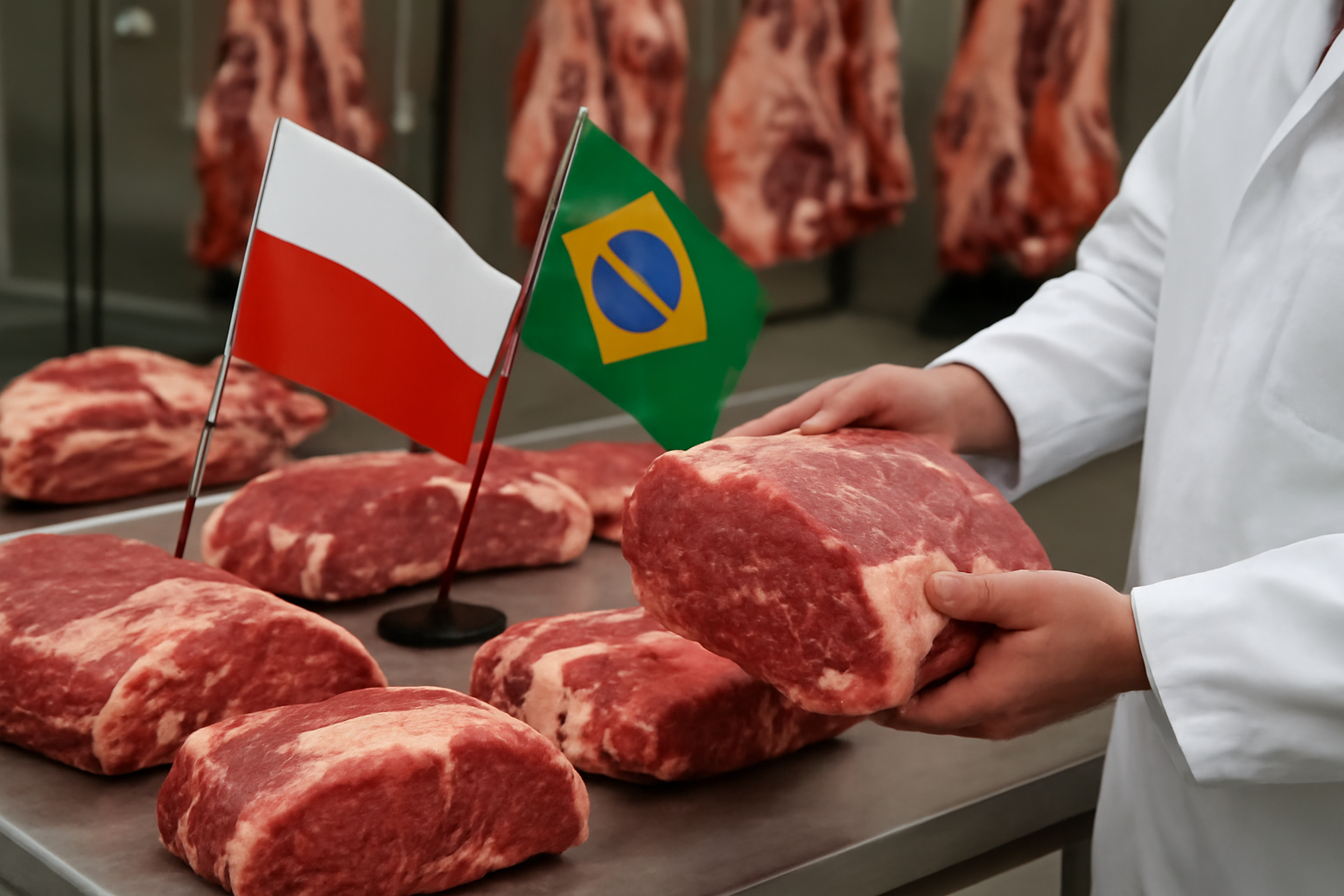
An increased inflow of lower-priced Brazilian beef is putting pressure on producers in Poland and across the European Union. The additional supply originates from Brazil, a member of the Mercosur trade bloc, and is competing directly with beef sold by European producers. The available source material does not specify shipment volumes, import prices or the period over which the increase occurred, but it describes the impact on the Polish market as substantial.
Polish beef producers have been forced to make significant reductions in the prices of their products. That response indicates that imported beef is not merely adding choice for buyers but is affecting the prices domestic suppliers can obtain. The pressure is particularly relevant for processors, wholesalers and food-service buyers that can compare imported and European-origin products on price. For producers, lower selling prices can narrow the margin available to cover cattle, feed, labor, energy and processing costs, although no individual cost figures were provided.
Pressure extends beyond Poland
The issue is not confined to Poland. The reported inflow is affecting the broader EU market, where suppliers from different member states compete for many of the same processing, retail and food-service customers. A competitively priced product entering one national market can therefore influence negotiations elsewhere, especially when buyers can redirect purchases between suppliers. The source does not identify which EU countries besides Poland have received the Brazilian beef or which market segments have absorbed it.
For Polish companies, the immediate commercial question is how much of the price gap can be absorbed without losing profitability. Producers may seek to defend sales through price cuts, while processors and importers can use the availability of Brazilian material to negotiate terms. Buyers benefit from greater access to lower-priced supply, but domestic cattle farmers and meat companies face stronger competition. The outcome will depend on volumes, product specifications and purchasing decisions, none of which were quantified in the supplied information.
Trade policy raises the stakes
The role of Mercosur gives the market development a wider trade-policy dimension. Brazilian beef entering the EU sits within a politically sensitive debate over competition between European agriculture and suppliers from the South American bloc. However, the supplied material does not state whether the reported increase is connected to a new tariff arrangement, a quota change or any specific trade agreement. It would therefore be premature to attribute the inflow to a particular policy decision.
Market participants will need clearer data on volumes, prices, product categories and entry points to assess the lasting effect. A temporary rise in supply would have different consequences from a sustained expansion of Brazilian sales into Poland and other EU countries. For now, the clearest signal is the response of Polish producers: imported Brazilian beef has become competitive enough to prompt substantial domestic price reductions. That makes future import flows and buyer behavior important indicators for cattle producers, processors, traders and investors across the European beef industry.